On a clear night in Delhi, you can see perhaps 20 to 50 stars.

Twenty to fifty. Out of the approximately 9,000 stars visible to the naked eye from Earth under perfect conditions, Delhi’s combination of light pollution and air quality reduces your sky to barely a handful of pinpricks — enough to find Orion’s belt on a good night, not much more.
Most people who grew up in Delhi have never actually seen the Milky Way. Not because the Milky Way has gone anywhere, but because the city has surrounded itself with so much artificial light that the galaxy we live in has become invisible.
This is what makes the drive to Sariska worth making.
Two hundred and ten kilometres from Delhi, on the edge of the Sariska Tiger Reserve in the Aravalli hills of Rajasthan, the sky at night is a different experience entirely. Sariska sits in a Bortle Class 3 to 4 zone — among the darkest skies within a one-day drive of Delhi — where over 4,000 stars become visible to the naked eye, the Milky Way appears as a textured, structured arch of light across the sky, and the distinction between the galactic core and the surrounding dust lanes is visible without any equipment.

And sitting at the centre of this dark sky destination is Astroport Sariska — India’s first dedicated astronomy resort — where professional-grade telescopes, trained astronomers, and guided sessions allow you to see Saturn’s rings, Jupiter’s moons, and deep-sky objects that most people assume require a professional observatory to observe.
This is the complete guide to Sariska stargazing: what to expect, when to go, how to reach, what you’ll see, and everything else you need to plan the trip.
Quick Facts: Sariska Stargazing at a Glance
| Detail | Information |
|---|---|
| Distance from Delhi | 200–215 km via NH-48 |
| Drive time from Delhi | 3.5–5 hours |
| Location | Tehla/Roopbas, Alwar district, Rajasthan |
| Sky darkness rating | Bortle Class 3–4 (among darkest near Delhi) |
| Stars visible (naked eye) | 4,000+ on a clear night |
| Best stargazing season | October to March (dry, clear skies) |
| Ideal duration | 1–2 nights |
| Day visit option | Yes — evening stargazing sessions from ₹1,200–1,500 per person |
| Budget per person (overnight) | ₹6,000–15,000 per night (Astroport Sariska) |
| Wildlife bonus | Sariska Tiger Reserve safaris available |
| Best dates | New moon phases — minimal lunar glare |
What is the Bortle Scale — and Why Sariska’s Rating Matters
Before getting into the details of the trip, it helps to understand why Sariska specifically — and not just “anywhere rural in Rajasthan.”
The Bortle Dark-Sky Scale is a numerical measurement of night sky brightness. It runs from 1 (the darkest skies on Earth, found in remote deserts and high mountains) to 9 (the heavily light-polluted skies above a city centre).
Here is where different places near Delhi sit on that scale:
| Location | Bortle Class | Stars visible | Milky Way |
|---|---|---|---|
| Delhi city centre | 8–9 | 20–50 | Invisible |
| Delhi suburbs | 7–8 | 100–200 | Barely visible |
| Typical rural UP/Haryana | 6–7 | 500–1,000 | Faint smudge |
| Sariska / Alwar hills | 3–4 | 4,000+ | Structured, brilliant |
| Ladakh high altitude | 1–2 | 9,000+ | Overwhelming |
The jump from a Bortle 7 rural sky to a Bortle 3–4 sky like Sariska is not incremental — it is transformative. The Milky Way does not just become slightly clearer; it becomes a visible structural feature of the sky, with the galactic core, dust lanes, and star-forming regions all distinguishable to the naked eye.

The Aravalli hills around Sariska create a natural shield — what astronomers call a dark pocket — by blocking the light domes from Alwar (23 km) and Jaipur (100 km). Combined with Rajasthan’s dry climate and low humidity (which reduces atmospheric light scattering significantly), the result is one of the most accessible dark sky sites in northern India.
Astroport Sariska — What It Is and What to Expect
Astroport Sariska is India’s first dedicated astronomy and space experience resort. It sits 4 km from the Sariska Tiger Reserve, surrounded by the Aravalli forest, and is built specifically around one purpose: giving visitors a genuine, guided experience of the night sky without needing any prior knowledge or equipment.
It operates on 100 percent solar power and uses eco-friendly construction materials — the low-impact infrastructure is deliberate, designed to preserve the dark sky environment that makes the location viable.

What the experience actually looks like:
Your evening begins as the sky darkens, typically between 7:30 and 8:30 PM depending on the season. A trained astronomer — not a general tour guide, an actual astronomer — leads the session outdoors in a designated dark-sky observation zone away from any artificial lighting.
The session begins with naked-eye orientation: identifying constellations with a green laser pointer, tracing the Milky Way’s structure, and allowing time for your eyes to dark-adapt properly. Dark adaptation — the process by which your pupils dilate and your retinas switch from cone-based to rod-based vision — takes 20 to 30 minutes and dramatically increases how much you can see. Most people are surprised by how much more becomes visible simply by waiting and avoiding bright light.
Then the telescopes come out.
Astroport uses high-powered telescopes in the 8 to 12 inch aperture range — the type of equipment that typically costs lakhs of rupees and requires technical expertise to operate. Through these, the session guide shows you Saturn’s rings (the detail is startling the first time — it looks exactly like the images and that somehow makes it more real, not less), Jupiter with its cloud bands and four Galilean moons, the Orion Nebula’s gaseous structure, the Andromeda Galaxy as a visible smudge of light that is actually 2.5 million light years away, and various other objects depending on the season.
The experience consistently generates one specific reaction in people who have never done it before: silence, followed by the question “why have I never done this?”
What is included at Astroport Sariska:
- Guided stargazing session with professional telescopes (nightly)
- Constellation orientation with laser pointer
- Astrophotography basics workshop
- Build-your-own-telescope hands-on session (daytime)
- Space science talks covering current discoveries, black holes, stellar life cycles
- Wildlife safari at Sariska Tiger Reserve (arranged separately, afternoons)
- Farm-to-table meals from the resort’s organic garden
- Nature walks in the Aravalli forest
Best Time to Visit Sariska for Stargazing
Season
October to March — Best Overall
Winter is the prime stargazing season for two compounding reasons. First, Rajasthan’s dry winter climate produces the clearest, most stable air of the year — cold temperatures push pollutants downward, leaving the upper atmosphere crystalline. Second, Orion, Taurus, the Pleiades star cluster, and other winter constellations are among the most visually impressive in the sky. Jupiter and Saturn are often visible in the early evening during this window. On nights between October and February, guests at Astroport regularly report seeing detail that surprises even people who consider themselves experienced travellers.
Temperatures drop significantly after dark — Alwar district nights in January and February reach 5–10°C. Carry proper warm layers regardless of how mild the afternoon felt.

April to June — Second Best
Summer nights are clear and, crucially, the Milky Way’s galactic core becomes visible after midnight as the galactic centre rises in the south. Scorpius and Sagittarius — the richest regions of the Milky Way — are at their best during summer. Days are hot (35–42°C) but the resort’s pool and shaded areas make afternoons manageable. The evening stargazing sessions typically begin later in summer as darkness arrives after 8 PM.
July to September — Monsoon, Not Recommended
Cloud cover increases dramatically and stargazing becomes unpredictable. Astroport remains open during monsoon and occasional clear nights after rain deliver exceptional sky transparency — the rain washes the atmosphere clean. But visiting specifically for stargazing in monsoon is a gamble. Better to wait for October.
Moon Phase — The Most Important Variable of All
This is the single factor most visitors overlook when planning. The moon, when visible, dramatically reduces how many stars and faint objects are visible — a full moon reduces the effective darkness of a Bortle 3 sky to something closer to a Bortle 5. For the best possible experience, plan your visit around the new moon phase, when the moon is absent from the sky entirely.
New moon dates for the remainder of 2026 (approximate):
- May 27, 2026
- June 25, 2026
- July 24, 2026
- August 23, 2026
- September 21, 2026
- October 21, 2026
- November 19, 2026
- December 19, 2026
Book your stay for 2–3 days before or after the new moon for maximum darkness. Astroport Sariska’s booking team provides moon phase calendars and can advise on optimal dates when you contact them.
How to Reach Sariska from Delhi
By Road — Most Practical
Delhi → NH-48 (Delhi-Jaipur Highway) → Gurgaon → Bhiwadi → Alwar → Tehla Gate
Distance: 200–215 km | Drive time: 3.5–5 hours
This is the most straightforward route. NH-48 is one of India’s best-maintained national highways and the driving is comfortable most of the way. The final stretch from Alwar toward Tehla on the Sariska road narrows and winds into the Aravalli hills — take it slowly.
Route details:
- Delhi to Gurgaon: 30 km (expressway)
- Gurgaon to Bhiwadi: 42 km (NH-48 continues, smooth)
- Bhiwadi to Alwar: 55 km (good highway)
- Alwar to Tehla Gate / Astroport: 25 km (narrower, hilly road)
Departure timing: Leave Delhi by 7 AM to arrive comfortably before noon. If morning departure is not possible, leaving by 2 PM ensures arrival before dusk — important because you want to be settled before the evening stargazing session begins.
By cab: Several operators offer Delhi to Sariska cab service. Private cabs cost ₹2,400–4,500 one way depending on vehicle type. A round-trip hire with driver waiting (1–2 nights) runs ₹5,000–8,000 typically — often more economical than two one-way bookings.
By Train + Taxi
Nearest railway station: Alwar (station code: AWR), 23 km from Sariska. Well-connected from Delhi: trains from Hazrat Nizamuddin and Delhi Junction take 2–3 hours. From Alwar station, hire a taxi or auto directly to Sariska or Astroport Tehla — approximately ₹400–700 and 45 minutes.
Train is a practical option, particularly for those who prefer not to drive. Book tickets in advance on IRCTC — the Delhi-Jaipur route is busy and popular trains fill up.
Where to Stay for Sariska Stargazing
Astroport Sariska — The Primary Option
The dedicated astronomy resort is the obvious first choice if you’re visiting specifically for stargazing. Accommodation runs from standard cottages to premium tents to private pool cottages.
What the tents actually look like: From outside they look like elaborate camping accommodation. Inside, they are furnished like a good hotel room — proper beds, air conditioning, attached bathrooms, refrigerator, all the basic comforts. The exterior design is meant to minimise light leak into the observation zones, which is why the construction looks unconventional.

Pricing: Rates vary by season and cottage type. Expect ₹6,000–15,000 per night for two people including meals and the astronomy session. Premium pool cottages run higher. Check their current pricing at astroportsariska.com — rates change seasonally.
Day visitor option: If overnight pricing is outside your budget, Astroport offers day visitor passes for the evening stargazing session at approximately ₹1,200–1,500 per person. You drive down in the afternoon, do the safari and dinner, attend the full stargazing session, and drive back. It is a long day from Delhi but entirely manageable.
Book in advance: Astroport is a small property with limited cottages. Weekend slots in peak season (November–March) fill up 2–3 weeks ahead. New moon weekends in particular book out fast among photography enthusiasts.
Other Accommodation Options Near Sariska
RTDC Hotel Tiger Den — The Rajasthan Tourism Development Corporation property in Sariska town. Basic government guesthouse accommodation at budget rates (₹1,500–3,000 per night). No astronomy infrastructure but a legitimate affordable base from which you can drive to the dark sky observation area independently.
Sariska Palace — A heritage hotel 8 km from the tiger reserve. Restored palace property with period furniture and considerable atmosphere. More expensive than Tiger Den, less expensive than Astroport, no dedicated stargazing but good elevated terraces. For those who want the heritage hotel aesthetic alongside the dark sky location.
Neemrana Fort Palace (100 km from Sariska): If you’re combining the dark sky trip with a heritage experience, Neemrana’s 15th-century fort — 30 km north of Alwar on the Delhi-Jaipur highway — has elevated open terraces that work for independent stargazing and the lack of TVs in rooms is a feature, not a bug.
Sariska Tiger Reserve Safari — The Daytime Complement
Astroport Sariska sits 4 km from the Sariska Tiger Reserve — one of India’s major Project Tiger reserves. Covering 866 square kilometres of dry deciduous forest in the Aravalli hills, Sariska holds Bengal tigers, leopards, sambar, nilgai, chital, wild boar, langur, rhesus macaque, and over 200 bird species.
The reserve has had a complicated history — tigers were poached out completely by 2004 and subsequently reintroduced from Ranthambore starting in 2008. The population has recovered and tiger sightings, while not guaranteed, are increasingly reported.

Safari timings: Morning safari (6:30–10 AM) and afternoon safari (3–6:30 PM). Book jeep safari permits in advance through the Rajasthan Forest Department — slots are limited and fill up, particularly on weekends.
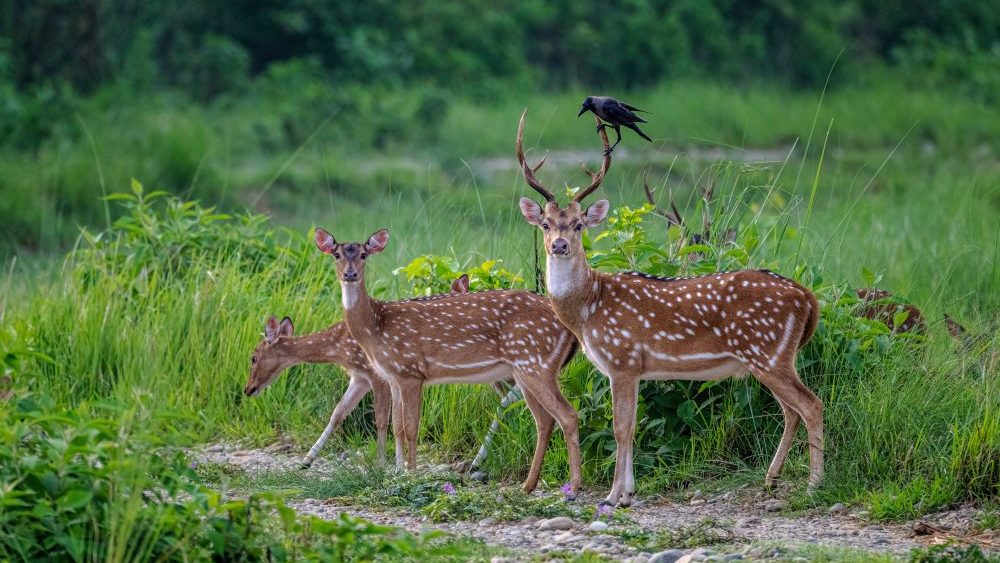
What you’re likely to see: The Sariska landscape is strikingly beautiful — rocky ridges, dry riverbeds, ancient temples inside the forest. Peacocks are everywhere. Langur troops move through the trees constantly. Nilgai and chital appear regularly. Leopard sightings are more common than tiger at present, and a leopard in the early morning light of these Aravalli hills is a sighting that needs no apology.
The day-night combination: The natural rhythm of an Astroport Sariska stay works beautifully — morning wildlife safari, afternoon rest and daytime astronomy workshops, evening telescope session under a dark sky. It is genuinely one of the most complete single-destination weekends available within a five-hour drive of Delhi.
Other Things to Do Around Sariska
Bhangarh Fort — The Most Atmospheric Ruins in Rajasthan
35 km from Sariska, Bhangarh is a 17th-century fortified town in a state of elaborate, largely intact ruin. The Archaeological Survey of India restricts entry after sunset — not for supernatural reasons, whatever the popular mythology says, but for safety given the scale of the unlit ruins. During the day, it is one of the most atmospheric historical sites in Rajasthan: concentric walls, a step-well, the Gopinath temple still standing, and the royal palace at the rear of the complex with its views over the surrounding agricultural land.

Allow 2–3 hours. Go early in the morning when the light is low and the site is quiet. By 10 AM in peak season it gets crowded with day-trippers from Jaipur.
Siliserh Lake — The Palace on the Water
18 km from Alwar, Siliserh Lake is a 19th-century artificial reservoir built by the Maharaja of Alwar. The lake palace — now a RTDC hotel — sits at the water’s edge and looks out over a reservoir that fills the valley between the Aravalli hills. Boating is available. The sunset from the palace terrace is excellent.
Worth a 2-hour afternoon stop, particularly on the way back from the reserve toward Alwar before the drive to Delhi.
Alwar City — The Rajput Heritage Town
23 km from Sariska, Alwar is a proper Rajasthani heritage city with a palace, museum, city fort, and old bazaar worth half a day. The Alwar City Palace museum holds an extraordinary collection of arms, manuscripts, howdahs, and royal photographs. The Bala Quila fort above the city has commanding views over the Aravalli landscape.
Astrophotography at Sariska — Practical Guide
If you’re bringing a camera, Sariska offers conditions that are genuinely exceptional for astrophotography by Indian standards. The Bortle 3–4 sky, combined with Rajasthan’s dry air and the absence of significant foreground light pollution, means the Milky Way photographs well even with basic equipment.
Camera settings starting point for the Milky Way:
- ISO: 1600–6400 (start at 3200, adjust for noise)
- Aperture: As wide as your lens allows (f/1.8 or f/2.8 ideal; f/4 manageable)
- Shutter speed: 15–25 seconds (the 500 rule: 500 ÷ focal length = maximum seconds before star trails appear)
- White balance: 3800–4200K for accurate star colours
- Focus: Manual, set to infinity, check by zooming in on a bright star on your live view
Best time to shoot the Milky Way galactic core: Visible from April to October. From November to March, the core is below the horizon but winter constellations like Orion are spectacular subjects. Plan to start setup around 9 PM, giving your eyes 30 to 45 minutes to fully dark-adapt before serious shooting. The hours between 11 PM and 2 AM offer the most stable atmospheric conditions.
Astroport Sariska offers astrophotography workshops as part of their program — camera settings, composition guidance, and post-processing basics. Bring your camera body with a wide-angle lens (24mm or wider is ideal), a sturdy tripod, and a remote shutter release.
Practical Tips for Your Sariska Stargazing Trip
Book around the new moon. This is more important than the season. A full moon night at Sariska will show you fewer stars than a new moon night almost anywhere rural. Check the lunar calendar before booking.

Arrive with enough time before dark. If you’re doing a day visit for the evening session, leave Delhi by 2 PM at the latest. If staying overnight, arriving by noon gives you time to settle, do a safari, and be ready for the stargazing session without rushing.
Dark adaptation is non-negotiable. Once the session begins, avoid checking your phone with screen brightness on. Even 5 seconds of bright screen exposure resets 20 minutes of dark adaptation. Dim your phone screen to minimum brightness or switch it off.
Dress for cold, not for the afternoon temperature. Even in April and October, Rajasthan nights drop significantly after 10 PM. The astronomy session runs late — carry a proper fleece or jacket regardless of what the afternoon temperature suggested.
Carry cash for Alwar. While Astroport and larger properties accept cards, smaller dhabas and roadside stops en route are cash-based. Stock up in Delhi or at a Gurgaon ATM on the way.
Wildlife safari permits need advance booking. The Rajasthan Forest Department’s Sariska safari slots fill up on weekends. Book permits at least 1 week in advance online — walk-in availability is not reliable on weekends.
Do the Bhangarh Fort visit in the morning. The light is better, the site is quieter, and you’ll have the afternoon for the safari before the stargazing session in the evening. This creates a near-perfect 2-day Sariska itinerary.
1-Night Itinerary: The Complete Sariska Weekend
Day 1 — Drive, Ruins, Safari, Stars
Leave Delhi by 7 AM. Drive via NH-48 — comfortable 4-hour drive. Stop briefly at Bhangarh Fort en route (35 km detour from the main highway toward Sariska — GPS it). Arrive Astroport Sariska or your chosen property by 2 PM. Check in. Afternoon safari at Sariska Tiger Reserve (book in advance: 3–6:30 PM slot). Return by 7 PM. Dinner at the resort. As darkness falls, join the astronomy session — constellation orientation, Milky Way observation, telescopes. Saturn’s rings. Jupiter’s moons. The Orion Nebula. Stay out until midnight or until you’re cold enough that the cottage bed wins.
Day 2 — Dawn, Lake, Drive
Wake before sunrise — the Aravalli forest at first light has its own quality of stillness. Morning walk or optional early safari slot. Breakfast. Drive to Siliserh Lake (18 km from Alwar) for a 90-minute stop — boating if available, the palace terrace, the reservoir light. Continue to Alwar for lunch and a brief stop at the City Palace museum if time allows. Drive back to Delhi via NH-48. Arrive Delhi by 6–7 PM depending on departure time.
Budget Breakdown (Per Person, 1 Night)
| Expense | Budget option | Mid-range (Astroport) |
|---|---|---|
| Accommodation (1 night, incl. meals) | ₹1,500–3,000 (RTDC Tiger Den) | ₹6,000–10,000 |
| Day visitor stargazing session | ₹1,200–1,500 | Included in stay |
| Safari permit + jeep | ₹800–1,200 | ₹800–1,200 |
| Bhangarh Fort entry | ₹50–100 | ₹50–100 |
| Fuel / cab Delhi–Sariska return | ₹1,500–2,000 per vehicle | ₹1,500–2,000 per vehicle |
| Total per person (sharing costs) | ₹3,500–6,000 | ₹9,000–14,000 |
Frequently Asked Questions
Is Sariska the best stargazing spot near Delhi? For a combination of sky darkness, professional infrastructure, wildlife, and accessibility, Sariska is the strongest single option within a 5-hour drive of Delhi. Other dark sky spots exist — parts of Rajasthan’s Thar Desert are darker — but they require significantly longer drives and lack the organised astronomy experience that Astroport provides.
Do I need any astronomy knowledge to enjoy the experience? None. The sessions are designed specifically for beginners. The astronomer explains everything from the basics. Children regularly attend and the format is interactive and accessible at every level.
Can I visit Astroport Sariska without staying overnight? Yes. Day visitor passes for the evening stargazing session are available at approximately ₹1,200–1,500 per person. You attend the session and drive back to Delhi the same night — a long day but entirely possible.
What is the best time of year for Sariska stargazing? October to March for the clearest, driest skies and best atmospheric conditions. October, November, and February are particularly recommended — clear, cold, low humidity, and some of the finest winter constellations visible.
Is Sariska safe? The resort premises are secure with 24-hour staff. The wider Sariska area is a forest reserve — wildlife is present, which is part of the appeal, but the organised safari structure and resort setting make this a genuinely safe destination. Many solo travellers, including women, visit regularly.
How far is Bhangarh from Sariska? 35 km — approximately 50–60 minutes by road. Easily combined as a day excursion or as a stop on the way from Delhi.
Can children attend the stargazing sessions? Yes. Children typically enjoy the telescope experience enormously. The sessions run late (starting 8–9 PM), so consider whether younger children can stay up. Daytime activities including the pool and farm programs are available for children who can’t manage late nights.
Nearby Destinations to Combine with Sariska
Alwar (23 km): Rajput heritage city with palace, museum, and old bazaar. A natural extension for history-interested travellers.
Bhangarh Fort (35 km): 17th-century atmospheric ruins — go in the morning before crowds arrive.
Siliserh Lake (42 km via Alwar): 19th-century lake palace, boating, peaceful afternoon stop.
Neemrana Fort Palace (100 km toward Delhi): 15th-century fort-hotel on the Delhi-Jaipur highway. Break the return journey with a heritage night here and you have a 2-night itinerary that covers dark skies, wildlife, and Rajput heritage across one extended weekend.
Shekhawati (150 km from Sariska): The painted haveli region of Rajasthan — Mandawa, Nawalgarh, Fatehpur. Combine with Sariska for a proper Rajasthan-without-Jaipur circuit.
Planning your Sariska stargazing trip? Drop your questions in the comments — happy to help plan the specifics.
Part of our Delhi Weekend Getaways series: 12 Best Offbeat Places Near Delhi Within 500 km — Sariska is one of twelve destinations featured.
More from Travel Thrive Hub: Lansdowne Travel Guide · Dhanaulti Travel Guide · Tirthan Valley Guide ·