Nestled in the Chanakyapuri area of New Delhi, Malcha Mahal stands as a historic structure steeped in mystery and royal legacy. You are about to uncover the fascinating story behind this 14th-century hunting lodge.
Built in 1325 during the reign of Firoz Shah Tughlaq, this once-grand hunting retreat has transformed into what many now consider one of India’s most haunted locations, shrouding its history in an aura of intrigue.

As you delve into the story of Malcha Mahal, you’ll discover the tragic tale of Begum Wilayat Mahal and the mysterious circumstances surrounding the palace’s most recent inhabitants.
Key Takeaways
- Discover the historical significance of Malcha Mahal as a 14th-century hunting lodge.
- Uncover the tragic story of Begum Wilayat Mahal and its connection to the palace.
- Learn about the supernatural legends that have made Malcha Mahal a compelling destination.
- Explore the transformation of Malcha Mahal from a royal retreat to a haunted location.
- Find out why Malcha Mahal continues to captivate visitors and historians alike.
The Mysterious Legacy of Malcha Mahal
In the modern landscape of Delhi, Malcha Mahal emerges as a fascinating enigma, its ancient stones whispering tales of yore. You are drawn into a world where history and mystery blend seamlessly, creating an irresistible allure. The story of Malcha Mahal is not just about its architectural grandeur but also about the people who once inhabited it, leaving behind a legacy shrouded in mystery.
A 14th Century Hunting Lodge in Modern Delhi
Malcha Mahal, built during the reign of Firoz Shah Tughlaq in the 14th century, served as a hunting lodge for the royal family. You can almost visualize the lush forests surrounding it, teeming with wildlife, as the monarchs and their entourage hunted and enjoyed the luxuries of nature. The structure stands as a testament to the architectural prowess of the era, with its robust walls and intricate designs.
As you explore the history of Malcha Mahal, you’ll discover that its significance extends beyond its original purpose. It has witnessed the rise and fall of dynasties, the transformation of the landscape, and the evolution of the city around it. Today, it stands as a relic of the past, a reminder of the rich cultural heritage that Delhi embodies.
The Mystery That Captivates Visitors
The true mystery of Malcha Mahal lies not just in its ancient walls but in the extraordinary story of its final inhabitants—a family claiming royal descent who lived in self-imposed isolation. You might be intrigued by Begum Wilayat Mahal, who claimed to be a descendant of Wajid Ali Shah, the last Nawab of Awadh, and her family’s tale of struggle and resilience.
As you delve deeper into their story, you’ll find that what draws people to this narrative is the dramatic contrast between their alleged royal status and the desperate conditions they lived in. The family’s determination to maintain their royal bearing, despite the absence of basic amenities and their reclusive lifestyle, adds to the mystique. The mystery deepens with questions about their true identity and whether they were genuine royalty or creators of an elaborate fiction.
“The story of Malcha Mahal is a poignant reminder of the human spirit’s capacity to persevere in the face of adversity,” a historian once noted. This quote encapsulates the essence of the Mahal’s mystique, a blend of history, mystery, and the indomitable will of its inhabitants.
The Historical Significance of Malcha Mahal
As you step into the historic Malcha Mahal, you’re not just entering a structure; you’re stepping into a piece of Delhi’s rich history. This monument, built during the Tughlaq dynasty, holds a special place in the annals of Indian history.
Firoz Shah Tughlaq’s Hunting Retreat
Firoz Shah Tughlaq, the ruler who commissioned Malcha Mahal in the 14th century, intended it as a hunting retreat. The strategic location of this place was chosen for its proximity to the hunting grounds and its elevated position, which offered both protection and panoramic views.
The monument may have been used for protection in the last days of Mughal rule, as this was a common practice when power was loose and many bandits were active. This historical context adds a layer of depth to the significance of Malcha Mahal, highlighting its role beyond being just a royal retreat.
- The construction of Malcha Mahal reflects the architectural preferences of the Tughlaq period, characterized by the use of local stone and a focus on durability.
- Its design served multiple purposes, including as a refuge for villagers during times of unrest, underscoring its importance to the local community.
Architectural Features of the Mahal
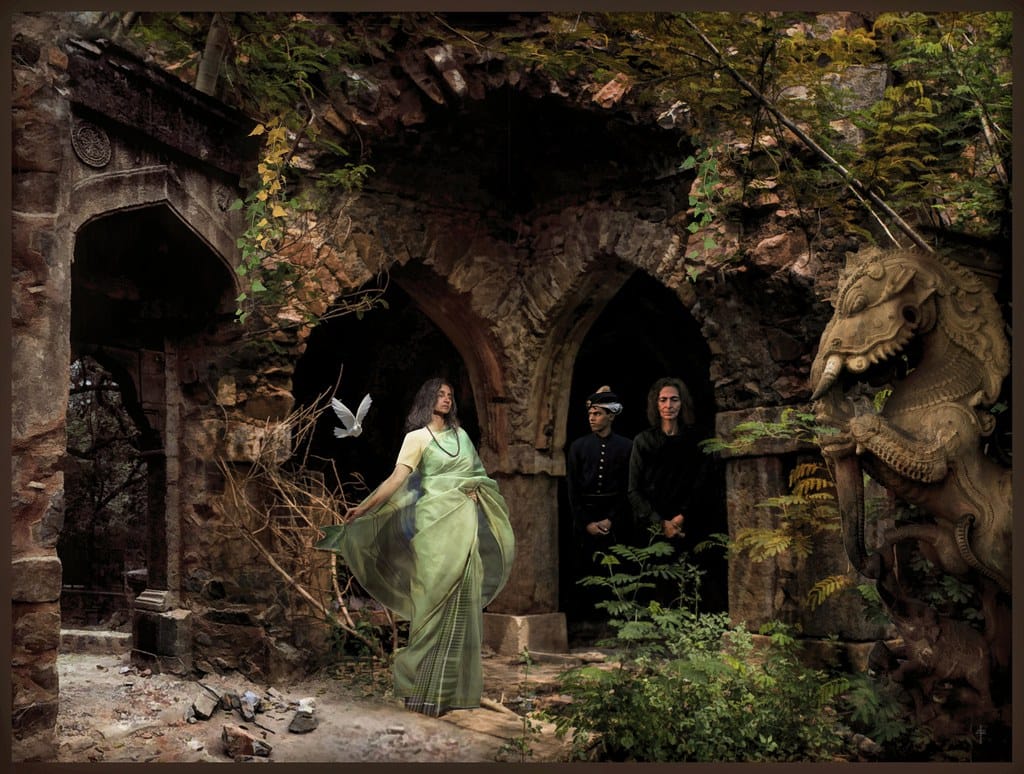
Despite centuries of neglect, Malcha Mahal still displays distinctive architectural elements that characterize the Tughlaq period. You’ll notice the thick walls, sloping buttresses, and arched entrances that have withstood the test of time.
The structure was designed with both practical and aesthetic considerations in mind. The thick walls provided insulation against Delhi’s extreme temperatures, while the arched doorways and windows created an imposing yet elegant appearance.
The use of local stone in the construction of Malcha Mahal demonstrates the Tughlaq dynasty’s preference for sturdy, functional architecture. Over time, the place served multiple purposes, adapting to the needs of the community.
- The palace was strategically built on elevated ground, offering both protection and panoramic views of the surrounding hunting grounds.
- The building materials used reflect the architectural style of the era, with a focus on durability and functionality.
The Royal Connection: Begum Wilayat Mahal
The tale of Begum Wilayat Mahal is one of resilience and determination, as she fought for her royal heritage in post-independence India. You are about to uncover the intricacies of her story, which is as fascinating as it is inspiring.
The Self-Proclaimed Descendant of Awadh Royalty
Begum Wilayat Mahal claimed to be a descendant of the royal family of Awadh, a region in northern India known for its rich cultural heritage and historical significance. Her assertion was not just a claim; it was a deeply ingrained identity that guided her actions and decisions. As you explore her background, you’ll find that her connection to the royal family was a pivotal aspect of her life.
She was not just any claimant; she was accompanied by her children, Prince Ali Raza and Princess Sakina, who were equally invested in their supposed royal lineage. Together, they formed a family unit that was determined to assert their royal status, despite the changing political landscape of India.
Nine Years of Protest at New Delhi Railway Station
One of the most remarkable aspects of Begum Wilayat Mahal’s story is her nine-year protest at the New Delhi Railway Station from 1975 to 1984. You might be astonished to learn that she lived in the waiting room, setting up a makeshift royal court complete with Persian carpets and antique furniture. This was not just a protest; it was a statement of her royal identity and a demand for recognition.
Her determination was unwavering; she refused all offers of ordinary housing, insisting that only a residence befitting her royal status would be acceptable. This protest became a media sensation, drawing attention to her cause and the plight of her family.
The protest finally yielded results in 1985 when the Indian government offered her Malcha Mahal, though the reasons behind this decision remain debated. Was it a recognition of her royal claims, or was it a measure to end an embarrassing situation? Regardless, Begum Wilayat Mahal’s determination had changed the course of her life and that of her children.
| Year | Event | Significance |
|---|---|---|
| 1975-1984 | Begum Wilayat Mahal’s protest at New Delhi Railway Station | Media sensation, drew attention to her royal claims |
| 1985 | Indian government offers Malcha Mahal to Begum Wilayat Mahal | Recognition of her claims or resolution of an embarrassing situation |
The Government’s Decision: Allotment of Malcha Mahal
As you explore the story of Malcha Mahal, you’ll discover that the government’s allotment of the palace to the royal family was a complex issue. In 1985, the government made a significant decision regarding the historical monument.
How the Royal Family Acquired the Palace
The government’s decision to allocate Malcha Mahal to Begum Wilayat Mahal and her family was seen as a resolution to a longstanding issue. The family had been claiming their ancestral rights over the property for years. Upon acquiring the palace, the family moved in, despite initial reservations about its condition.
You might find it interesting that Begum Wilayat Mahal expressed her disappointment with the state of Malcha Mahal in handwritten notes. She lamented issues such as leaking roofs and the lack of basic amenities like electricity and running water. The condition of the palace was far from what they had expected.
Controversies Surrounding the Allocation
The allocation of Malcha Mahal to the royal family was not without controversy. Many viewed this decision as inadequate, considering it a mere gesture towards addressing the family’s claims for their ancestral properties. Archaeological experts questioned the use of a historical monument as a private residence, especially given the lack of provisions for its maintenance and preservation.
- The government’s decision was met with mixed reactions—some saw it as a recognition of royal claims, while others viewed it as a publicity stunt.
- The controversy deepened over concerns about the historical monument’s preservation and the family’s ability to maintain it.
- Begum Wilayat Mahal described Malcha Mahal as a “living tomb,” highlighting the stark reality of its dilapidated state.
- Despite the controversies, the family transformed Malcha Mahal into their isolated kingdom, complete with warning signs threatening trespassers.
The allocation raised important questions about the government’s responsibility toward historical preservation and addressing the claims of former royal families. The decision had far-reaching implications, not just for the royal family but also for the preservation of historical monuments in the country.
“The government’s decision was a complex mix of historical preservation and political expediency.”
Life in Malcha Mahal: The Royal Family’s Struggles
The history of Malcha Mahal is intertwined with the struggles of the family who lived there, a narrative of grandeur and neglect. As you explore the intricacies of their life within the Mahal’s walls, you uncover a story of contrasts.
Living Without Basic Amenities
Living in Malcha Mahal was a challenging experience for Begum Wilayat Mahal and her family. Despite their royal claims, they had to endure the harsh realities of living without basic amenities. The Mahal, though historically significant, was in a state of disrepair, lacking the comforts that one might associate with royal living.
You can imagine the difficulties they faced as they navigated their life in a structure that was more suited to a bygone era. The absence of modern conveniences made their daily life a struggle. Over the years, the family’s living conditions remained rudimentary, a far cry from the luxury they claimed as their heritage.
The Family’s Reclusive Lifestyle
The family’s reclusive nature was one of the most striking aspects of their life in Malcha Mahal. They rarely ventured out, and when they did, it was often to interact with foreign correspondents, whom they seemed to prefer over local visitors. This selective engagement with the outside world added to the mystique surrounding their lives.
As the years passed, the family’s isolation deepened. They occupied separate areas within the Mahal, each consumed by their own disappointments and memories. The once-grand structure became a backdrop for their reclusive existence, a testament to their detachment from the world around them.
You might find it intriguing that their isolation was self-imposed, marked by threatening signs that warned intruders of dire consequences. This aura of mystery and danger surrounded their dwelling, further isolating them from the community.
The Tragic End of Begum Wilayat Mahal
As you delve into the story of Malcha Mahal, the tragic tale of Begum Wilayat Mahal stands out as a poignant reminder of the human cost of royal ambition. Her story is intricately linked with the history of the Mahal, and understanding her fate provides a deeper insight into the lives of those who called this place home.
The Dramatic Suicide in 1993
In 1993, Begum Wilayat Mahal’s life took a tragic turn when she ended her life by swallowing crushed diamonds, a dramatic act that shocked those who knew her story. This event was the culmination of years of struggle and hardship for the Begum, who had fought tirelessly for recognition of her royal lineage.
The circumstances surrounding her suicide were as tragic as they were dramatic, leaving behind a family torn apart by grief.

Impact on the Remaining Family Members
The aftermath of Begum Wilayat Mahal’s suicide saw her children, Prince Ali Raza and Princess Sakina, left to continue their isolated existence within the crumbling walls of Malcha Mahal. The siblings became even more reclusive, rarely venturing beyond the boundaries of their domain and becoming increasingly dependent on each other.
Despite their isolation, they maintained their royal bearing and continued their mother’s quest for recognition, even as their circumstances grew increasingly desperate. The trauma of their mother’s death by swallowing crushed diamonds left a lasting impact, with reports suggesting they kept her memory alive through daily rituals.
| Family Member | Life After Begum Wilayat Mahal’s Death |
|---|---|
| Prince Ali Raza | Continued to live in Malcha Mahal until his death on September 2, 2017. |
| Princess Sakina | Lived with her brother, maintaining their royal traditions in isolation. |
Their story is a poignant reminder of the complex and often tragic history of India’s royal past, with Malcha Mahal standing as a testament to their enduring legacy.
Prince Ali Raza: The Last Resident of Malcha Mahal
The story of Prince Ali Raza is one of resilience and dignity, as he lived out his days within the crumbling walls of Malcha Mahal. As the last living member of his family, he held on to the memories of his lineage with pride.
Life After His Mother’s Death
After Begum Wilayat Mahal’s tragic death in 1993, Prince Ali Raza continued to live in Malcha Mahal, alongside his sister Sakina. The loss was profound, but Prince Ali Raza maintained the family’s dignity, adhering to the royal protocols they had followed for years. As time passed, however, Sakina’s death (on an unknown date) left Prince Ali Raza as the sole survivor of their claimed royal lineage.
You can imagine the poignant scene: Prince Ali Raza, dressed formally, receiving the rare visitor, insisting on proper etiquette, and refusing any charity that might compromise his status. His life was a testament to the strength of the human spirit, as he survived on minimal resources and the occasional kindness of neighbors.
- He continued to uphold the family’s royal traditions, even in isolation.
- His determination to maintain dignity, despite the hardships, is a remarkable aspect of his story.
- The prince’s life was marked by a deep sense of responsibility towards his family’s legacy.
The Lonely Final Years
In his final years, Prince Ali Raza lived a life of increasing solitude. With Sakina gone, he was alone in the vast, decaying palace, with only his memories to keep him company. Despite his frailty and lack of access to proper medical care, he refused to leave Malcha Mahal, choosing instead to guard it until the end.
Reports from those who occasionally visited him paint a picture of a man clinging to his dignity, even as his physical health deteriorated. Prince Ali Raza’s story is a powerful reminder of the human capacity for resilience and the importance of legacy.
Key aspects of his final years include:
- His isolation was nearly complete, with rare interactions with the outside world.
- Despite his condition, he maintained formal attire and protocols for the few visitors he received.
- His death on September 2, 2017, marked the end of an era for Malcha Mahal.
Today, Malcha Mahal stands empty, a testament to the life and legacy of Prince Ali Raza, the last resident of this once-grand palace.
The Haunted Reputation of Malcha Mahal

As you explore Malcha Mahal, you’ll uncover a plethora of stories that contribute to its haunted reputation. Local legends suggest that the spirits of Begum Wilayat and her family continue to linger in the vicinity, adding an air of mystery that captivates those who dare to explore its ruins.
Paranormal Experiences Reported by Visitors
Visitors to Malcha Mahal often report strange occurrences, which have become an integral part of the palace’s haunted story. Many claim to have experienced inexplicable phenomena, such as unexplained noises, movements, or apparitions. The most persistent story claims that visitors who disrespect the site or mock the family’s royal claims experience bad luck or sudden illness—a supernatural extension of the warnings that the family posted during their lifetime.
The isolation of the palace within the Ridge Forest at night adds to the haunted atmosphere. Natural sounds of the woods combine with the creaking of the old structure to create an eerie soundscape that many find deeply unsettling. Local guides often share stories of the Begum’s ghost being seen near the spot where she reportedly took her life, still adorned in royal finery and appearing to be searching for something among the ruins.
Local Legends and Supernatural Tales
The rich tapestry of supernatural tales that have developed around Malcha Mahal is fascinating. Local legends suggest that the spirits of Begum Wilayat and her children continue to guard their former home. The haunted reputation has been amplified by media coverage and ghost-hunting television shows that have featured Malcha Mahal, cementing its status as a destination for those interested in the paranormal.
You’ll be captivated by the stories of people who have visited Malcha Mahal and experienced something inexplicable. These accounts have contributed significantly to the palace’s haunted legacy, making it a place of intrigue for many. As the story of Malcha Mahal continues to unfold, its haunted reputation remains an essential part of its history and appeal.
The Truth Behind the Royal Claims
As you explore the story of Malcha Mahal, you’ll find that the truth behind the royal claims is more complex than initially meets the eye. The narrative of Begum Wilayat Mahal and her family claiming to be descendants of the royal house of Awadh has been a subject of much debate and controversy.
Investigative Revelations About the Family
Investigative journalists have uncovered evidence that challenges the legitimacy of Begum Wilayat Mahal’s claims. According to reports, the Royal House of Awadh, the authentic descendants of Wajid Ali Shah in Lucknow, disputes the family’s assertions of royalty. They argue that Begum Wilayat Mahal and her family were not recognized in the official genealogical records of the royal house.
- The investigation revealed that the family’s claims were not supported by documented evidence, raising questions about their true lineage.
- Representatives of the legitimate royal family expressed frustration over the international attention received by the Malcha Mahal family, while authentic royal descendants struggled for recognition.
- Detailed genealogical records maintained by established royal families showed no link between Begum Wilayat Mahal and the royal lineage she claimed.
This revelation has significant implications, suggesting that the family’s royal persona may have been fabricated. The New York Times investigative report highlighted these discrepancies, further fueling the controversy.
Reactions from the Authentic Royal House of Awadh
The authentic Royal House of Awadh has strongly objected to Begum Wilayat Mahal’s claims, pointing out inconsistencies in her narrative regarding titles, family relationships, and historical events. These objections are backed by the detailed genealogical records that are characteristic of royal families.
Despite these objections, the story of Malcha Mahal continues to captivate many. The family’s dramatic narrative has resonated with people, reflecting India’s complex relationship with its royal past. The royalty associated with Malcha Mahal has become a part of its allure, regardless of the authenticity of the claims.
Over the years, the Malcha Mahal family’s story has garnered significant attention, overshadowing the struggles of the authentic royal descendants. This phenomenon highlights the enduring appeal of royal narratives and the complexities of historical legacy.
Current State of Malcha Mahal
As you explore the story of Malcha Mahal, you’ll find that its current state is a complex mix of neglect and potential. The 14th-century hunting lodge, once a symbol of royal grandeur, now stands as a testament to the challenges faced by historical monuments in modern Delhi.
Deterioration and Abandonment
Malcha Mahal, under the jurisdiction of the Delhi government’s Department of Archaeology, has seen a significant decline in its condition over the years. The lack of maintenance and basic amenities has led to a state of disrepair, making it challenging for visitors to fully appreciate its historical significance. The government has recognized the mahal’s historical importance, but bureaucratic hurdles and funding issues have delayed comprehensive restoration plans.
The site’s abandonment has not only affected its physical state but also its cultural significance. As a result, efforts are being made to revive its former glory, focusing on both its historical integrity and its potential as a cultural heritage site.
Conservation Efforts and Proposals
In recent years, conservation efforts for Malcha Mahal have gained momentum. The Indian National Trust for Art and Cultural Heritage (INTACH) has submitted a proposal to the Delhi government for its restoration. The proposed plan aims to stabilize the structure while preserving its historical integrity, addressing urgent structural issues before they lead to the complete collapse of this important monument.
One of the significant challenges in these conservation efforts is balancing preservation with accessibility. The state and the Delhi government are working together to determine how to make the site safe for visitors while maintaining its authentic character and historical significance. Additionally, the conservation plan must comply with a Delhi High Court directive that restricts construction activities within the Central Ridge Forest area, requiring any restoration work to address environmental concerns as well as historical preservation.
The collaboration between the Indian National Trust for Art and Cultural Heritage and the Delhi government’s Department of Archaeology represents a crucial step towards preserving Malcha Mahal’s cultural heritage and art cultural heritage. By protecting this historical monument, the government can promote trust art cultural values and ensure that future generations can appreciate this piece of history.
Visiting Malcha Mahal Today
Steeped in history and shrouded in mystery, Malcha Mahal offers a unique experience for visitors. This 14th-century hunting lodge, now a relic of Delhi’s past, continues to captivate people with its intriguing story.
Location and Accessibility
Malcha Mahal is located in the Malcha village, one of the historical villages around Raisina Hill. The area was significantly altered during the construction of New Delhi in the 1920s, particularly with the construction of the Viceroy’s House, now known as the Rashtrapati Bhavan. To visit this place, you need to navigate through the forest paths that lead to the Mahal.
The location, while somewhat remote within Delhi, is accessible by various means of transportation. Understanding its location is key to planning your visit.
Nearest Metro Stations and Transportation Options
To visit Malcha Mahal, the nearest metro stations are the Jahangirpuri Metro Station and the Rohini Sector 22, 23 Metro Station, though the latter is a bit farther. From these stations, you can hire a taxi or an auto-rickshaw to reach Malcha village. The journey involves navigating through local roads and potentially some walking through forest paths.
It’s advisable to check the current transportation options and plan your route in advance to ensure a smooth journey to this place.
Best Time to Visit
The best time to visit Malcha Mahal is during the winter months, from November to February, when Delhi’s weather is pleasant, and the forest paths are less overgrown. Morning visits between 8:00 AM and 11:00 AM are ideal for photography and experiencing the serene atmosphere.
Avoid visiting during the monsoon season (July-September) due to muddy and slippery paths, and potential instability of the structure. If you’re interested in the “haunted” aspect, late afternoon visits can create a more eerie atmosphere, but be cautious of navigating the forest paths before dark.
Understanding the best time to visit enhances your experience at this historical place, making it a memorable visit for people interested in history and mystery.
Can You Enter Malcha Mahal?
If you’re intrigued by the mystique of Malcha Mahal, you might wonder if it’s possible to step inside this enigmatic structure. The Delhi government has been exploring ways to capitalize on its historical and paranormal significance, making it a point of interest for many.
Official Access Restrictions
The current state of Malcha Mahal imposes certain restrictions on visitors. Due to its dilapidated condition and the government‘s efforts to preserve the site, access is limited. The structure is under the supervision of the Department of Archaeology and the Forest Department, which regulates visits.
You should be aware that the interior spaces may be off-limits due to safety concerns. The fragile state of the Mahal necessitates cautious management of tourism to prevent further deterioration.
Guided Tours and Special Permissions
While direct access might be restricted, there are alternative ways to experience Malcha Mahal. Organized heritage walks conducted by Delhi government-approved organizations like Delhi Tourism or INTACH occasionally include the site in their tours. These guided visits provide historical context and ensure a safe and respectful experience.
For researchers, historians, or journalists, it’s possible to obtain special permission from the relevant departments for a more in-depth exploration. However, this requires formal applications and approval, indicating a genuine professional interest in the site.
As the government continues to explore the potential of “haunted heritage walks,” there’s a growing interest in promoting Malcha Mahal as a tourist destination. This initiative aims to balance the preservation of the site with the public’s desire to experience its mysterious atmosphere.
Ticket Information and Entry Fees
Exploring the abandoned grandeur of Malcha Mahal requires some planning, especially when it comes to understanding the entry fees. As you prepare to visit this historical site in New Delhi, you’ll need to know that there isn’t a straightforward ticketing process.
Current Pricing Structure
Since Malcha Mahal is not a regularly open tourist site, there is no official ticketing system or entry fee. The site is managed by the government, and access is restricted due to its location in a sensitive diplomatic zone. However, you can participate in guided heritage walks organized by Delhi Tourism or heritage organizations like INTACH, which occasionally include Malcha Mahal in their itineraries.
These heritage walks usually require advance registration and may involve signing liability waivers, especially if the walk includes protected forest areas. It’s essential to check with the organizers for specific requirements and to book your spot in advance.
Booking Process and Requirements
To visit Malcha Mahal as part of a heritage walk, you’ll need to contact the organizing body directly to inquire about upcoming walks and to register. If you’re planning to visit for a research or documentary project, you should prepare a formal request letter to the Delhi government’s Department of Archaeology, outlining your purpose, planned dates, and the scope of your visit.
Be prepared to show government-issued photo identification if requested by forest officials or police personnel who patrol the area. This is a precautionary measure due to the site’s location in the sensitive diplomatic zone of New Delhi.
Exploring the Surroundings: Malcha Village and Ridge Forest
Malcha Mahal is not just a historical monument; it’s a gateway to the historical village of Malcha and the Ridge Forest. As you explore the surroundings, you’ll discover a unique blend of history, culture, and natural beauty.
The Historical Village of Malcha
The village of Malcha has a rich history that dates back centuries. It’s a place where traditional Indian village life continues to thrive amidst the bustling city of New Delhi. As you walk through the village, you’ll notice the old-world charm that still lingers in the air.
Historical Significance: Malcha village has been a part of New Delhi’s landscape for a long time, with its history intertwined with that of Malcha Mahal. The village offers a glimpse into the past, with its old structures and traditional ways of life.
Local Culture: The village is home to people who continue to live in harmony with the historical monument and the surrounding forest. You can experience the local culture firsthand by interacting with the villagers and learning about their customs and traditions.
Natural Beauty of the Central Ridge Forest
The Central Ridge Forest surrounding Malcha Mahal is a haven for nature lovers. This urban forest is one of the “green lungs” of New Delhi, providing a much-needed escape from the city’s chaos. As you explore the forest paths, you’ll be surrounded by the sounds of birds chirping and leaves rustling.
Biodiversity: The forest is home to a wide variety of flora and fauna, including nilgai (blue bull), jackals, monitor lizards, and over 200 species of birds. The forest represents the northernmost extension of the ancient Aravalli Range, making it a unique geological feature.
Historical Structures within the Forest: As you explore the forest, you’ll come across historical structures like the 800-year-old dargah (Sufi shrine), which, according to local legend, has earthen pots that imprison malevolent spirits and djinns. The caretaker of the dargah still performs regular exorcisms, adding to the mystique of the place.
Visiting Malcha village and the Ridge Forest offers a unique experience, blending history, culture, and nature. It’s a place where you can step back in time and enjoy the serene beauty of the surroundings.
Capturing Malcha Mahal: Photography Tips
Malcha Mahal, with its rich history and mysterious aura, offers a unique subject for photographers. As you plan to capture its essence, consider the best angles, viewpoints, and lighting conditions to make your photos stand out.
Best Angles and Viewpoints
When photographing Malcha Mahal, the angle and viewpoint can significantly impact the outcome of your photos. To capture its grandeur, consider shooting from a low angle to emphasize the height and architectural details of the structure. The eastern façade, with its intricate carvings and ornate details, is particularly photogenic.
Experimenting with different vantage points can also yield interesting results. For instance, capturing the palace from a distance, surrounded by the lush greenery of the Ridge Forest, can add context to your photos and highlight its isolation.
Lighting Considerations and Time of Day
The golden hours—shortly after sunrise and before sunset—provide the most flattering natural light for photographing Malcha Mahal. The warm glow on the sandstone structure during these times is truly captivating.
- Morning Light: Illuminates the eastern façade, highlighting architectural details and creating fewer harsh shadows than midday sun.
- Late Afternoon Light: Creates longer shadows and a more dramatic mood, especially as it filters through trees surrounding the structure.
- Monsoon Season: Overcast skies create softer, more diffused light ideal for capturing details without harsh shadows, though visiting may be more challenging due to weather conditions.
- Interior Rooms: Consider using HDR techniques or bracketing your exposures to capture the dynamic range between bright light streaming through openings and deep shadows in corners.
By understanding and leveraging these lighting conditions, you can significantly enhance the quality of your Malcha Mahal photos.
Conclusion: The Enduring Allure of Malcha Mahal
The story of Malcha Mahal is a complex tapestry woven from threads of history, mystery, and tragedy. As you explore the layers of this 14th-century hunting lodge, you uncover a narrative that is both captivating and heartbreaking.
Malcha Mahal’s history spans centuries, from its origins as a royal retreat to its later years as a residence for a family claiming royal lineage. The story of Begum Wilayat Mahal and her son Prince Ali Raza is particularly poignant, marked by their struggles and ultimate tragedy.
You’ve now discovered the multifaceted story of Malcha Mahal—a tale that weaves together medieval history, disputed royal claims, tragic personal narratives, and supernatural legends into one of Delhi’s most enduring mystery. The family‘s presence in the mahal for over thirty years adds a layer of complexity to its history.
What makes this crumbling hunting lodge so captivating is how it embodies larger themes in Indian history—the transition from monarchy to democracy, the fate of displaced royalty, and the complex relationship between historical preservation and modern development. As you reflect on the palace’s centuries-long journey, you gain insight into how places accumulate layers of meaning and significance through the storys we tell about them.
Whether you’re drawn to Malcha Mahal for its historyal significance, architectural features, supernatural reputation, or simply its atmospheric beauty in decay, its enduring allure lies in how it continues to raise questions rather than provide definitive answers—a mystery that invites each visitor to draw their own conclusions. The mahal remains a poignant reminder of India’s rich cultural heritage and the complexities surrounding identity and heritage in modern India.
As you conclude your exploration of Malcha Mahal, you’re left with a deeper understanding of its significance and the story it tells about Delhi’s past and present. The mahal’s legacy continues to captivate, a testament to the power of history and narrative in shaping our perceptions of the world around us.
FAQ
What is the history behind Malcha Mahal?
Malcha Mahal is a 14th-century hunting lodge built during the reign of Firoz Shah Tughlaq, a ruler of the Tughlaq dynasty. It was originally used as a royal hunting retreat.
Who was Begum Wilayat Mahal?
Begum Wilayat Mahal was a woman who claimed to be a descendant of the royal family of Awadh. She and her family were allotted Malcha Mahal by the government in 1985.
Why did Begum Wilayat Mahal protest at New Delhi Railway Station?
Begum Wilayat Mahal protested at New Delhi Railway Station for nine years, claiming that she was the rightful heir to the throne of Awadh and demanding recognition from the government.
What is the current state of Malcha Mahal?
Malcha Mahal is currently in a state of deterioration and abandonment. Despite its historical significance, it has not been well-maintained and is facing threats to its structural integrity.
Can visitors enter Malcha Mahal?
Officially, Malcha Mahal is not open to the public, and access is restricted. However, some guided tours and special permissions may be available under certain circumstances.
Is Malcha Mahal haunted?
Many people believe that Malcha Mahal is haunted, and there have been reports of paranormal experiences by visitors. Local legends and supernatural tales have contributed to its haunted reputation.
What is the significance of Prince Ali Raza?
Prince Ali Raza was the son of Begum Wilayat Mahal and the last resident of Malcha Mahal. He lived in the palace after his mother’s death and spent his final years in solitude.
Are there any conservation efforts for Malcha Mahal?
There have been some proposals and efforts to conserve Malcha Mahal, but so far, none have been successfully implemented. The Indian National Trust for Art and Cultural Heritage has shown interest in preserving the monument.
How can I visit Malcha Mahal?
To visit Malcha Mahal, you need to plan your trip to the Malcha Village and Ridge Forest area. The nearest metro stations and transportation options are available, and the best time to visit is during the day.
Read more: Attractions