Did you know that the Red Fort, or Lal Qila, is a testament to India’s rich history, standing proudly in the heart of New Delhi? Commissioned by Emperor Shah Jahan in 1639, this magnificent monument was constructed after he decided to shift his capital from Agra to Delhi.

You are about to step into a world of grandeur as you explore the fort‘s centuries-old stories and architectural marvels. Designed by Ustad Ahmad Lahori, the same architect behind the Taj Mahal, the Red Fort blends Persian influences with indigenous Indian elements, making it a significant part of India’s history.
Key Takeaways
- The Red Fort is a historic Mughal fort in Delhi, India.
- It was commissioned by Emperor Shah Jahan in 1639.
- The fort is a blend of Persian and Indian architectural styles.
- It served as the primary residence of Mughal emperors for nearly 200 years.
- The Red Fort is a powerful symbol of India’s struggle for independence.
The Magnificent Red Fort: A Symbol of India’s Heritage
The Red Fort, a majestic monument in the heart of Delhi, embodies the rich cultural heritage of India. As a heritage site, it attracts visitors from around the world, eager to experience its grandeur. You are about to discover why this fort is not just a historical monument but a living symbol of India’s struggle for independence and its rich Mughal legacy.
Why the Red Fort is Famous in India
The Red Fort is famous in India because it represents the country’s history and its struggle for Independence Day. Every year on August 15th, the Prime Minister of India hoists the national flag here, symbolizing the nation’s freedom. This tradition, started by Jawaharlal Nehru in 1947, continues to be a significant national event, broadcast across the country. The fort’s association with India’s independence and its recognition as a UNESCO World Heritage Site in 2007 have cemented its place in the hearts of Indians.
You can appreciate the historical significance of the Red Fort as it stands as a testament to the Mughal architecture that once flourished in India. The fort’s design, with its imposing walls and intricate structures, reflects the architectural prowess of the Mughal emperors who built it.
The Strategic Location and Layout
The Red Fort’s strategic location along the Yamuna River was chosen for its natural defense and royal views. The fort’s octagonal design, with its longer north-south axis, was a deliberate choice to maximize the use of space and to provide a robust defense mechanism. The walls of the fort, stretching over 2.41 kilometers, vary in height from 18 meters on the river side to 33 meters on the city side, making it an imposing structure.
You will notice that the fort’s layout was designed to serve as the epicenter of Mughal power and administration in Shahjahanabad (Old Delhi). Its location and design were crucial in establishing the fort as a symbol of Mughal architecture and imperial power.
The Rich History of Red Fort
With its imposing walls and intricate architecture, the Red Fort is more than just a relic of the past; it’s a living, breathing chronicle of India’s history. As you explore the fort, you’re walking through the annals of time, witnessing the rise and fall of empires, and experiencing the cultural richness that has defined the nation.
Shah Jahan: The Visionary Builder
Emperor Shah Jahan, the visionary behind the Taj Mahal, commissioned the construction of the Red Fort on May 12, 1639. The design, attributed to the renowned architect Ustad Ahmad Lahori, was a testament to the Mughal era’s grandeur. The fort’s construction began in the sacred Islamic month of Muharram in 1638 and took nearly a decade to complete, finally being finished on April 6, 1648. The Red Fort was not just a palace; it was the centerpiece of Shahjahanabad, the new capital city, showcasing the emperor’s ambition and architectural prowess.

From Mughal Glory to British Occupation
The Red Fort witnessed the zenith of Mughal glory and the subsequent decline of the empire. The fort suffered during Nadir Shah’s invasion in 1739, when priceless treasures, including the legendary Peacock Throne, were looted. The fort changed hands multiple times before the British seized control after the Indian Rebellion of 1857. The British dramatically altered the fort’s structures, using it as a military garrison, marking the beginning of a new era in the fort’s history.
| Period | Event | Significance |
|---|---|---|
| 1639-1648 | Construction of Red Fort | Establishment of Shahjahanabad |
| 1739 | Nadir Shah’s Invasion | Looting of treasures |
| 1857 | Indian Rebellion | British occupation |
Red Fort in Independent India
After India gained independence in 1947, the Red Fort became a symbol of the nation’s sovereignty. It was here that Prime Minister Jawaharlal Nehru hoisted the national flag on August 15, 1947, marking the beginning of a new era for India. Today, the Red Fort continues to be an important ceremonial site, hosting national events and celebrations, including Independence Day.
The Red Fort’s history is a testament to the rich cultural heritage of India, reflecting the country’s diverse past and its journey towards independence. As a historical monument, it continues to inspire and educate, offering a glimpse into the grandeur of the Mughal era and the significant events that have shaped the nation.
Architectural Marvels of the Red Fort
With its stunning blend of Persian, Timurid, and Indian styles, the Red Fort is an architectural marvel. As you explore the fort, you’ll discover the ingenuity and craftsmanship that went into its construction. The Red Fort’s architecture is not just a reflection of its historical significance but also a testament to the Mughal era’s grandeur and creativity.

The Imposing Walls and Gates
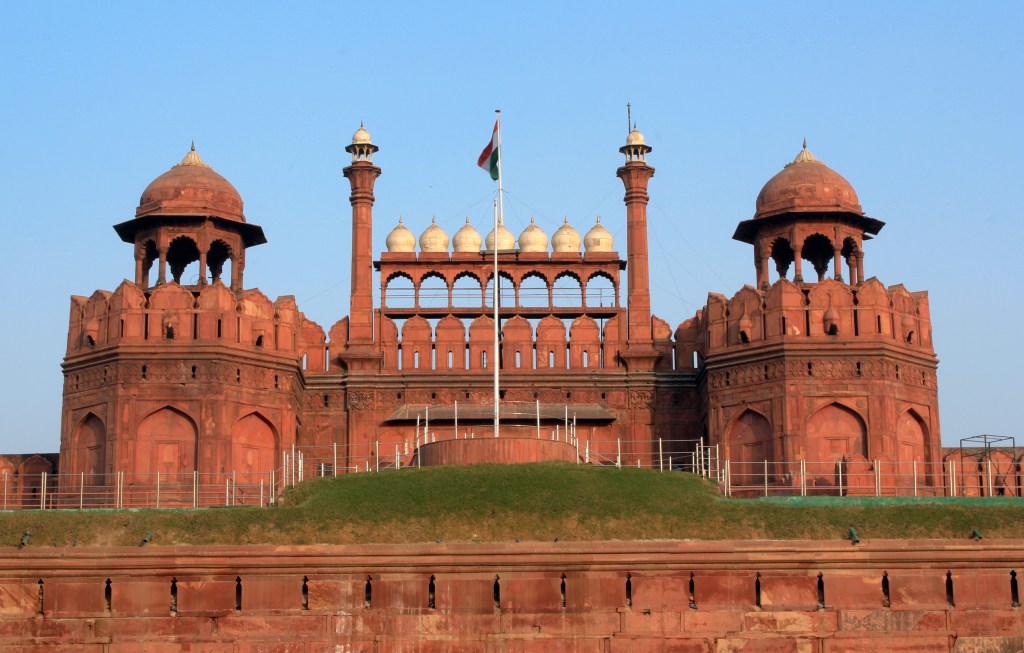
The Red Fort’s imposing walls, constructed from red sandstone, stretch over 2.4 kilometers, forming an irregular octagonal shape that once protected the imperial treasures within. The fort has two main gates: the Lahori Gate on the west and the Delhi Gate on the south. These gates are not only impressive in their architecture but also served strategic defensive purposes, welcoming visitors into the royal complex.
Key Features of the Walls and Gates:
- Red sandstone construction
- Strategic defensive features
- Impressive architecture
Diwan-i-Am: The Hall of Public Audience
Experience the grandeur of the Diwan-i-Am, a rectangular hall with nine graceful arches where the emperor would hear petitions from ordinary citizens seated on his elevated marble throne. The hall is three aisles deep, with a façade that exudes elegance and simplicity.
The Diwan-i-Am is a masterpiece of Mughal architecture, reflecting the era’s emphasis on public audience and justice.
Diwan-i-Khas: The Hall of Private Audience
Be awestruck by the exquisite Diwan-i-Khas, a highly ornamented pillared hall where the emperor met with nobility and dignitaries. The hall features a flat ceiling supported on engrailed arches, with the lower portion of its piers ornamented with floral pietra dura panels.
“The Diwan-i-Khas is a true marvel of white marble, intricately carved ceilings, and pietra dura floral panels, showcasing the zenith of Mughal craftsmanship.”
Other Notable Structures
Apart from the Diwan-i-Am and Diwan-i-Khas, the Red Fort houses several other notable structures, each with its unique architectural charm. These include various palaces, mosques, and other buildings that reflect the Mughal’s architectural prowess.
Inside the Red Fort Complex
As you step into the Red Fort Complex, you are transported to a world of Mughal grandeur and architectural splendor. The complex is home to numerous historical structures, each with its own unique story to tell.
Naubat Khana (Drum House)
The Naubat Khana, also known as the Nakkar Khana, is where ceremonial music was once played to announce royal arrivals and departures. Today, it houses the War Memorial Museum, which tells the story of India’s military history. This historic building served as the entrance to the Diwan-i-‘Am.
Rang Mahal (Palace of Colors)
The Rang Mahal, or ‘Painted Palace’, is a stunning example of Mughal architecture. The palace was once adorned with colorful decorations and featured a central marble basin fed by the “Stream of Paradise” water channel. You can still imagine the opulence of the emperor’s wives and concubines who resided here.
Mumtaz Mahal and Khas Mahal
The Mumtaz Mahal, originally part of the imperial seraglio, now houses the Delhi Fort Museum. The adjacent Khas Mahal served as the emperor’s private residence, showcasing the elegance of Mughal design. These structures are a testament to the rich cultural heritage of India.
Hammam (Royal Baths)
The Hammam, or Royal Baths, is a luxurious example of Mughal bathing facilities. The three marble chambers, inlaid with colored stones, were used by the emperor and his family to enjoy hot and cold baths and perfumed waters. You can experience the luxury of royal life in these beautifully maintained baths.
Moti Masjid (Pearl Mosque)
The Moti Masjid, or ‘Pearl Mosque’, was added by Emperor Aurangzeb and is a serene example of white marble architecture. This private mosque was used by the royal family for their daily prayers.
“The Moti Masjid is a gem of Mughal architecture, reflecting the beauty and elegance of the era.”
| Structure | Description |
|---|---|
| Naubat Khana | Ceremonial music hall and entrance to Diwan-i-‘Am |
| Rang Mahal | Palace of Colors with marble basin and water channel |
| Mumtaz Mahal | Imperial seraglio, now houses Delhi Fort Museum |
| Hammam | Royal Baths with marble chambers and colored stones |
| Moti Masjid | Pearl Mosque, private mosque for the royal family |
Planning Your Visit to Red Fort
To ensure a memorable visit to the Red Fort, understanding its operational hours and entrance fees is crucial. The Red Fort, a magnificent monument in the heart of Delhi, attracts numerous visitors every year.
Red Fort Timings and Entry Fees
The Red Fort is open to visitors from Tuesday through Sunday, with operating hours generally from 9:30 AM to 4:30 PM in winter and 7:00 AM to 5:30 PM in summer. The entry fees are approximately ₹35 for Indian nationals and ₹500 for foreign tourists, with additional charges for still cameras and video recording.
| Category | Entry Fee |
|---|---|
| Indian Nationals | ₹35 |
| Foreign Tourists | ₹500 |
Best Time to Visit
The best time to visit the Red Fort is from October to March when the weather is pleasant. If you’re visiting during the summer months, it’s advisable to go early in the morning or late in the afternoon to avoid the intense heat.
On Which Day is Red Fort Closed?
The Red Fort remains closed every Monday for maintenance, allowing the staff to preserve this historic monument for future generations.
How to Reach Red Fort
Navigating to the Red Fort is convenient using Delhi’s public transportation system. The Chandni Chowk Metro Station (Yellow Line) is just a short walk away, or you can take an auto-rickshaw from anywhere in New Delhi.
By planning your visit according to the Red Fort’s timings and understanding how to get there, you can have a more enjoyable and stress-free experience at this historical site.
The Cultural Significance of Red Fort Today
In the heart of Delhi, the Red Fort continues to inspire awe and reverence, reflecting the rich cultural tapestry of India. As a monument of immense historical and architectural significance, it stands as a testament to the country’s glorious past.
Independence Day Celebrations
Every year on August 15, the Red Fort becomes the focal point of India’s Independence Day celebrations. The Prime Minister of India hoists the national flag here, continuing a tradition started by Jawaharlal Nehru in 1947. As the Prime Minister delivers a speech from the fort’s ramparts, it is broadcast nationwide, symbolizing national unity and pride. “The Red Fort is not just a historical monument; it’s a living symbol of India’s sovereignty.”
Millions of Indians tune in to watch this ceremony, making it a moment of collective national pride. The event is a reminder of India’s struggle for independence and its journey towards becoming the world’s largest democracy.
UNESCO World Heritage Status
The Red Fort was recognized as a UNESCO World Heritage Site in 2007, acknowledging its representation of “the zenith of Mughal creativity.” This designation highlights the fort’s unique synthesis of Islamic palace structure with local traditions, resulting in a blend of Persian and Timurid architecture. As “a masterpiece of human creative genius,” the Red Fort continues to inspire contemporary Indian architecture and design.
The Red Fort’s influence extends beyond its walls, shaping the cultural landscape of the Indian subcontinent. It stands alongside other iconic monuments like the Taj Mahal, exemplifying the rich architectural heritage of India.
Conclusion: Experiencing the Legacy of Red Fort
As you conclude your journey through the Red Fort, you’re left with a profound appreciation for India’s rich history and cultural heritage. This magnificent monument, built by the same emperor who created the Taj Mahal, offers a comprehensive window into the sophistication and grandeur of Mughal architecture at its zenith.
The Red Fort is more than just a tourist attraction; it’s a living testament to India’s history spanning over 400 years. Each element of the fort—from its imposing red sandstone walls to its delicate marble inlay work—tells a story of artistic excellence and imperial ambition. As you reflect on your visit, you’ll understand that the Red Fort witnessed the rise and fall of empires, from Shah Jahan’s vision to British occupation to its current status as the backdrop for India’s celebration of independence.
Read more: Attractions
FAQ
The Red Fort, also known as Lal Qila, is a testament to India’s rich history and a symbol of the country’s cultural heritage. Built by Shah Jahan in the 17th century, it served as the imperial palace of the Mughal Empire.
The Red Fort is a magnificent example of Mughal architecture, blending Indian, Persian, and Islamic styles. The fort’s imposing walls, made of red sandstone, enclose a complex of palaces, gardens, and other structures.
Some of the notable structures within the complex include the Diwan-i-Am (Hall of Public Audience), Diwan-i-Khas (Hall of Private Audience), Rang Mahal (Palace of Colors), and Moti Masjid (Pearl Mosque).
Yes, the Red Fort was designated a UNESCO World Heritage Site in 2007, recognizing its cultural and historical significance.
The Red Fort is open from 9:30 AM to 4:30 PM, and the entry fee varies depending on the time of day and nationality. It’s best to check the official website for the most up-to-date information.
The Red Fort is located in the heart of Old Delhi, and you can reach it by metro, bus, or taxi. The nearest metro station is Chandni Chowk.
The Red Fort is closed on Mondays. It’s also a good idea to check the official website for any special closures or events.