Nestled in the heart of Delhi, a historical treasure awaits your discovery. You’re about to uncover the secrets of an ancient stepwell that has stood the test of time.

This stone structure, hidden in a narrow street off Hailey Road, stretches 60 meters long and 15 meters wide, with 108 steps leading down to what was once a vital water reservoir. As you explore this guide, you’ll learn about the haunted stories surrounding this stepwell and its historical significance.
Key Takeaways
- Discover the meaning and historical significance of Agrasen ki baoli.
- Learn about the nearest metro stations for easy access.
- Uncover the eerie haunted stories associated with this ancient stepwell.
- Explore the architectural marvel of this stone structure.
- Plan your visit to this captivating historical site in Delhi.
The Historical Significance of Agrasen ki baoli

Steeped in history, Agrasen ki baoli is an ancient stepwell that continues to fascinate visitors today. You’ll be fascinated to learn that Agrasen ki baoli carries profound historical significance as one of Delhi’s oldest water conservation structures, with its name literally translating to “Agrasen’s stepwell.”
Origin and Meaning of Agrasen ki baoli
The origin of this ancient stepwell dates back to the 14th century during the Tughlaq or Lodi dynasty, though it bears the name of the legendary King Agrasen who lived thousands of years earlier. As you explore the history of this monument, you’ll discover how it served as both a practical water reservoir and an important social gathering place throughout time.
Architectural Marvel in the Heart of Delhi
The architectural marvel stands as a testament to medieval engineering brilliance, showcasing intricate stone craftsmanship that has withstood centuries in the heart of Delhi. You’ll appreciate how this structure represents the ingenious water conservation methods employed in ancient India, particularly important during periods of drought and water scarcity.
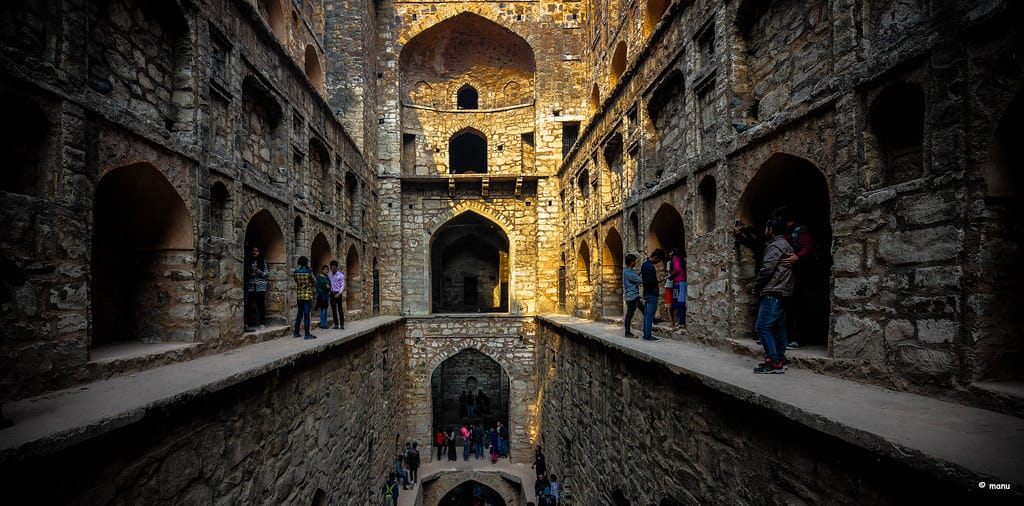
When you understand the meaning behind Agrasen ki baoli, you’ll gain deeper insight into how these stepwells were not just utilitarian structures but also held cultural and social significance in medieval Indian society. The stepwell’s architecture, featuring red sandstone, symmetrical arches, and three levels underground, is a remarkable example of the era’s construction techniques.
The Mysterious Legend of Maharaja Agrasen
As you explore the legend of Maharaja Agrasen, you’ll uncover a rich history that has shaped the Agrawal community. This ancient king’s impact is still felt in the city, particularly in the context of community support and resource management.
Who Was Maharaja Agrasen?
Maharaja Agrasen was a ruler from the Mahabharata era, known for founding the prosperous city of Agroha near present-day Hisar, not far from Delhi. Legend has it that a hundred thousand traders lived in Agroha during its heyday, making it a significant trading hub in ancient times.
| Aspect | Description |
|---|---|
| Kingdom | Agroha, near modern-day Hisar |
| Population | A hundred thousand traders |
| Legacy | Enduring influence on the Agrawal community |
Connection to the Agrawal Community
The Agrawal community claims descent from Maharaja Agrasen and the city of Agroha. The community’s prosperity and commercial skills are attributed to the king’s model of community support, where newcomers were given a brick and a rupee by each inhabitant to build homes and establish businesses. This legacy has endured through the times, making the Agrawal community an influential and respected group in Indian society.
Understanding the historical context of Maharaja Agrasen and his connection to the Agrawal community provides insight into why the stepwell, Agrasen ki baoli, was named after him. It’s a tribute to his enduring influence on Indian history and commerce.
Architectural Features of Agrasen ki baoli
As you explore Agrasen ki baoli, you’ll be struck by its impressive architectural features. The stepwell is a remarkable example of medieval engineering, with a unique blend of functionality and aesthetics.

The Three-Level Structure
The baoli is built over three levels, with each level featuring arches carved out of stone. This three-level structure not only adds to the baoli’s visual appeal but also demonstrates a sophisticated understanding of water management.
The 108 Steps and Their Significance
At the shorter end of the well, 108 stone steps lead down to the pool at the bottom. As you descend these steps, you’ll experience the physical journey that ancient visitors would take to reach the life-sustaining water.
The Ancient Water Reservoir System
The baoli’s water reservoir system was ingeniously designed to collect and store rainwater during monsoon seasons, ensuring a reliable water supply during dry months. The system’s sophistication is evident in its ability to maintain a steady water level, even during times of drought.
When you reach the bottom of the stepwell, you’ll gain a profound appreciation for how this architectural wonder served as a crucial lifeline for communities facing water scarcity in pre-modern Delhi.
The Haunted Reputation of Agrasen ki baoli

As you step into the ancient Agrasen ki baoli, you’ll uncover the dark and mysterious stories that surround this historical monument. The stepwell’s haunted reputation is a tale that has captivated many, with stories of supernatural occurrences and unexplained phenomena.
The Legend of the Hypnotic Black Water
Myths say that Agrasen ki baoli used to hold ominous, stagnant water that allegedly lured people to end their lives. The legend speaks of a strange power that forced people to drown, with the water at the bottom somehow rising after each tragedy. While these stories are hard to verify, they have contributed to the stepwell’s mystique.
The haunting tales surrounding Agrasen ki baoli gained momentum after a tragic incident in 2007, despite the stepwell being dry at the time. This event kept the myth alive, leaving many to ponder the fact behind the legend.
Unexplained Phenomena and Visitor Experiences
Visitors to Agrasen ki baoli have reported experiencing unusual acoustics that create disembodied whispers and echoes, contributing to the stepwell’s haunted reputation. The atmospheric conditions within the stepwell, often described as cool, dark, and “suffocating,” enhance the mysterious ambiance.
Many have described feeling a chill down their spine as they explore the stepwell, with some attributing the experience to the supernatural. Whether you believe in the paranormal or not, the haunting stories surrounding Agrasen ki baoli have undoubtedly added to its cultural significance.
Agrasen ki baoli in Modern Culture
As you explore the depths of Delhi’s history, you’ll find Agrasen ki baoli standing out not just as a historical monument, but as a cultural icon in modern times. Its significance extends beyond its ancient architecture, as it has become an integral part of the city’s contemporary identity.
Appearances in Bollywood Films
Agrasen ki baoli has gained widespread recognition through its appearances in popular Bollywood films. Movies like PK (2014) and Sultan (2016) have showcased the stepwell’s mystique, drawing more visitors and cementing its status as a cultural landmark. The atmospheric setting of this ancient stepwell has made it a favorite location for filmmakers seeking to capture Delhi’s historical essence or create scenes with mysterious, dramatic backdrops.
You might recognize Agrasen ki baoli from these films, which have significantly boosted its visibility in modern culture. Its unique architecture and historical ambiance have made it an attractive setting for cinematic storytelling.
A Popular Photography Destination
As a photography enthusiast, you’ll be drawn to the stepwell’s perfect combination of symmetrical architecture, dramatic light and shadow play, and historical ambiance that creates stunning visual compositions. Social media has transformed this once-obscure historical monument into one of Delhi’s most Instagram-worthy locations, with visitors from around the world seeking to capture its unique aesthetic.
The contrast between ancient architecture and modern visitors creates a fascinating cultural intersection that makes Agrasen ki baoli not just a historical site but a living place where past and present continually engage with each other.
| Aspect | Description | Impact on Modern Culture |
|---|---|---|
| Bollywood Appearances | Featured in films like PK and Sultan | Increased visibility and tourist interest |
| Photography | Symmetrical architecture and dramatic lighting | Made it an Instagram-worthy location |
| Cultural Significance | Blend of ancient and modern elements | Creates a unique cultural experience |

Despite its growing popularity in modern culture, you’ll appreciate that the Archaeological Survey of India maintains the site, preserving its authentic character while accommodating its new role as a cultural icon.
How to Reach Agrasen ki baoli
Visiting Agrasen ki baoli is a breeze, thanks to its prime location in the heart of Delhi. The stepwell is nestled near the popular Connaught Place shopping district, making it easily accessible by various means of transportation.
Nearest Metro Stations to Agrasen ki baoli
The most convenient way to reach Agrasen ki baoli is via the Delhi Metro. There are two nearby metro stations that can take you to this historical site.
Barakhamba Road Metro Station
Barakhamba Road Metro Station on the Blue Line is one of the nearest stations, just a 10-minute walk away through the bustling city streets. From here, you can make your way to Hailey Road and then turn onto Hailey Lane to reach the stepwell.
Rajiv Chowk Metro Station
Alternatively, you can use Rajiv Chowk Metro Station, a major interchange on the Blue and Yellow lines. Exit through Gate 5 onto Kasturba Gandhi Marg, walk past the Tolstoy Marg crossing, turn left onto Hailey Road, and then left again onto Hailey Lane. The baoli is about 30 meters down Hailey Lane.
Other Transportation Options
Apart from the metro, you can also use other transportation options to reach Agrasen ki baoli. Auto-rickshaws and taxis are readily available throughout Connaught Place and can drop you directly at the entrance to Hailey Lane. For those using ride-sharing apps like Uber or Ola, simply set “Agrasen ki Baoli” as your destination.
You can also combine your visit to Agrasen ki baoli with other nearby attractions in Connaught Place, making for an efficient day of sightseeing in Delhi. With its central location and various transportation options, reaching Agrasen ki baoli is surprisingly convenient.
Visitor Information and Tips
Before you head out to explore Agrasen ki baoli, here are some valuable tips and information to make your visit more enjoyable. Planning your trip in advance can help you avoid crowds and make the most of your time at this historical site.
Agrasen ki baoli Timings and Entry Fee
Agrasen ki baoli is open daily from 9:00 AM to 5:30 PM, providing ample time to explore the stepwell. One of the best aspects of visiting this monument is that entry is completely free for everyone, whether you’re a local resident or an international tourist. This makes it an excellent addition to any budget-conscious Delhi itinerary.
Best Time to Visit
For the most enjoyable experience, plan your visit during the early morning hours, ideally right when the stepwell opens at 9:00 AM. This allows you to avoid the crowds and capture the best lighting for photography. If possible, schedule your visit on a weekday rather than a weekend, as the site can get quite crowded during peak times. The best time of year to visit is during the winter months (November to February), when Delhi’s weather is pleasant.
Photography Tips at the Stepwell
For photography enthusiasts, the mid-morning offers the most dramatic shots as sunlight creates striking patterns through the arches, highlighting the architectural details. When planning your day, allocate approximately 1-2 hours for exploring Agrasen ki baoli thoroughly, giving you enough time to descend all 108 steps and capture memorable photographs.
Other Historical Stepwells in Delhi
Beyond Agrasen ki Baoli, Delhi is home to several other historical stepwells worth exploring. These structures not only served as vital water sources but also stand as testaments to the city’s rich architectural heritage.
Rajon Ki Baoli
Rajon Ki Baoli, located within the Mehrauli Archaeological Park, is one of Delhi’s most decorative stepwells. Named after the masons (rajons) who frequented it, this baoli showcases intricate architectural design and historical significance.
Nizamuddin Ki Baoli
Nizamuddin Ki Baoli, attached to the Nizamuddin Dargah, was built by the Sufi saint Nizamuddin Auliya in the 1320s. This stepwell has a fascinating history, having been at the center of a dispute with Sultan Ghiasuddin Tughlaq.
Red Fort Baoli
The Red Fort Baoli, with its unique L-shaped design, is another significant historical stepwell in Delhi. It was used during India’s freedom movement to imprison INA officers, adding to its historical importance.
| Stepwell | Location | Historical Significance |
|---|---|---|
| Rajon Ki Baoli | Mehrauli Archaeological Park | Named after masons who frequented it |
| Nizamuddin Ki Baoli | Nizamuddin Dargah | Built by Nizamuddin Auliya in 1320s |
| Red Fort Baoli | Red Fort | Used to imprison INA officers during freedom movement |
These stepwells collectively demonstrate how water source management was integrated into the urban planning of historical Delhi, with each structure adapted to its specific area and community needs. By visiting these stepwells, you can gain a deeper understanding of Delhi’s history and architectural evolution.
Conclusion: Why Agrasen ki baoli Is a Must-Visit Delhi Landmark
Agrasen ki baoli is more than just a historical monument; it’s a gateway to understanding Delhi’s multifaceted identity. As you stand at the top of this ancient stepwell and gaze down the 108 steps to the bottom, you’ll feel a powerful connection to Delhi’s rich past.
The stepwell‘s convenient location near Connaught Place makes it an easy addition to your Delhi itinerary. Whether you’re captivated by the engineering brilliance, the haunting legends, or seeking a peaceful retreat, this landmark delivers a multifaceted experience. Your visit to Delhi would be incomplete without experiencing this remarkable must-visit site.
The memories you’ll take away from Agrasen ki baoli will be some of the most distinctive souvenirs of your time in India’s capital city.
FAQ
What is the significance of Agrasen ki baoli in Delhi’s history?
Agrasen ki baoli is an ancient stepwell that served as a vital water source for the community, showcasing the city’s rich history and architectural prowess.
Is Agrasen ki baoli haunted?
The stepwell has a reputation for being haunted, with many visitors reporting unexplained phenomena and strange experiences, although there’s no conclusive evidence to support these claims.
How do I reach Agrasen ki baoli?
You can reach Agrasen ki baoli by taking the metro, with the nearest station being Connaught Place or Barakhamba Road. It’s also accessible by taxi or auto-rickshaw.
What are the timings and entry fee for visiting Agrasen ki baoli?
The stepwell is open from 9:00 AM to 5:00 PM, and the entry fee is minimal, making it an affordable tourist destination.
Can I take photos at Agrasen ki baoli?
Yes, Agrasen ki baoli is a popular photography destination, with its unique architecture and historic significance making for great shots. Be sure to capture the 108 steps and the ancient water reservoir system.
Are there other historical stepwells in Delhi worth visiting?
Yes, Delhi has several other historical stepwells, including Rajon Ki Baoli, Nizamuddin Ki Baoli, and Red Fort Baoli, each with its own unique character and history.
Read more: Attractions