Imagine standing before a majestic monument that has witnessed the rise and fall of empires, its red sandstone walls echoing tales of a glorious past. Agra Fort, a UNESCO World Heritage Site, is one such marvel that beckons you to explore its rich history and breathtaking architecture. Located near the iconic Taj Mahal, this fort is a testament to the grandeur of the Mughal Empire.

You are about to embark on a journey through time, discovering the evolution of this magnificent structure from a military stronghold to an imperial palace complex. As you explore the fort’s impressive walls, you will uncover the stories behind its exquisite palaces, audience halls, and mosques.
Key Takeaways
- Discover the historical significance of Agra Fort as a Mughal stronghold and imperial palace.
- Explore the architectural marvels within the fort, including palaces and mosques.
- Learn about the fort’s strategic importance during the Mughal era.
- Find essential information about visiting Agra Fort, including timings and entry fees.
- Understand the fort’s connection to the Taj Mahal and its status as a UNESCO World Heritage Site.
The Magnificent Legacy of Agra Fort
As you step into the grandeur of Agra Fort, you’re immediately transported to a bygone era of Mughal majesty. This ancient citadel, once known as Badalgarh, has a rich history that spans centuries, with its origins tracing back to the Rajput kings.
From Badalgarh to Agra Fort: A Historical Journey
The transformation of Badalgarh into Agra Fort began in the 16th century when Mughal Emperor Akbar set his sights on Agra, determined to establish it as the capital of his expanding empire. Under Akbar’s rule, Badalgarh was reconstructed and fortified, evolving into the magnificent Agra Fort we know today. This historical journey is marked by numerous battles and changes in leadership, with each ruler leaving their mark on the fort’s architecture.
The Architectural Marvel of Red Sandstone
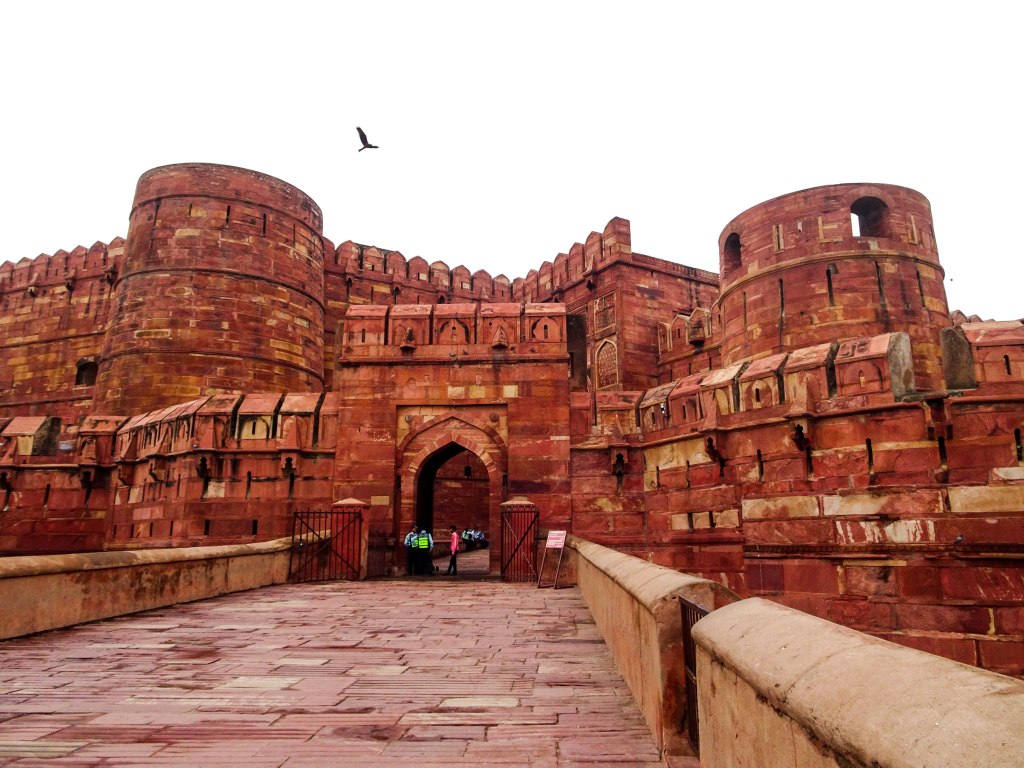
The Agra Fort’s imposing red sandstone walls stretch for 2.5 kilometers, reaching heights of up to 70 feet, creating an impenetrable defense system. The fort’s design elements, including its double ramparts, massive circular bastions, and deep moat, showcase the ingenuity of Mughal architecture. The use of red sandstone gives the fort its distinctive appearance, a testament to the craftsmanship of the era.
| Feature | Description |
|---|---|
| Red Sandstone Walls | Stretching 2.5 km, up to 70 feet high |
| Double Ramparts | Enhancing the fort’s defense system |
| Circular Bastions | Massive structures for added protection |
The architectural significance of Agra Fort lies not only in its imposing structures but also in its evolution over time. Each Mughal emperor added their own distinctive elements, creating a unique blend of styles that reflects the dynasty’s artistic sensibilities. As a result, Agra Fort stands as a testament to the rich cultural heritage of the Mughal era, a true marvel of Mughal architecture.
Who Built Agra Fort? The Royal Visionaries
As you explore Agra Fort, you’ll discover the royal visionaries behind its construction, including Akbar and Shah Jahan. The fort’s rich history is a testament to the architectural prowess of these Mughal emperors.
The Grand Vision of Emperor Akbar
Emperor Akbar commissioned Agra Fort in 1565 as part of his plan to establish Agra as the capital of his expanding empire. He transformed the existing structure into a formidable military fortress, incorporating elements of his innovative architectural style that blended Persian, Islamic, and Hindu influences. Akbar’s inclusive approach was reflected in the fort’s design, making it a unique representation of Mughal architecture.
Shah Jahan’s Contributions in Marble
Shah Jahan, Akbar’s grandson and the Mughal emperor who built the Taj Mahal, added magnificent marble structures to Agra Fort. He replaced many of Akbar’s red sandstone structures with white marble buildings, bringing a new level of elegance and refinement to the complex. Shah Jahan’s architectural choices reflected his distinctly Islamic aesthetic, further enriching the fort’s heritage.
| Ruler | Contribution | Architectural Style |
|---|---|---|
| Emperor Akbar | Commissioned Agra Fort in 1565, transformed it into a military fortress | Blend of Persian, Islamic, and Hindu influences |
| Shah Jahan | Added white marble structures, replaced red sandstone with marble | Distinctly Islamic aesthetic with white marble |
Exploring Agra Fort: Must-See Attractions
As you step into the majestic Agra Fort, you’ll discover a treasure trove of historical marvels that will leave you in awe. This 94-acre compound is home to numerous monuments that showcase the grandeur of Mughal architecture.
Jahangir’s Palace: A Blend of Cultures
Jahangir’s Palace, built with red sandstone, is a stunning example of the blend of Hindu and Islamic architectural styles. You’ll be impressed by its intricately carved pillars and spacious courtyards, which reflect the cultural diversity of the Mughal era.
Khas Mahal: The Private Residence
The pristine white marble construction of Khas Mahal, Shah Jahan’s private residence, is a sight to behold. This beautiful pavilion offers panoramic views of the Yamuna River and is adorned with ornamental pools, creating a serene ambiance.

Musamman Burj: Shah Jahan’s Prison With a View
The octagonal Musamman Burj is a poignant reminder of Shah Jahan’s tragic fate. He spent his final years as a prisoner of his son Aurangzeb, gazing longingly at the Taj Mahal across the river. This tower offers a glimpse into the emperor’s last days.
Diwan-i-Khas: Hall of Private Audience
Diwan-i-Khas, or the Hall of Private Audience, is where emperors would meet with important dignitaries and nobles. This opulent hall features stunning marble inlay work and once housed the legendary Peacock Throne, symbolizing the opulence of the Mughal court.
Sheesh Mahal: The Palace of Mirrors
Sheesh Mahal, or the Palace of Mirrors, is a marvel of decorative arts. Thousands of tiny mirrors embedded in the walls and ceilings create a dazzling effect when lit by even a single candle, showcasing the Mughals’ mastery of craftsmanship.
As you explore these must-see attractions within Agra Fort, you’ll gain a deeper understanding of the historical significance and architectural brilliance of this UNESCO World Heritage Site. The fort’s monuments, including Jahangir’s Palace, Khas Mahal, Musamman Burj, Diwan-i-Khas, and Sheesh Mahal, are a testament to the rich cultural heritage of India.
- Jahangir’s Palace: A blend of Hindu and Islamic architectural styles.
- Khas Mahal: Shah Jahan’s private residence with pristine white marble construction.
- Musamman Burj: The tower where Shah Jahan spent his final years as a prisoner.
- Diwan-i-Khas: Hall of Private Audience featuring stunning marble inlay work.
- Sheesh Mahal: The Palace of Mirrors with thousands of tiny mirrors embedded in its walls and ceilings.
The Agra Fort and Taj Mahal Connection
As you explore Agra Fort, you’ll discover a poignant connection between this majestic monument and the Taj Mahal, two of India’s most iconic landmarks. This connection is rooted in history, architecture, and a tale of tragic love.
Viewing the Taj Mahal from Agra Fort
One of the most breathtaking experiences within Agra Fort is viewing the Taj Mahal from various vantage points, particularly from the Musamman Burj and Khas Mahal. The white marble mausoleum appears to float ethereally on the horizon, creating a mesmerizing sight.

Shah Jahan’s Tragic Story
Emperor Shah Jahan, who built the Taj Mahal as a testament to his love for his wife Mumtaz Mahal, spent his final years imprisoned in Agra Fort by his son Aurangzeb. Historians believe he was kept in a room with views of the Taj Mahal, adding a layer of melancholy to both monuments.
| Monument | Built By | Significance |
|---|---|---|
| Agra Fort | Emperor Akbar | Historical and architectural significance |
| Taj Mahal | Emperor Shah Jahan | Maosoleum for Mumtaz Mahal |
The connection between Agra Fort and the Taj Mahal is a testament to the rich history and architectural brilliance of the Mughal era. As you explore these monuments, you’ll appreciate the intricate details and the stories they tell.
Agra Fort Timings and Entry Fees

Agra Fort, a magnificent heritage site, is open throughout the year, but knowing its timings and ticket prices can enhance your experience. As you plan your visit, understanding the operational hours and entry fees is crucial to making the most of your trip.
Opening Hours Throughout the Year
Agra Fort is open every day of the week, from sunrise to sunset. This allows you to experience the fort in different lighting conditions, making it a unique visit each time. Whether you prefer the golden hues of sunrise or the warm glow of sunset, Agra Fort offers a breathtaking view at any time of day.
Ticket Prices for Domestic and International Visitors
The entry fee structure for Agra Fort varies significantly between domestic and international visitors. Indian adults are charged ₹40, while Indian children pay ₹20. Foreign adults are required to pay ₹650, and foreign children are charged ₹500. Additionally, there are special rates for SAARC & BIMSTEC countries, which are ₹40. It’s also important to note that there are additional charges for camera usage: ₹25 for video cameras and ₹200 for still photography.
Experience the Agra Fort Light and Sound Show

Experience the magic of Agra Fort after dark with a captivating light and sound show that brings its rich history to life. This spectacular multimedia presentation is a must-see when visiting the fort.
Show Timings and Languages
The Agra Fort light and sound show is available in both Hindi and English. The Hindi show starts approximately 30 minutes after sunset, followed immediately by the English show. Plan your evening around these timings to make the most of your visit.
Ticket Prices and Booking Information
Ticket prices for the Agra Fort light and sound show are as follows: ₹70 for Indian visitors, ₹40 for students, $15 for foreign tourists, and free entry for children under 15 years of age. You can book your tickets in advance to avoid any last-minute hassles.
By attending the light and sound show, you will gain a deeper understanding of the fort’s history and significance, making your visit to Agra Fort even more memorable.
Planning Your Visit to Agra Fort
To make the most of your trip, planning your visit to Agra Fort is essential. This historical site, located near the Yamuna River, offers a rich experience, but being prepared is key to enjoying its attractions.
Best Time to Visit
The best time to visit Agra Fort is from October to February when the weather is pleasant, making it ideal for exploring the extensive grounds and open courtyards. Visiting during these cooler months ensures a comfortable experience.
How to Reach Agra Fort
You can reach Agra Fort by various means of transportation. The nearest railway stations are Agra Cantt, Agra Fort Station, and Raja Ki Mandi. Alternatively, you can fly into Agra Airport, which is about 5 km from the city center and well-connected to major cities like Delhi, Jaipur, and Lucknow. Traveling by road is also an option from cities like Delhi (230 km) and Jaipur (240 km).
What to Bring and What Not to Bring
When visiting Agra Fort, it’s advisable to bring essentials like comfortable walking shoes, water bottles, sunscreen, and a camera. However, certain items are prohibited inside the fort, including knives or sharp items, alcohol, tobacco products, cell phone chargers, headphones, and dangerous items like explosives. Entering through the Amar Singh Gate, the main entrance, you’ll be prepared for a hassle-free visit.
| Mode of Transport | Details |
|---|---|
| By Train | Agra Cantt, Agra Fort Station, Raja Ki Mandi |
| By Air | Agra Airport (5 km from city center) |
| By Road | 230 km from Delhi, 240 km from Jaipur |
Attractions Near Agra Fort
Beyond the grandeur of Agra Fort lies a treasure trove of nearby attractions that will deepen your appreciation for Mughal history and architecture. As you explore the area, you’ll discover a rich cultural and historical landscape that is both fascinating and enlightening.
Taj Mahal
Visit the incomparable Taj Mahal, just 2.9 kilometers from Agra Fort, to witness one of the world’s most beautiful buildings and understand its deep connection to the fort through Shah Jahan’s story. The Taj Mahal is a must-visit attraction that embodies the essence of Mughal architecture.
Itmad-ud-Daulah’s Tomb
Discover the exquisite Itmad-ud-Daulah’s Tomb, often called the “Baby Taj,” located 3.5 kilometers from Agra Fort, featuring delicate marble inlay work that predates and influenced the Taj Mahal’s design. This tomb is a masterpiece of Mughal craftsmanship and a testament to the era’s architectural innovation.
Mehtab Bagh
Experience the tranquil Mehtab Bagh (Moonlight Garden), situated 5.5 kilometers from Agra Fort on the opposite bank of the Yamuna River, offering spectacular sunset views of the Taj Mahal across the water. Mehtab Bagh is a serene escape that provides a unique perspective on the Taj Mahal’s beauty.
You can also consider a day trip to Fatehpur Sikri, about 40 kilometers from Agra, another UNESCO World Heritage site that served as the Mughal capital before Agra and showcases Emperor Akbar’s architectural vision. Exploring these sites will enrich your understanding of the region’s history and cultural heritage.
Conclusion
Stepping out of Agra Fort, you’re left with a deep appreciation for the rich history and cultural heritage it embodies. This UNESCO World Heritage site is a testament to the grandeur of Mughal architecture, with its imposing red sandstonewalls and delicate marble palaces. As you reflect on your visit, you’ll appreciate how Agra Fort complements the Taj Mahal in showcasing different aspects of Mughal heritage.
Read more: Attractions
FAQ
Agra Fort is a testament to the grandeur of the Mughal Empire, having served as the capital during the reign of Emperor Akbar and later as the imperial residence for Shah Jahan.
The Jahangir Palace was built by Emperor Akbar as a residence for his son, Jahangir.
Sheesh Mahal, or the Palace of Mirrors, is a stunning example of Mughal architecture, featuring intricate mirror work and ornate decorations.
Yes, Agra Fort offers breathtaking views of the Taj Mahal, especially during sunrise and sunset.
The fort is open from sunrise to sunset, with specific timings varying throughout the year.
Yes, the fort hosts a spectacular light and sound show in the evening, narrating the history and significance of the monument.
Ticket prices vary for domestic and international visitors, with discounts available for certain categories.
The fort is easily accessible by road, rail, or air, with Agra being a major tourist hub.
Nearby attractions include the Taj Mahal, Itmad-ud-Daulah’s Tomb, and Mehtab Bagh, all within a short distance.