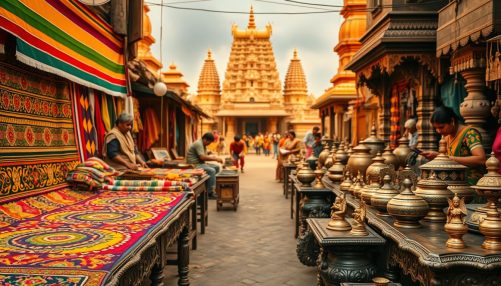
Did you know that Tamil Nadu is home to over 50,000 artisans who continue to preserve its rich art and heritage? This southern state of India is a treasure trove of cultural wonders, where age-old practices thrive alongside modern advancements. Its vibrant markets and skilled craftsmen offer a glimpse into a world where tradition meets creativity.

The state’s deep-rooted connection to its cultural legacy is evident in every handcrafted piece. From intricate textiles to stunning sculptures, the art of Tamil Nadu reflects centuries of craftsmanship. Visitors are drawn to its authenticity, making it a hub for those seeking unique, handmade treasures.
Exploring this region reveals not just products but stories of resilience and passion. The artisans here are the custodians of a heritage that has been passed down through generations. Tamil Nadu’s artistic landscape is a testament to its enduring spirit and cultural richness.
Key Takeaways
- Tamil Nadu is a cultural hub with a thriving artisan community.
- The state’s art reflects centuries of tradition and craftsmanship.
- Its markets offer unique, handmade treasures for visitors.
- Artisans play a vital role in preserving the region’s heritage.
- The blend of tradition and creativity makes Tamil Nadu unique.
Introduction to Tamil Nadu’s Artisan Heritage
Tamil Nadu’s artisan heritage is a vibrant tapestry of history and skill. The state’s crafts are deeply intertwined with its cultural identity, reflecting centuries of evolution. From ancient dynasties to modern times, these practices have shaped the region’s artistic landscape.
Cultural Significance and History
The roots of Tamil Nadu’s crafts trace back to the Chola dynasty, known for its patronage of art and culture. This historical backdrop has left an indelible mark on the state’s artistic traditions. Bronze casting and art plate creation are prime examples of techniques that have endured through the ages.
These crafts are not just products but symbols of the region’s cultural pride. They tell stories of resilience, creativity, and the enduring spirit of its people. As one historian noted,
“Tamil Nadu’s crafts are a living testament to its rich heritage.”
Local Artisans and Time-Honored Techniques
Local artisans are the heart of Tamil Nadu’s craft traditions. They have preserved time-honored techniques, passing them down through generations. Their work is a blend of skill, dedication, and cultural reverence.
For instance, the art of bronze casting in Swamimalai remains unchanged for centuries. Similarly, the intricate designs of Thanjavur art plates showcase the artisans’ meticulous craftsmanship. These practices highlight the state’s commitment to preserving its cultural legacy.
| Art Form | Location | Key Features |
|---|---|---|
| Bronze Casting | Swamimalai | Centuries-old technique, intricate details |
| Art Plates | Thanjavur | Handcrafted designs, cultural motifs |
Essential Guide: Traditional Handicrafts and Shopping Places in Tamil Nadu
From bustling bazaars to quaint boutiques, Tamil Nadu offers a unique shopping experience. The state’s markets are a treasure trove of handcrafted items that reflect its rich cultural heritage. Whether you’re looking for a memorable souvenir or a unique item, these destinations have something for everyone.
Overview of Must-Visit Spots
Tamil Nadu’s shopping scene is as diverse as its culture. Urban markets like Chennai’s George Town are vibrant hubs where you can find everything from textiles to decorative pieces. Government emporiums, such as Poompuhar, showcase authentic crafts made by local artisans.
For a more intimate experience, explore regional boutiques in smaller towns. These spots often feature one-of-a-kind items that capture the essence of Tamil Nadu’s artisan spirit. Each market offers a blend of traditional craftsmanship and modern retail convenience.
Here are some practical tips for visitors:
- Visit early to avoid crowds and get the best selection.
- Bargain politely, as it’s a common practice in many markets.
- Look for government-certified shops to ensure authenticity.
Whether you’re a seasoned traveler or a first-time visitor, this guide will help you navigate Tamil Nadu’s shopping destinations with ease. Discover the perfect souvenir to take home and immerse yourself in the state’s vibrant culture.
Regional Crafts: Bronze Icons, Art Plates, and Veena Making
Swamimalai and Thanjavur are renowned for their unique metal creations. These towns are centers of artistic excellence, where centuries-old techniques continue to thrive. Each art craft reflects a deep connection to cultural roots and showcases the skill of local artisans.
Bronze Icons in Swamimalai
Swamimalai is famous for its metal icons, crafted by skilled Sthapathis. The bronze casting methods here are guided by ancient scriptures and traditions. Every piece is a masterpiece of precision, often depicting deities and temple art.
The process involves meticulous attention to detail, ensuring each icon captures the essence of its subject. These creations are not just decorative but also hold spiritual significance. Swamimalai’s artisans are custodians of a craft that has endured for generations.
Art Plates of Thanjavur
Thanjavur is celebrated for its intricate art plates, originally made for guests during the Maratha period. These plates are symbols of cultural opulence, featuring detailed designs and motifs. Each piece reflects the town’s rich artistic heritage.
The craftsmanship involved in creating these plates is unparalleled. Artisans use traditional techniques to produce stunning works of art. Temple art often inspires the designs, making each plate a unique representation of Thanjavur’s culture.
| Art Form | Location | Key Features |
|---|---|---|
| Bronze Icons | Swamimalai | Ancient techniques, spiritual significance |
| Art Plates | Thanjavur | Intricate designs, cultural motifs |
Timeless Saree Weaving Traditions Across Tamil Nadu
The art of saree weaving in Tamil Nadu is a timeless tradition that continues to captivate the world. This craft is deeply rooted in the region’s cultural heritage, showcasing the skill and creativity of its artisans. From luxurious silks to intricate designs, each saree tells a story of dedication and artistry.
Kanchipuram Silk Sarees
Kanchipuram silk sarees are renowned for their opulence and craftsmanship. These sarees are woven with pure silk and adorned with gold or silver zari, creating intricate patterns. The fabric is known for its durability and vibrant colors, making it a favorite for special occasions.
The weaving process is meticulous, often taking weeks to complete a single saree. Artisans follow age-old techniques passed down through generations. As one weaver shared,
“Every Kanchipuram saree is a labor of love, reflecting our cultural pride.”
Paramakudi Saree Craftsmanship
Paramakudi sarees stand out for their unique tie designs and traditional motifs. These sarees blend traditional craftsmanship with modern influences, offering a distinct style. The fabric used is lightweight yet durable, making it ideal for everyday wear.
The weaving process involves careful attention to detail, ensuring each saree is a masterpiece. Paramakudi sarees are a testament to the region’s ability to adapt while preserving its heritage. They are a perfect example of how tradition and innovation can coexist harmoniously.
The saree weaving traditions of Tamil Nadu are more than just a craft—they are a celebration of culture and artistry. Whether it’s the luxurious Kanchipuram silk or the unique Paramakudi designs, each saree reflects the state’s enduring legacy. Explore these timeless creations and experience the beauty of Tamil Nadu’s weaving heritage.
Vibrant Floral Art: Garland Making and Toda Embroidery
Madurai’s floral artistry and Toda embroidery are shining examples of Tamil Nadu’s cultural richness. These crafts are deeply rooted in the region’s traditions, blending creativity with cultural significance. From fragrant flower garlands to intricate needlework, each piece tells a story of skill and heritage.
Madurai’s Flower Garland Tradition
Madurai is renowned for its exquisite flower garlands, crafted with fragrant jasmine and other blooms. These garlands hold immense cultural importance, often used in religious ceremonies and festive celebrations. The design of each garland is a work of art, reflecting the artisan’s creativity and attention to detail.
The tradition of garland-making has been passed down through family generations, preserving its authenticity. Artisans use innovative techniques to create stunning arrangements that captivate the senses. As one artisan shared,
“Every garland is a symbol of devotion and beauty, woven with love and tradition.”
Intricacies of Toda Embroidery
Toda embroidery is a delicate handicraft known for its intricate patterns and cultural motifs. This art form is practiced by the Toda community, with skills passed down through family lines. Each piece is a testament to the community’s dedication to preserving their heritage.
The design elements of Toda embroidery are inspired by nature and tribal traditions. Artisans use unique techniques to create detailed patterns on fabric, making each piece a masterpiece. Today, this embroidery blends traditional aesthetics with modern influences, appealing to contemporary tastes.
Both garland-making and Toda embroidery are more than just crafts—they are expressions of Tamil Nadu’s enduring cultural legacy. Explore these vibrant art forms and experience the creativity and passion of the region’s artisans.
Exquisite Home Textiles: Weaving Clusters and Handloom Innovations
Chennimalai’s weaving clusters are redefining the global textile industry with their innovation and craftsmanship. This region has emerged as a hub for creating stunning home décor items, blending traditional techniques with modern design. The artistry here is not just about weaving; it’s about preserving a legacy while embracing the future.

The evolution of home textiles in Chennimalai is a story of resilience and creativity. Artisans here have mastered the art of handloom weaving, producing fabrics that are both durable and beautiful. From vibrant cotton throws to intricate table linens, every piece reflects the region’s rich heritage.
Weaving in Chennimalai
Chennimalai’s handloom techniques are a blend of tradition and innovation. Artisans use high-quality cotton and natural fibers to create textiles that are eco-friendly and luxurious. The weaving process involves meticulous attention to detail, ensuring each product meets global standards.
The economic impact of these woven products is significant. Local communities thrive as home textiles from Chennimalai are exported worldwide. This not only supports artisans but also promotes sustainable practices in the textile industry.
Here’s a look at some of the key features of Chennimalai’s weaving:
| Feature | Description |
|---|---|
| Materials | High-quality cotton and natural fibers |
| Techniques | Traditional handloom weaving with modern innovations |
| Products | Home décor items like throws, linens, and cushions |
Chennimalai’s artisans are not just weavers; they are storytellers. Each textile they create carries the essence of their culture and the promise of a sustainable future. Explore these exquisite creations and bring a piece of Chennimalai’s artistry into your home.
Artistic Tiles and Paintings: From Athangudi to Tanjore
Athangudi tiles and Tanjore paintings are two of Tamil Nadu’s most celebrated art forms. These creations are not just decorative items but symbols of the region’s rich cultural heritage. Each piece tells a story of skill, tradition, and creativity.
Originating from a small village, these products have gained recognition for their unique charm and craftsmanship. Whether it’s the vibrant patterns of Athangudi tiles or the gold embellishments of Tanjore paintings, these art forms are a testament to Tamil Nadu’s artistic legacy.
Crafting Athangudi Tiles
Athangudi tiles are known for their vivid colors and intricate patterns. This art form began in the village of Athangudi, where artisans use traditional techniques to create stunning floor tiles. The process involves pouring colored liquid into molds, resulting in unique designs that reflect the region’s cultural motifs.
Each tile is a labor of love, requiring precision and patience. The vibrant hues and detailed patterns make these tiles a sought-after product for home décor. As one artisan shared,
“Creating Athangudi tiles is not just a craft; it’s a way of preserving our heritage.”
Captivating Tanjore Paintings
Tanjore paintings are renowned for their rich use of colors and gold embellishments. This art form originated in the town of Thanjavur, where artisans create detailed depictions of deities and mythological scenes. The use of gold foil and gemstones adds a luxurious touch to each painting.
The process of creating a Tanjore painting is meticulous, often taking weeks to complete. Artisans follow traditional methods, ensuring each piece is a masterpiece. These paintings are not just decorative items but also hold spiritual significance, making them popular among collectors and art enthusiasts.
| Art Form | Key Features | Origin |
|---|---|---|
| Athangudi Tiles | Vivid colors, intricate patterns | Athangudi village |
| Tanjore Paintings | Gold embellishments, rich colors | Thanjavur |
Both Athangudi tiles and Tanjore paintings are more than just products; they are expressions of Tamil Nadu’s cultural pride. Explore these timeless art forms and bring a piece of the region’s heritage into your home.
Shopping Destinations: Urban Markets and Boutique Emporiums
Chennai, a bustling metropolis in South India, is a shopper’s paradise. This vibrant city offers a unique blend of traditional markets and modern retail outlets, making it a must-visit for anyone exploring the region. Whether you’re searching for authentic crafts or contemporary designs, Chennai’s diverse shopping scene has something for everyone.

Chennai’s Dynamic Shopping Scene
Chennai’s shopping landscape is a dynamic mix of old and new. From bustling street markets to upscale boutiques, the city caters to every taste and budget. George Town, one of the oldest commercial hubs, is a treasure trove of textiles, jewelry, and decorative items. Here, traditional craftsmanship meets modern retail convenience.
Over the years, Chennai’s shopping culture has evolved to accommodate both locals and tourists. The rise of boutique stores has added a contemporary twist to the city’s retail offerings. These shops often feature curated collections of handcrafted goods, blending traditional techniques with modern designs.
Traditional Markets and Government Emporiums
For an authentic shopping experience, visit Chennai’s traditional markets. T. Nagar, known as the shopping heart of the city, is famous for its sarees, silks, and accessories. The bustling atmosphere and vibrant displays make it a favorite among visitors.
Government emporiums like Poompuhar are another highlight. These stores showcase the best of South India’s crafts, from intricate woodwork to handwoven textiles. As one visitor noted,
“Poompuhar is a gateway to the rich cultural heritage of the region.”
These emporiums not only support local artisans but also ensure the authenticity of every product. Whether you’re a seasoned shopper or a first-time visitor, Chennai’s markets and emporiums offer a memorable experience.
Exploring Cultural Souvenirs: Wood Crafts, Handlooms, and More
Discover the charm of Tamil Nadu’s handcrafted wood and textile treasures. These items are more than just souvenirs—they are a reflection of the region’s deep-rooted artistry and cultural pride. Each piece tells a story of skill, tradition, and the collaborative spirit of its community.
Wood Crafts and Decorative Pieces
Tamil Nadu’s wood crafts are a blend of functionality and beauty. From intricately carved furniture to delicate decorative items, these creations showcase the artisans’ meticulous craftsmanship. Each piece is a tangible part of the region’s heritage, passed down through generations.
The community plays a vital role in preserving these techniques. Artisans work together, sharing knowledge and skills to ensure the craft thrives. This collaborative effort not only sustains the tradition but also empowers local families.
Visitors can find a diverse range of handcrafted items, from elegant wall hangings to practical home accessories. These souvenirs are perfect for adding a touch of Tamil Nadu’s culture to any space. As one artisan shared,
“Every piece we create carries the essence of our heritage and the love of our craft.”
Whether you’re looking for a decorative centerpiece or a functional item, Tamil Nadu’s wood crafts offer something for everyone. These treasures are a meaningful way to remember your trip and celebrate the region’s artistic legacy.
Conclusion
Every visit to this region reveals a new layer of its cultural depth. From intricate woodwork to vibrant textiles, the artistry here is a celebration of skill and passion. Each day spent exploring these crafts uncovers a new thing about the rich heritage that defines this place.
Preserving these traditions is vital. By supporting local artisans, we ensure that these timeless practices continue to thrive. Whether it’s a handwoven saree or a detailed painting, every piece tells a story of dedication and creativity.
Encourage yourself to seek out various types of artisan products. Appreciate the other art forms that make this region unique. Immerse yourself in the living traditions that continue to inspire and captivate visitors from around the world.
Experience the magic of this cultural haven. Let its artistry leave a lasting impression on your heart and home.
FAQ
Tamil Nadu’s artisan heritage stands out for its rich history and cultural significance. The state is home to skilled artisans who have preserved time-honored techniques for generations, creating masterpieces like bronze icons, Tanjore paintings, and Kanchipuram silk sarees.
Kanchipuram, a town in Tamil Nadu, is renowned for its exquisite silk sarees. Local weavers use pure silk and intricate designs to craft these sarees, making them a must-buy for anyone visiting the region.
Athangudi tiles are vibrant, handcrafted tiles made in the village of Athangudi. Known for their unique patterns and durability, these tiles are a popular choice for home decor and flooring.
Toda embroidery, practiced by the Toda community in the Nilgiri Hills, is distinct for its geometric patterns and use of red and black threads. This art form reflects the community’s cultural identity and is often seen on shawls and garments.
Chennai offers a mix of urban markets and boutique emporiums. From handloom textiles to wood crafts, the city is a treasure trove for those seeking authentic Tamil Nadu souvenirs and products.
Thanjavur art plates are celebrated for their intricate designs and use of metals like brass and copper. These plates often depict deities and cultural motifs, making them a cherished part of Tamil Nadu’s craft heritage.
Madurai’s flower garlands are known for their vibrant colors and fragrant blooms. Used in temples and festivals, these garlands are a symbol of devotion and a key part of the region’s floral art tradition.
Wood crafts are widely available in towns like Chennai and Thanjavur. Artisans create decorative pieces, furniture, and souvenirs using locally sourced wood, showcasing their exceptional craftsmanship.
Tanjore paintings are famous for their rich colors, gold foil work, and detailed depictions of deities. Originating in Thanjavur, these paintings are a blend of art and spirituality, making them highly sought after.
Chennimalai is a major hub for handloom weaving, producing high-quality cotton fabrics. The town’s weavers use traditional techniques to create textiles that are both durable and aesthetically pleasing.
Read more: Attractions