
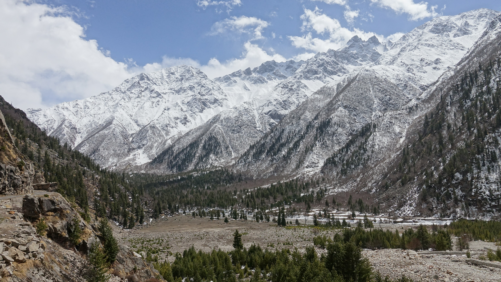
Nestled high in the Himalayas, the Sangla Valley is a hidden gem that many travellers still talk about in hushed awe. Picture lush green apple orchards cascading down the slopes, the icy Baspa river carving through towering peaks, and a tranquil village life that feels almost untouched. At an elevation of around 2,700 m (≈8,900 ft) above sea level, the Sangla Valley lies in the scenic heart of the Kinnaur district of Himachal Pradesh, India.

Whether you’re an adventurous trekker, a nature-lover seeking peace or a cultural traveller keen on local traditions, this place pulls you in. In this article, you’ll get all the must-knows — from when to go and how to reach, to what to do, where to stay, what to eat, and how to travel responsibly.
Quick Snapshot
| Key | Details |
|---|---|
| Best time to visit | Late April to early June (spring-summer) & mid-September to mid-October (post-monsoon) |
| How to reach | By road (from Shimla/Rampur/Karcham), nearest major airport: Shimla or Chandigarh |
| Must-do experiences | Visit Kamru Fort, stroll through apple orchards, drive to Chitkul (last village), river side meander, trout-farm visit |
| Budget indication | Mid-range: approx. ₹3,000–₹6,000 per day (stay + food + local transport) for 2-3★ stays (estimate only) |
| Safety & tips | Roads can be narrow, weather changes fast, winter travel risky due to snow; always check status |
Why Visit Sangla Valley?
The Sangla Valley isn’t a typical tourist hub with neon lights and crowds. Instead, it charms with authenticity: the apple-laden slopes, traditional Kinnauri houses stacked on hillsides, and a river that gleams like a thread of silver. According to the official district site: “Sangla is … situated on the right bank of the Baspa river … at an elevation of 2,621 m … the whole of the Baspa valley is one of the prettiest valleys mainly due to its flat terrain and green vegetation on the slopes which are not very steep.”
The valley also carries a layered culture — you’ll find temples like the Bering Nag, ancient fortresses, local Kinnauri people with their intriguing traditions, and landscapes that shift mood from dawn mist to alpine sunshine. It’s a place where you can balance “doing nothing” and “doing everything” on your own terms.
Best Time to Visit
Seasons & What to Expect
- Spring (April–June): The valley wakes up — apple blossoms, moderate temperatures (~9–29 °C). According to Incredible India data: April ~6.2–26.0 °C; May ~9.1–28.8 °C.
- Monsoon (July–August): The green is lush, but some roads may get tricky due to rain or slips.
- Post-monsoon / Autumn (September–October): Clear views of peaks, crisp air, fewer crowds. Example: September ~11.9–25.5 °C.
- Winter (November–March): Beautiful snow-covered scenes, but many roads get blocked and services may be limited. E.g., November ~3.9–20.8 °C; December ~1.1–18.5 °C.
My recommendation
For most travellers (especially budget to mid-range), late April–early June or mid September–early October hits the sweet spot: good weather, fewer crowds, good access. Winter only if you’re prepared for snow, cold and limited connectivity.
How to Reach Sangla Valley
By Air
The nearest airport listed by official sources is at Shimla (~224 km away) from Sangla.
Another option: Chandigarh Airport for larger flights, then drive onwards.
By Train
Nearest broad-gauge station is also Shimla (via narrow gauge onward) or one can alight at Rampur/Sangla entry-roads and then continue by road.
By Road
- From Delhi/Chandigarh: Drive to Rampur→ Kinnaur → Sangla.
- From Shimla: Travel via Rampur and up into Kinnaur.
According to HPTDC: “Sangla Valley … starts at Karcham and ends at Chitkul.”
Google-map distance varies but allow 8–10 hours from major plains entry point (Rampur/Recong Peo) depending on road condition.
Travel Tips
- Start early in daylight.
- Check road & weather status in Kinnaur, especially in off-season.
- Ensure your vehicle (or rental) is in good condition: narrow mountain roads, sharp turns.
- If driving yourself: fuel up at Karcham/Rampur since remote stretches have fewer stations.
Where to Stay
Regions & Price Bands
The valley’s main hub is the town of Sangla itself; from there you can venture out to nearby villages like Batseri, Rakcham or even Chitkul for more remote stays. The official Tourism site shows Sangla is well-equipped with “petrol pump, bank ATMs, post office, restaurants, mid-range hotels and shops.”
Price bands (approximate)
- Budget guesthouses/homestays: ~ ₹1,500–₹3,000/night (depending on season)
- Mid-range hotels/resorts: ~ ₹3,000–₹6,000/night
- Premium luxury lodges/camps: from ~ ₹7,000+ (in peak season)
Recommended Example
- Stay in Sangla town for best access to amenities.
- For quiet, book a homestay in Rakcham or Batseri — fewer crowds, nature right outside your door.
- Consider camping by the Baspa river for a more immersive experience (note: check season & services).
Top Attractions & Experiences
Here are the key highlights — each one gives you a flavour of the Valley’s diversity.
Kamru Fort

One of the oldest forts in the region, perched above Sangla with sweeping views of the valley. Visitors often report the climb is steep but worth it.
Bering Nag Temple
A crucial local temple dedicated to Lord Jagas (a form of Shiva) located a few kilometres from Sangla; visited during the Fulaich fair (Aug-Sept).
Chitkul (Last Inhabited Village)

Located at the end of the valley near the Indo-Tibetan border, it’s often described as the “last village”. Great for a day trip or overnight if you want remote mountain charm.
Baspa River & Apple Orchards

The Baspa river flows through Sangla; the valley is rich in apple and walnut orchards. According to Incredible India: “Apple orchards grow down the slopes … in spring the orchards transform into a canvas of delicate pink and white blossoms.”
Trekking & Nature Walks
From simple village walks in Batseri/Rakcham to full-day treks leading into remote terrain, Sangla serves as a base for Himalayan exploration.
Suggested Itineraries
1-Day Itinerary
- Early morning drive into Sangla.
- Mid-day: Arrival, lunch and a riverside walk or orchard stroll.
- Afternoon: Visit Kamru Fort.
- Evening: Sunset at valley viewpoint & local dinner.
3-Day Itinerary
- Day 1: Arrive Sangla; relax, roam local village and orchard.
- Day 2: Full day trip to Chitkul, lunch by Baspa river, explore the last village.
- Day 3: Visit Bering Nag Temple, Batseri village and maybe a short trek or nature walk; depart.
5-Day (or 7-Day) Itinerary
- Use days 4–5 for deeper exploration: Rakcham village, glacier trail walk, camping by river, longer trek routes. You might include rest days or immersive village stays.
Costs & Budget
| Item | Approximate Cost* |
|---|---|
| Accommodation | ₹2,000–₹6,000/night (mid-season) |
| Meals (3/day) | ₹800–₹1,500 |
| Local transport | Taxi or shared cab ₹2,000–₹4,000/day (varies) |
| Activities & entrance fees | ₹500–₹1,000 extra roughly |
* These are estimates (as of verification date) and can vary by season & booking.
Local Transport
- Shared jeeps and taxis link from Rampur/Recong Peo to Sangla and nearby villages.
- Some HRTC (Himachal Road Transport Corporation) buses run into the region — check schedules locally.
- For remote villages (Chitkul, Rakcham), private taxi is more reliable.
- Road conditions may deteriorate in monsoon or winter; always check ahead.
Food & Drink
- Local dishes: Kinnauri thali, buckwheat (kuttu) roti, trout (in season), apples/almonds from orchards.
- For hygiene: Stick to cooked hot meals, carry bottled water or purify river water.
- Restaurants: In Sangla town you’ll find basic cafés/guest-house eateries; in remote villages choices are limited, so carry snacks.
Safety, Health & Permits
- At high altitude (~2,600–2,700 m), some may feel mild breathlessness — give yourself a rest day if coming directly from plains.
- Winter travel: Many roads may remain closed due to snow; check with local authorities.
- Carry warm clothes even in spring.
- Permits: While Sangla is open for tourists, some border-area trails/villages may need local permission — verify with Kinnaur district or tourism office.
- Health: Carry a basic first-aid kit; insurance covering mountain terrain is a plus.
Packing List & Tips
Must-carry:
- Thermal base layer, woollen jacket, gloves, warm hat
- Good trekking/hiking shoes
- Sunscreen, sunglasses (UV is strong)
- Water bottle, any personal medication
- Camera, extra batteries
- Day-pack for village walks
Tip: Even in summer, evenings can be cold. Respect local culture: modest dress when visiting temples.
Sustainable & Responsible Travel
- Stay on marked trails; avoid cutting through wetlands or fragile slopes.
- Respect local communities: ask before photographing people, buy local crafts (helpful for economy).
- Use refillable bottles, avoid plastic bottles when possible.
- Dispose of waste properly; remote villages may not have robust waste-management.
- Support homestays and village-based businesses for more authentic, beneficial tourism.
Conclusion
The Sangla Valley invites you to slow down, to breathe mountain air and take in views that linger long after you’ve returned home. Whether you’re relaxing by the Baspa river, wandering through an orchard, or rising early for a dawn viewpoint — there’s a rhythm here that stays. Before you go: check road and weather conditions, stay conservative with altitude or remote ventures, and let the valley do its magic.
If you enjoyed this guide, don’t forget to subscribe to my travel updates, and have a safe, memorable trip to Sangla!
FAQs
A: Late April–early June or mid-September–early October offer the best combination of weather, accessibility and natural beauty.
A: Drive via Chandigarh → Rampur → Kinnaur → Sangla. Expect ~10–12 hours depending on traffic and roads.
A: Yes, for mid-range travellers and families, as long as pace is easy, stays comfortable and you avoid very high-altitude treks.
A: The main valley is open to tourists, but for remote border-area trails and villages, local permits may be required — check at local tourism office.
A: Layers (for warm days & cold nights), good shoes, sunglasses, sunscreen, day-pack, water bottle — even in summer nights can be chilly.

.jpg)
