There are few places on Earth that feel as untouched, raw and mystical as Pangi Valley. Far from the crowded tourist trails, this remote Himalayan region, tucked between the Zanskar and Pir Panjal ranges, offers rugged terrain, deep gorges, ancient villages, and a rare chance to experience tribal Himalayan life. As per official records, Pangi is a tehsil of Chamba district with a population of 18,868 (2011 census) and spans a vast area of over 1,600 km².

For those willing to brave narrow mountain roads and high-altitude passes, Pangi Valley delivers serenity, adventure, and memory-making vistas. And at the heart of the access lies Sach Pass — the dramatic gateway to this remote land. This guide is your comprehensive companion to exploring Pangi: when to go, how to reach, where to stay, what to see and do, and how to travel responsibly.
Quick Snapshot
| Attribute | Detail |
|---|---|
| Region / District | Pangi Valley, Chamba District, Himachal Pradesh |
| Population (2011) | ~ 18,868 |
| Geography | Sandwiched between Zanskar & Pir-Panjal ranges; deep gorges cut by the Chandrabhaga (Chenab) river |
| Typical altitude range | Main valley villages around 2,600–2,700 m (e.g. headquarters town), sub-valleys and high ridges often much higher |
| Access via | Sach Pass (seasonal), alternative remote routes from Jammu–Kishtwar or via Lahaul/Manali depending on season |
| Best travel season | July to mid-October — when passes open and weather is manageable |
| Connectivity | Nearest major rail head / road hub: Chamba / Pathankot; nearest airports: Dharamshala (Gaggal), Kullu–Manali (when flights operate) |
| Accommodation | Limited: guesthouses, homestays or govt rest-houses mostly around Killar; a few simple stay options in villages |
| Best for | Adventure-seekers, trekkers, offbeat travellers, culture-curious explorers, Himalayan road-trip lovers |
Why Visit Pangi Valley?
Untouched Himalayan Wilderness
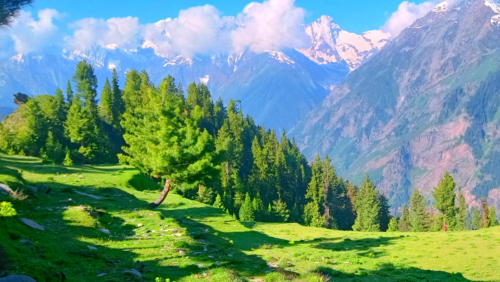
Pangi Valley remains one of the most secluded valleys in Himachal Pradesh. It’s enveloped by high mountain ranges, deep gorges carved by the Chandrabhaga (Chenab) river, and rugged terrain that deters mass tourism — which means unspoiled nature, quiet villages, and spectacular landscapes.
Unique Tribal Culture & Authentic Himalayan Life
The valley is inhabited by the Pangwali people, along with “Bhatoris” (Bhot/Tibetan-Buddhist communities) in higher villages. Their traditional lifestyle, warm hospitality, distinct language (Pangwali), festivals, and a slow, village-rhythm life offer a rare glimpse into Himalayan tribal culture.
Dramatic Landscapes & Sub-Valleys
Pangi is not a single valley — it’s a network of sub-valleys (like Sural, Hudan, Saichu, Parmar) each with its own charms: high ridges, glacial streams, meadows, waterfalls, and ancient Buddhist monasteries.
Adventure, Trekking & High-Altitude Road-Trips
The journey itself — via steep Himalayan roads, across the formidable Sach Pass at ~4,414 m — is an adventure. Once inside, there are trekking trails, village walks, river-gorge hikes, and opportunities for offbeat exploration.
Remoteness & Solitude — A True Escape
Unlike popular hill stations bustling with tourists, Pangi offers solitude: starry skies, silence, crisp mountain air, vast spaces, and a sense of being truly “off the grid.”
Best Time to Visit (Seasonal Breakdown)
Summer / Monsoon (July – mid-October):
- This is the prime window. Sach Pass is typically cleared and open, and you can reach Pangi by road.
- Days are pleasant; valleys show wildflowers; snow melts except higher ridges.
- Ideal for trekking, camping, hiking, village visits, and enjoying rivers and waterfalls.
Early Summer / Late Snow (June – early July):
- Road to Sach Pass may just open; snow-walls often remain near the top, meltwater crossings are common, and some patches remain rocky or muddy.
- For experienced bikers or drivers, this season offers dramatic views with snowy peaks — but caution advised.
Late Season (September – mid-October):
- Crisp air, clear skies, and golden autumn hues — a beautiful time for photography and quiet exploration.
- Risk of early snowfall or icy roads starts rising; check local status.
Winter (Late October – April/May):
- Most passes including Sach Pass are closed due to heavy snow.
- Travel is possible only via very remote routes (e.g. from Jammu–Kishtwar), often arduous and not recommended for casual travellers.
- Expect freezing temperatures (valleys may drop below 0°C, higher villages much colder), heavy snow, frozen streams — a beautiful but extreme and challenging environment.
Verdict: Best window for most travellers is July to mid-October.
How to Reach
Reaching Pangi Valley is part of the adventure — and the route you choose depends on the season, your comfort with mountain driving, and time available.

By Road (Most Common & Flexible)
Via Sach Pass from Chamba — Shortest & Most Dramatic
- The classic route: Chamba → Tissa → Bairagarh → Satrundi → Sach Pass → Bagotu → Killar (Pangi’s HQ)
- Distance to Killar from Chamba via this route: ~ 170 km; travel time typically around 8–10 hours depending on conditions.
- Buses (from Chamba) via Sach Pass usually start early (~5–6 AM) because it’s a long and tough drive. Shared cabs are also an option.
- Road surface is narrow, often unmetalled or rocky near the pass; water-crossings and loose stones are common. Expect slow speeds and caution.
Alternative Routes (for Off-Season / When Sach Pass Closed)
- From Jammu–Kishtwar → remote mountain roads → Killar / Pangi. This is far longer and meant for seasoned adventurers; seldom used by regular tourists.
- From Manali / Kullu → via Rohtang / Lahaul / Udaipur / Purthi → Killar: a circuit combining Lahaul, Pangi, and Manali — sometimes opted by road-trip enthusiasts when weather permits.
By Rail + Road / Air + Road
- Nearest major railway station: Pathankot Railway Station (Punjab). From there, catch a bus or taxi to Chamba, then proceed by road to Pangi.
- Nearest airports: Gaggal Airport (Kangra / Dharamshala) — around 180 km from Killar; and Kullu–Manali Airport (when flights operate, though often unreliable) — approx 230 km from Killar.
- In winter, when roads close, limited helicopter services may operate — but this should be taken only in emergencies or extreme weather.
Where to Stay
Because Pangi is remote and infrastructure is scarce, accommodation options are limited and basic — but that’s part of its charm.
Suggested Bases & Accommodation Types
- Killar (HQ of Pangi) — the most practical base. About 2,600–2,700 m altitude. Typical stay options: small guesthouses, few private hotels or homestays, and government rest-houses.
- Village Homestays & Guesthouses in Sub-Valleys — a few scattered homestays or forest/PWD rest-houses (especially in villages like Sural, Hudan, Cherry). These are basic, often with limited electricity, simple meals (home-cooked), and no luxury — but they offer authenticity.
- Budget ranges: Expect modest pricing; rooms in guesthouses or homestays should be affordable. Don’t expect city-level amenities; treat it as back-to-basics Himalayan lodging.
Tip: Because of limited availability, especially in peak season, plan ahead — or be ready to adapt. Also, flexibility and humility go a long way; part of Pangi’s beauty is its simplicity.
Top Things to Do in Pangi Valley
Explore Killar — Gateway to the Valley
The small town of Killar sits on a ridge above the deep gorge of the Chandrabhaga (Chenab) river. It’s at ~2600–2700 m altitude and serves as the base for most travellers. Walking around the town offers a chance to see traditional wooden houses, local life, small shops, and the unspoiled Himalayan charm.
Every evening, the sunset from Killar — with mountains, cloud-filled valleys, and distant peaks — can be magical, especially on clear days. Some travellers compare its hues to those of famous hill towns, but with far fewer crowds.
Killar also acts as the hub for further exploration into deeper valleys, villages, and high ridges.

Cross the Legendary Sach Pass
No trip to Pangi is complete without crossing the formidable Sach Pass at ~4,414 m — the gateway between the outer world and Pangi’s wilderness.
Expect narrow, rocky, and often treacherous terrain: water crossings, loose stones, steep drops, and unpaved segments.
But the reward is immense — sweeping Himalayan panoramas, snow-clad peaks, dramatic mountain air, and the sense of entering a hidden world. For seasoned bikers, road-trippers and adventure lovers, this remains a bucket-list experience.
Visit Sub-Valleys & Tribal Villages — Sural, Hudan, Saichu, Parmar, etc.
Pangi is a weave of many sub-valleys. Each offers its own flavour: high-altitude meadows, icy streams, sparse forests, Buddhist monasteries, and remote villages.

- Sural Bhatori: A peaceful Buddhist village at the end of the Sural valley. Home to the ancient (300+ years old) monastery Sural Gompa, nestled among birch forests.
- From Sural, there are gentle waterfall hikes, forest walks, and opportunities to mingle with local Bhotia culture.
- Other valleys — Hudan, Parmar, Saichu — offer high-altitude trekking, meadows, streams, and solitude. For travellers seeking silence, isolation, and rugged beauty, these are perfect.
Visit Mindhal Mata Temple & Local Spiritual Sites
At the left bank of the Chenab (Chandrabhaga) river stands the old Mindhal Mata Temple — an ancient Himalayan temple dedicated to Chamunda. It’s a sacred site, frequented by locals, especially during festivals like the Bhādon mela.

Visiting such sites gives insight into the valley’s spiritual and cultural dimensions, beyond just scenic beauty.
Trekking, Hiking & Nature Walks
Whether you take short walks around villages or attempt higher-altitude trekking along Bhatori trails, Pangi offers trekking opportunities — amid gorges, ridges, rivers, and Himalayan forests.
Even lesser treks — like from village to village, or to small waterfalls and forest patches — provide value: fresh air, silence, panoramic views and a deep sense of Himalayan wilderness.
Cultural Immersion & Village Life
Because tourism here is nascent, the valley retains its authenticity. Visitors often get invited into local homes, share meals, hear stories of the mountains, learn about tribal traditions, and observe the simple yet fulfilling life of Pangwali and Bhot communities.
Local festivals, seasonal rhythms, and warm hospitality make for meaningful travel beyond sightseeing.
Photography, Stargazing & Natural Beauty
From snow-clad peaks to rushing rivers, from dense forest patches to barren ridges, Pangi’s contrasts offer spectacular photography opportunities. Night skies — away from city lights — can be magical for stargazing. The silence, the grandeur, and the untouched vibe make it a visual treat.
Offbeat & Local Experiences
- Stay in a homestay in a remote village (like Sural or Hudan) to experience Himalayan village rhythm.
- Share meals with local families, try traditional food, learn a few words of the local language (Pangwali), and engage respectfully.
- Walk narrow mountain trails, cross streams, explore remote meadows — away from crowds.
- Opt for a motorcycle or self-drive trip via Sach Pass — many travellers call this the ultimate Himalayan road test.
- If visiting during festival times, join local celebrations, listen to folk stories, enjoy traditional music and dance (if available).
Suggested Itineraries
1-Day Itinerary
This is only feasible if you’re already nearby (Chamba / Dalhousie / Dalhousie-Chamba area) and want a quick taste — but note, one day gives only a fleeting glimpse.
- Early morning from Chamba → begin drive via Sach Pass → reach Killar by afternoon (if roads clear).
- Explore Killar town: walk along ridge, enjoy sunset, interact with locals, visit small markets or viewpoint.
- Overnight stay in Killar guesthouse.
Note: Only recommended for travellers who want a glimpse or are on tight time constraints. Full beauty of Pangi needs more time.
3-Day Itinerary (Ideal for First Visit)
Day 1: Reach Killar via Sach Pass from Chamba. Evening stroll around town, acclimatize.
Day 2: Visit nearby villages / sub-valleys — e.g., Sural Bhatori, small waterfall/forest walk; visit Sural Gompa, local village life.
Day 3: Light trek or walk in valley; maybe visit Mindhal Mata Temple; enjoy local food; return (or stay another night, if time permits).
This gives a fair mix of road adventure, village experience, and Himalayan atmosphere — with minimal risk and moderate effort.
5–7 Day Extended Trip (For Explorers / Adventure Lovers)
- Day 1: Enter Pangi (via Sach Pass) → Killar.
- Day 2: Explore Killar & nearby village(s).
- Day 3: Visit Sural / Hudan / Parmar villages — stay in a remote homestay.
- Day 4: Trek or longer hike in sub-valley; explore meadows, streams, waterfalls.
- Day 5: Visit spiritual site — Mindhal Mata Temple or local village festival (if timing works).
- Day 6: Relax, soak in mountain views, interact with locals, try local food.
- Day 7: Return via alternate route (if feasible) — perhaps via Lahaul/Manali circuit or retrace via Sach Pass (if open).
This gives deep immersion — culture, nature, adventure — a full Pangi experience.
Costs & Budgeting
| Expense Category | Approximate Cost / Notes* |
|---|---|
| Shared car / shared taxi (Chamba → Killar via Sach Pass) | ~ INR 1,000–1,200 per head (if shared) |
| Private car hire (Chamba–Killar return) | ~ INR 4,000–5,000 (depending on driver discretion) |
| Guesthouse / Homestay (per night) | Basic — affordable; expect modest pricing (simple rooms, basic meals) |
| Food / Meals (local dhaba or homestay) | Local meals simple and economical; some basic dhabas serve simple Himachali fare |
| Fuel / Self-drive / Bike trip | Since petrol pumps are few (last pump well before pass or remote), plan fuel carefully and carry extra cans if self-driving. |
| Permit or rest-house stay (forest / PWD) | If using government rest-houses — may require local permit or permission; costs minimal but process needs time. |
*Costs are indicative; expect variation depending on season, vehicle, and availability.
Local Transport Guide
- Shared taxis / shared cars from Chamba → Killar via Sach Pass: available when pass open. Expect early departure (~5–6 AM).
- Local buses / village transport: buses often connect Killar to nearby villages/sub-valleys (e.g. Sural, Hudan). Frequency can be low — plan accordingly.
- Own vehicle / Motorcycle / Self-drive: Many bikers and adventure drivers attempt the route — but be aware: road is narrow, rough near pass, petrol pumps sparse, and high-altitude driving risky. Plan fuel, spare parts, and allow slow pace.
- Back-up route (winter / post-snow): In winter or when Sach Pass closed — the alternate route via Jammu–Kishtwar is possible, but remote and difficult. Not recommended for casual tourists.
Food & Cuisine
Pangi’s isolation means food is simple, home-cooked or basic dhaba fare. Visitors often experience:
- Traditional Himachali meals in homestays or local dhabas. Limited variety, but hearty and authentic.
- Occasional local produce — from farms carried out by villagers; maybe cheese or dairy products (as some travellers report seeing homemade cheese drying on roofs while en-route to remote villages)
- If you stay in remote villages, expect basic meals — so plan accordingly (carry essentials if needed).
Because the region is remote, don’t expect fancy restaurants or wide variety — enjoy simplicity and local flavour.
Safety, Health & Permits
- High altitude caution: Sach Pass at ~4,400 m — altitude sickness possible. Allow acclimatization time; stay hydrated; avoid over-exertion.
- Road conditions & vehicle risks: Narrow, rocky roads; water-crossings; loose stones; no guard-rails in many places; possible avalanches or sudden weather changes. Suitable only for confident drivers or with experienced driver.
- Limited medical / emergency facilities: Remote villages — access to modern hospitals is minimal. For serious issues, relief or emergency helicopter (if functional) may be only option.
- Permits / accommodations: Some remote rest-houses or forest-village stays may need permission from local authorities or PWD. It’s wise to check with district or village authorities before venturing deep.
- Travel insurance & contingency planning: Given remoteness, unpredictable weather, possibility of delays or blockages — travel insurance (covering high-altitude, rescue) advisable. Carry extra fuel, food, warm clothes, basic medical kit, and emergency contacts.
Packing List
- Warm clothes (jackets, woolens) even in summer — nights can be cold especially in upper sub-valleys.
- Layered clothing; waterproof jacket — mountain weather unpredictable.
- Good trekking shoes / sturdy boots — for rough terrain, rocky paths, water-crossings.
- Basic first-aid kit, altitude sickness medication, medicines for cold/flu.
- Extra fuel (if self-driving), spare tubes/tyres, basic repair kit, flashlight, power bank (electricity can be uncertain in remote stays).
- Water purification tablets / filter — in remote areas, safe drinking water may be limited.
- Extra blankets / sleeping bag (if homestay), warm socks, woollen gloves, cap / muffler.
- Snacks / dry food — in case local food is not available or you are venturing in remote sub-valleys.
- Copies of identity proof, permits (if needed), emergency contacts.
Responsible Travel
- Respect local culture, traditions, and tribal sensibilities. Ask permission before photographing people or villages.
- Avoid littering — carry back all plastic or non-biodegradable waste. The valley’s fragile ecosystem deserves care.
- Use local homestays / guesthouses if possible. This supports local economy and encourages sustainable tourism.
- Travel light, avoid unnecessary noise — preserve the peace and solitude of the valley.
- Follow trekking trails or paths; avoid disturbing wildlife or fragile flora; avoid cutting wood or disturbing nature.
- If travelling by road, avoid excessive speeds, avoid driving at night — roads are dangerous, and help is often far away.
Conclusion
Pangi Valley is not a destination for the faint-hearted — it demands patience, flexibility, humility and a willingness to embrace uncertainty. But for those who venture, it offers something almost magical: untouched Himalayan wilderness, quiet villages, warm tribal hospitality, dramatic landscapes, and a rare chance to step off the beaten path into Himalayan solitude. The journey — across narrow mountain roads, over the legendary Sach Pass — itself becomes part of the experience.
If you are ready for adventure, willing to embrace simplicity, and eager to discover remote corners of the Himalayas, Pangi Valley awaits. Pack well, travel responsibly, respect the land and its people — and you might return with more than just photos; you’ll carry memories, stories, and perhaps a quiet inner transformation.
Read more: Attractions
FAQs
A: As per local and traveller reports, Sach Pass generally opens around June or early July, once snow clearance is done. It remains open until around mid-October, though exact dates vary annually depending on weather and snow conditions.
A: Winter (late October – April/May) brings heavy snowfall. Sach Pass and most roads get blocked, making access extremely difficult. Some remote alternative routes (e.g. via Jammu–Kishtwar) exist but they are challenging and only for experienced adventurers. For most travellers, winter visit is not recommended.
A: Only if you have prior high-altitude driving/motorcycling experience, a sturdy vehicle or bike, adequate fuel spare and safety gear. Roads near Sach Pass are narrow, rocky, and prone to water-crossings or rockfall. For inexperienced drivers, shared cars/cabs with experienced local drivers are safer.
A: Killar — the headquarters town — is the most practical base. It offers the relatively better stay options (guesthouses, homestays, small hotels), food, and acts as a transit hub. For deeper valley stays, simple homestays or forest rest-houses exist but are basic.
A: Yes — in villages like Sural Bhatori, Hudan, Parmar etc — you may find simple homestays or PWD/forest rest-houses. Expect basic facilities (simple meals, no luxury). Staying there offers an authentic Himalayan village experience.
A: Pangi experiences a semi-arid, inner-Himalayan climate. In summer (peak season) daytime temperatures in valleys can be pleasant (roughly 10–20 °C), nights cold. Higher elevations remain chilly. Winter can be severe: heavy snow, sub-zero temperatures, snow-covered valleys, and frozen streams.
A: Fuel stations are extremely sparse. On the approach via Sach Pass, the last reliable petrol pump may be in the lower hills (for example, near Tissa / Bairagarh on the Chamba side). Once you climb higher or enter remote sub-valleys, fuel supply may be nonexistent. Thus, if self-driving or biking — carry extra fuel or cans.
A: The region is remote and rugged, which means travel itself demands caution — regarding altitude, road conditions, unpredictable weather, limited facilities. Solo travellers should plan carefully, preferably travel with experienced companions, keep someone informed, stay in known guesthouses, avoid risky night travel. Locals are reportedly hospitable and friendly — but always respect local customs.