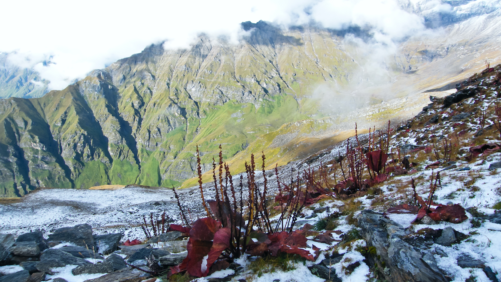
From jagged peaks draped in snow to hidden alpine meadows, Nanda Devi National Park delivers a Himalayan experience like no other. Tucked deep within the Garhwal Himalayas, this sanctuary stands sentinel around the towering summit of Nanda Devi (7,817 m), India’s second-highest mountain — a natural fortress of glaciers, high-altitude forests, and remote valleys.

As you step into this wilderness, you enter a world where biodiversity, sacred mountains and rugged beauty converge. This article dives deep — from practical travel details to ecological insights — to help you plan a meaningful journey into the heart of Nanda Devi National Park.
Quick Snapshot
| Aspect | Details |
|---|---|
| Location | Chamoli district, Uttarakhand, India |
| UNESCO Status | Part of the UNESCO World Heritage Centre listing “Nanda Devi and Valley of Flowers National Parks” (since 1988) |
| Area (core park) | ~ 630 km² |
| Elevation range | Roughly above 3,500 m up to 7,817 m at summit of Nanda Devi |
| Accessible months | Generally May to October |
| Permits | Trek/entry permits required from forest/administration (via competent authority — e.g. forest office in Joshimath) |
| Trek / Difficulty | Moderate to difficult depending on route; high-altitude trekking with steep terrain, recommended for experienced hikers |
Why Visit Nanda Devi National Park?
A Himalayan ecosystem unlike any other
Nanda Devi National Park preserves one of the most spectacular high-altitude ecosystems in the Indian Himalayas. The landscape spans dramatic glaciers, alpine meadows, rhododendron and fir forests, and fragile glacial basins. The variation in altitude from about 3,500 m up to over 7,800 m creates a unique ecological gradient rarely found elsewhere.
UNESCO heritage & pristine wilderness
Together with the nearby Valley of Flowers National Park, Nanda Devi was inscribed as a UNESCO World Heritage Site for its outstanding natural beauty and biodiversity. The protected status helps safeguard a sanctuary ringed by towering peaks, deep valleys, moraines and glaciers — a realm largely untouched by mass tourism.
Rich flora and rare fauna
The park is home to a surprising variety of life adapted to extreme altitudes. Among the flora are fir, birch, rhododendron, juniper and alpine mosses. On the fauna side — elusive animals including the Snow Leopard, Himalayan musk deer, Himalayan tahr, Himalayan black bear, and bharal (blue sheep) roam these mountains. For nature-lovers and wildlife enthusiasts, spotting even traces of these creatures is a profound experience.
Spiritual & cultural aura
The massif of Nanda Devi is revered locally — named after a Himalayan goddess and considered sacred by mountain communities. Trekking here is not just physical — it’s a journey through culture, old Himalayan settlements, and legends echoing in the valleys.
Adventure, challenge and solitude
Because of its remote terrain and restricted access, Nanda Devi remains a place for serious trekkers, nature seekers, and those searching for raw, unspoiled alpine wilderness. The sense of solitude, rugged grandeur and challenge is rare in a world increasingly flooded with easy-access travel destinations.
Best Time to Visit
| Season | What to Expect | Pros & Cons |
|---|---|---|
| Spring (March–April) | Snow melting begins; lower trails start to open | Early season — lower crowd density; but still snow on higher reaches; unpredictable weather |
| Early Summer (May–June) | Clear skies, melting snow, access to trek routes | Ideal for trekking and wildlife sightings; meadows begin to green; high-altitude conditions remain cold at night |
| Monsoon (July–August) | Rain, cloud cover, risk of landslides and slippery trails | Not recommended — risky access, limited visibility; unstable trails and potential road/bridge damage |
| Post-monsoon / Autumn (September–October) | Clear skies, crisp mountain air, stable weather, colourful landscapes | Best overall time: good weather, pleasant temps, vivid scenery; safe trekking window |
| Winter (November–April approx.) | Heavy snowfall, sub-zero temps, closed trails and restricted access | Park and treks usually closed; not recommended for tourism |
➤ Recommended window: May–June or September–October — for reliable weather, open trails and maximum scenic beauty.
How to Reach
By Air
- The nearest airport is Jolly Grant Airport (Dehradun), about 295–315 km from the park’s base town.
- From the airport you’ll need to take road transport (bus or taxi) toward Uttarakhand’s hill towns — most travelers proceed toward Rishikesh / Haridwar and then further into the mountains.
By Rail
- The closest major railway station is Rishikesh Railway Station (or sometimes Haridwar depending on train connectivity), from where road onward travel begins.
By Road & Trek start
- From Rishikesh/Haridwar to Joshimath is approximately 253 km by road.
- From Joshimath, you reach the village of Lata (road-head for the park/trek) — about 25–30 km drive.
- From Lata begins the trek/entry into the park / sanctuary zone.
Note: Entry to the core protected area invariably involves trekking — there is no direct road access into the sanctuary proper.
Where to Stay
Because of the fragile ecology and remoteness, accommodation inside the park is not realistic. Instead, trekkers and travellers typically stay in nearby towns and villages — with a range of options depending on budget and comfort level.
Common base locations
- Joshimath — the main gateway town, well-connected by road, with guesthouses, basic hotels, and service facilities.
- Lata — small village near the trek start point; simpler guesthouses or village-style accommodation; good for early start to treks.
- Nearby hamlets / homestays / eco-lodges — some operators or local communities may offer basic homestay or camping-style options (especially for trekkers).
Budget & comfort range
- Budget / backpacker — basic guesthouses or homestays in Joshimath or Lata; shared dorm-style/bed rooms; minimal amenities.
- Mid-range — small hotels or mountain lodges in Joshimath; slightly more comfort; decent meals.
- Trek-camping / eco-stay — for those on trekking trips, overnight camps or tented stays along trekking trails; minimal comfort but immersive wilderness experience.
Because of restricted infrastructure, it’s important to book in advance, especially during peak season (May–June, Sept–Oct), and carry essentials if trekking (warm clothes, sleeping bag, etc.).
Top Things to Do
Here are some of the most meaningful experiences and treks when visiting Nanda Devi National Park:
Nanda Devi Base Camp / Sanctuary-Approach Trek
The classic way to experience the park’s core wilderness. Starting from Lata (after Joshimath), the trek passes through alpine meadows, forest zones, moraines, and high-altitude terrain, bringing you close to the glacial basin guarded by the massive peaks that surround the inner sanctuary.

This trek is regarded as moderate to difficult — terrain gets steep, altitude rises significantly; good physical fitness and prior high-altitude experience recommended.
Mountain & Peak Viewing (around Nanda Devi massif)
Though ascent to the main summit of Nanda Devi is closed (for conservation and protection of the core sanctuary), there are vantage points and trekking routes in the outer zones (and on approaches) that offer breathtaking views of the snow-capped peaks, glaciers and rugged Himalayan ridgelines — a surreal Himalayan panorama.
Flora & Wildlife Spotting
As you traverse forests and alpine zones, keep an eye out for signs of rare mammals — Himalayan musk deer, Himalayan tahr, Himalayan black bear, bharal (blue sheep), and possibly even the elusive snow leopard (though sightings are extremely rare) — as well as a variety of high-altitude birds.
In spring and early summer, the rhododendron blooms, alpine meadows open up, and the flora shows its alpine colours — a treat for botanists and nature lovers alike.
Cultural & Village Walks — Himalayan Communities

On the way to the park/sanctuary, villages like Lata and small hamlets in Chamoli region give you a glimpse into traditional Garhwali/Bhotia mountain life. Meeting locals, listening to folklore (especially related to the sacred mountain Nanda Devi), or staying in simple homestays lends a deeply human and cultural aspect to the trip.
Combined Visit: Valley of Flowers + Nanda Devi (for longer trips)
Because the Nanda Devi National Park forms, along with Valley of Flowers National Park, a contiguous UNESCO-protected expanse, some longer itineraries attempt to combine both — offering a contrast of rugged granite peaks and serene alpine flower meadows.
Offbeat & Local Experiences
- Evening under alpine skies: The remote valleys and high-altitude basins — miles away from light pollution — are phenomenal for stargazing. The clear Himalayan night sky can make you feel like you’re under a cosmic canopy.
- Listening to legends of Nanda Devi: The mountain is more than a peak — it’s a goddess, a protector in local folklore. Spending time in villages around Chamoli and interacting with elders can bring alive myth, oral history and Himalayan spirituality.
- Forest-meadow contemplative walks: Away from popular trekking routes, some high-altitude forest patches, meadows and glacial streams offer peaceful solitude. Ideal for meditation, sketching, writing or simply reconnecting with nature.
- Bird-watching & alpine plant photography: For those interested in wildlife beyond big mammals — high-altitude birds, alpine flora and fragile mosses/lichens present unique photographic and observation opportunities.
Suggested Itineraries
1-Day (Acclimatization / Short Visit)
Ideal if you have very limited time — good for first-timers, or if you combine with other hill destinations.
- Morning arrival at Joshimath (or drive from Dehradun / Rishikesh)
- Short local hike or walk around Joshimath / Lata — get a feel of Himalayan terrain
- Evening rest, light acclimatization, local village visit, early night (prepare for altitude)
3-Day (Short Trek / Sanctuary-Approach)
Day 1: Reach Joshimath → Drive to Lata → Begin hike into lower alpine meadows
Day 2: Trek deeper into hills, witness rising altitudes, first glimpses of snow-clad peaks, forest zones, alpine flora
Day 3: Return trek to Lata → Joshimath → Exit
This gives a taste of wilderness, with moderate effort and minimal time commitment.
5-Day (Immersive Trek & Nature Experience)
Day 1: Arrival, acclimatization in Joshimath / Lata
Day 2: Trek from Lata into higher meadows / forest zones
Day 3: Push further toward sanctuary-approach (depending on permit/route), look out for alpine flora/fauna
Day 4: Spend full day exploring meadows / high ridges / glacial streams — soak in mountain views, nature, solitude
Day 5: Return trek, descend → Joshimath → onward journey
This plan balances trekking effort with time for rest, acclimatization and deep nature immersion — ideal for enthusiasts comfortable with moderate altitude and rough terrain.
Costs & Budgeting
| Expense Type | Estimated Range / Notes |
|---|---|
| Permit / Entry fee (Indian / Foreign) | As per local regulations — permit required; fees vary depending on trek/route (obtain via forest/administration) |
| Trekking package / guiding (5–6 day) | Many agencies quote ~ ₹ 32,000–₹ 34,000 for standard packages (tent, food, guide, basic support) |
| Accommodation (base town / guesthouse) | Budget to mid-range hotels/guesthouses in Joshimath or village stays; variable on season and availability |
| Food & meals (basic mountain fare) | Simple local meals along trekking route; self-catering or provided by camps/guesthouses — moderate cost |
| Local transport (bus / taxi / jeep from airport/rail to mountains) | Cost depends heavily on group size, transport type; shared taxis/buses more economical |
| Miscellaneous (permit copies, local guide fees, porters, contingency) | Always good to carry buffer — for weather delays, emergency, permits, etc. |
Note: Exact permit fees vary — always check with local forest office or licensed trekking agency before planning.
Local Transport Guide
- Once in Joshimath, you may use shared jeeps or local buses to reach Lata (road-head / base village) — the start point for treks.
- During the trek — movement is on foot only; hiring local porters or guides is common, especially for camps with luggage.
- Within village / base locations — small footpaths, minimal motorised transport; carry light gear, plan ahead for supply runs (food, fuel, etc.).
Food & Cuisine
In mountain villages around Nanda Devi, expect simple, rustic cuisine — local staples suited to Himalayan conditions:
- Warm meals: rice, lentils (dal), local vegetables, pulses, chapatis / rotis
- For trekkers: simple but energy-rich fare — soups, porridge, dry-food rations
- Traditional Uttarakhand/Chamoli snacks: Himalayan tea (chai), local breads, seasonal produce (when available)
- Note: once on the trekking trail, meals are basic and often pre-arranged — carry extra snacks and energy bars for long stretches.
Because of the remote terrain, don’t expect luxury dining — meals are functional, warm, and designed to sustain you.
Safety, Health & Permits
- Altitude & acclimatization: The area lies high in the Himalayas; even base villages start at substantial altitude. Spend at least a day acclimatizing in Joshimath / Lata before ascending.
- Permits mandatory: Entry into core zones / treks require valid permits — obtain from local forest office or authorized agency, preferably in advance.
- Restricted zones: The inner sanctuary around the main summit of Nanda Devi remains closed to protect fragile ecology. Trekking routes remain outside core restricted zones.
- Environmental regulations: Respect park rules — avoid littering, avoid disturbing wildlife, follow guidance on waste, firewood, camping.
- Health preparedness: Carry basic first-aid kit, altitude sickness medication, warm clothes; trekking may involve cold nights, uneven terrain, and variable weather.
- Weather & terrain risks: Mountain weather is unpredictable; avoid treks during heavy rain/monsoon; risks include landslides, trail damage, glacial melt.
Packing List
Here’s a basic checklist for a trek / visit to Nanda Devi National Park:
- Layered clothing (thermal base, fleece/jacket, waterproof outer)
- Good trekking boots with ankle support
- Warm hat, gloves, woollen socks
- Backpack with rain cover
- Sleeping bag (for camping / high-altitude nights)
- Trekking poles (helpful on steep or uneven terrain)
- Reusable water bottle + water purification tablets or filter
- Basic first-aid kit, altitude sickness medication, personal medicines
- Headlamp / flashlight + extra batteries
- Dry snacks, energy bars, light non-perishable food
- Lightweight towel, personal hygiene items (biodegradable soaps, sanitary items)
- Trek documents & permit copies (printed), ID proofs, some local currency
Responsible Travel
- Stick to marked trails; avoid venturing into restricted/dangerous zones.
- Carry back all non-biodegradable waste; follow “leave no trace” ethos.
- Minimise noise — respect wildlife, maintain silence in sensitive areas.
- Respect local communities, culture, and traditions — ask permission before photographing people or sacred sites.
- Use local guides and services — helps support the community and ensures safety.
- Avoid firewood collection, unnecessary fuel consumption, and pollution — the Himalayan ecosystem is fragile.
Conclusion
Nanda Devi National Park is not just another Himalayan destination — it’s a realm of raw beauty, sacred mountains, and fragile wilderness. For those willing to traverse remote trails, acclimatize under mountain skies, and respect nature’s delicate balance, the park offers an experience few places on earth can match.
Whether you seek adventure, solitude, ecological wonder, or spiritual serenity — Nanda Devi promises all. Plan carefully, travel responsibly, and you may leave with memories etched in craggy peaks, alpine meadows, and glacial silence.
Read more: Attractions
FAQs
A: The core inner sanctuary around the main summit of Nanda Devi is restricted — as per official conservation rules, climbing or free trekking into the inner sanctuary is prohibited.
A: The best seasons are May–June and September–October — when weather is favourable, skies are clear, trails accessible, and the risk of landslides or heavy snow is low.
A: Yes — permits are mandatory. You must obtain valid entry/trek permits from the local forest office or district administration (often via licensed trekking agencies).
A: The park hosts rare Himalayan fauna: Himalayan musk deer, Himalayan tahr, Himalayan black bear, bharal (blue sheep), and — though very elusive — possibly snow leopard.
A: Accommodation is basic and limited — in towns like Joshimath or villages like Lata. Facilities are simple guesthouses, homestays, or mountain-style lodges. For trekking, camping or tented stays are common.
A: Not recommended for first-time trekkers with no high-altitude experience. Trails are moderate to difficult, and altitude + terrain demand physical fitness and some prior trekking exposure.