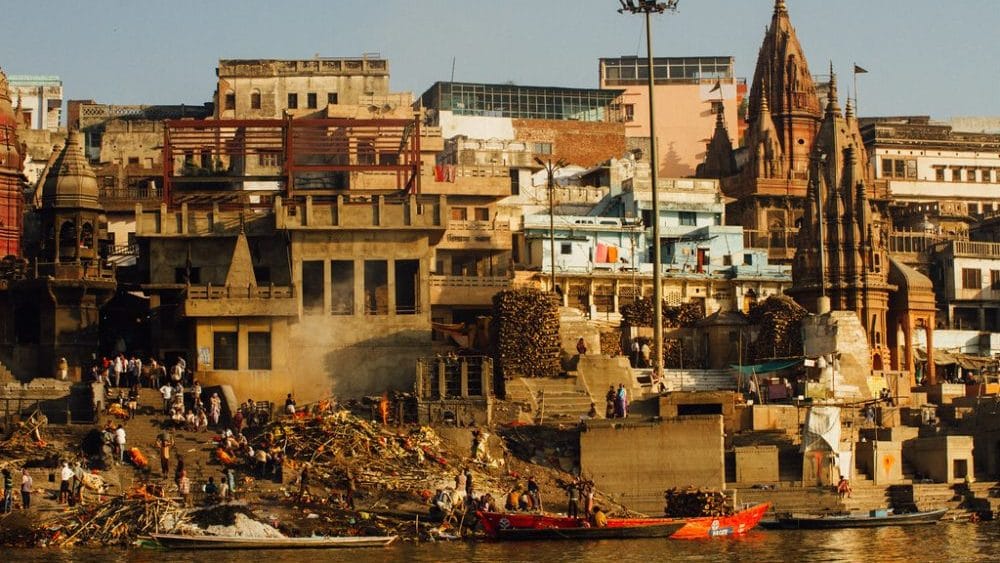
You’ve likely never heard of a place where death is not just an end, but a new beginning. Manikarnika Ghat, nestled along the holy Ganges in Varanasi, is one such sacred site where the concept of mortality takes on a different meaning. As one of the busiest and most significant ghats, it houses an eternal fire believed to have blazed since ancient times.

This sacred cremation ground represents the intersection of life and death, serving as a powerful reminder of the impermanence of life and the Hindu belief in the soul’s journey. Thousands of Hindus travel to Varanasi with the hope of being cremated at this auspicious place, believing it grants immediate liberation from the cycle of rebirth.
Key Takeaways
- You’ll discover why this site is one of the most spiritually significant places in India.
- You’ll learn how it represents the intersection of life and death.
- You’ll understand the significance of being cremated at this site.
- You’ll explore the unique perspective on mortality.
- You’ll gain insight into the site’s continued spiritual significance.
The Sacred Significance of Manikarnika Ghat
Manikarnika Ghat is revered as a gateway to salvation, where the cycle of life and death is transcended. This sacred site in Varanasi is considered the holiest cremation ground for Hindus, attracting devotees from around the world.
The Holiest Cremation Ground in Varanasi
The significance of Manikarnika Ghat lies in its association with Moksha, or liberation from the cycle of birth, death, and rebirth. It is believed that those cremated here are granted liberation, making it a spiritually significant place in India. According to Hindu belief, Lord Shiva whispers the Taraka Mantra into the ears of the deceased, guiding their souls toward salvation.
The Concept of Moksha and Liberation
The concept of Moksha is central to Hinduism, representing freedom from worldly attachments and the cycle of reincarnation. Manikarnika Ghat is considered a direct gateway to achieving this spiritual goal. Many devout Hindus travel to Varanasi in their final days, hoping to be cremated at this auspicious ground, thus preserving an ancient tradition.
As you explore Manikarnika Ghat, you’ll discover its profound significance and the beliefs that make it a revered site. “Death is a natural part of life,” and at Manikarnika Ghat, it is celebrated as a transition to the afterlife.
Mythological Origins and Legends
As you explore Manikarnika Ghat, you’ll uncover the rich mythological heritage that surrounds it. This sacred site is steeped in legends that have been passed down through generations.
Lord Shiva and the Divine Earring
One legend states that Lord Vishnu created a special pool near Manikarnika Ghat for Lord Shiva and Goddess Parvati to bathe in. While bathing, a precious earring (‘Mani’) from Goddess Parvati’s ear fell into the pool. To retrieve it, Lord Shiva dug a well at this spot, filling it with his sacred sweat.
The Story Behind the Manikarnika Curse
Another narrative connects Manikarnika Ghat to the tragic tale of Goddess Sati, whose body parts fell at various sites after being cut by Lord Vishnu’s Divine Chakra. Her earring fell at this ghat, establishing it as a Shakti Peeth. Some believe that disrespecting the ghat’s sacred nature can invoke a curse.

The mythological origins of Manikarnika Ghat continue to influence its spiritual practices and beliefs today, making it a unique and fascinating destination.
The Eternal Flame: Rituals and Ceremonies
As you step into Manikarnika Ghat, you’re immediately immersed in a world of ancient rituals and ceremonies that have been a cornerstone of Varanasi’s spiritual landscape for centuries. The air is thick with the scent of incense and smoke from the eternal flame, a symbol of the cycle of life and death.
The 24/7 Cremation Process
The cremation process at Manikarnika Ghat is a continuous, intricate ritual that unfolds 24 hours a day, with up to 400 bodies being cremated daily. The cremation of the physical body is seen as a sacred act, returning the elements to nature while liberating the soul.

Why Death is Celebrated, Not Mourned
At Manikarnika Ghat, death is viewed not as an end but as a transition, a celebration of the soul’s journey toward moksha. The concept of life death is intertwined, reflecting the Hindu belief in the cycle of existence.
| Rituals | Significance |
|---|---|
| Cremation | Returning the physical body to nature |
| Immersion of Ashes | Completing the cycle of return to the Ganges |
| Eternal Flame | Symbolizing the unbroken spiritual tradition |
Exploring Manikarnika Ghat Today

Manikarnika Ghat, one of the most revered ghats in Varanasi, is a place where you can witness the cycle of life and death amidst profound spiritual energy. As you visit this sacred site, you’ll be surrounded by the sights and sounds of ancient rituals and ceremonies.
What to Expect During Your Visit
During your visit to Manikarnika Ghat, you’ll witness the 24/7 cremation process, with smoke and chanting filling the air. The ghat is always bustling with activity, as pilgrims and mourners gather to perform rituals and ceremonies. You’ll experience the vibrant energy of the ghat, which is considered one of the holiest cremation grounds in Varanasi.
Etiquette and Respectful Behavior
When visiting Manikarnika Ghat, it’s essential to dress modestly and behave respectfully. Avoid interfering with the cremation rituals, and ask permission before taking photographs. Maintain a considerate distance from active cremations and be mindful of grieving families. By being respectful, you can have a meaningful and enriching experience at this sacred site.
Practical Information for Visitors
As you plan your visit to the sacred Manikarnika Ghat, it’s essential to have practical information at your fingertips. Manikarnika Ghat is located in the Lahori Tola area of Varanasi, nestled deep within the spiritual core of the old city.
Directions to Manikarnika Ghat
To reach Manikarnika Ghat, you can use major transportation hubs like Varanasi Junction railway station and Lal Bahadur Shastri International Airport. The ghat is accessible on foot or by boat from other major ghats like Dashashwamedh Ghat. You can also hire a rickshaw to the nearest accessible point and then walk through the narrow lanes of the old city.
Can Women Visit Manikarnika Ghat?
Yes, women are welcome to visit Manikarnika Ghat. However, they should dress modestly and be aware of certain cultural sensitivities surrounding the cremation rituals. It’s a place of great spiritual significance, and respect for local customs is appreciated.
Best Time to Visit
The best time to visit Manikarnika Ghat is from October to March, when the weather is pleasant. The ghat is open 24/7, with cremations occurring around the clock. Early morning (5-7 AM) offers a serene atmosphere with beautiful light for observation.
Manikarnika Ghat in Popular Culture
Manikarnika Ghat’s eternal flames have become a powerful metaphor in art and literature, symbolizing the cycle of life and death. This sacred site has been a muse for many creatives, reflecting its importance in Indian culture and heritage.
References in Films and Literature
The ghat has been featured in numerous films, documentaries, and literary works, often symbolizing the transcendence of life and death. For instance, the 2019 Bollywood film “Manikarnika: The Queen of Jhansi” shares its name with the ghat, although it tells the story of Rani Laxmibai.
The Manikarnika Movie Connection
While “Manikarnika: The Queen of Jhansi” isn’t directly about the ghat, it highlights the cultural significance of the name. The ghat itself has inspired many documentaries that explore Hindu death rituals and the unique relationship with mortality, often featuring the fire that burns continuously.
The surrounding area’s food culture also reflects the site’s heritage, with specific offerings and prasad that connect to the spiritual traditions.
Nearby Sacred Sites and Attractions
As you explore the spiritual essence of Manikarnika Ghat, you’ll discover a plethora of sacred sites and attractions in its vicinity. The area is rich in religious significance, offering a comprehensive spiritual experience.
Temples Near Manikarnika Ghat

The vicinity of Manikarnika Ghat is home to several revered temples. The Kashi Vishwanath Temple, dedicated to Lord Shiva, is one of the most significant pilgrimage sites in Hinduism. You can also visit the Tarakeshwar Temple and the sacred Manikarnika Kund, which features in the origin stories of Manikarnika Ghat.
Other Notable Ghats to Visit

While in Varanasi, you can explore other notable ghats along the Ganges. Dashashwamedh Ghat is famous for the spectacular Ganga Aarti ceremony that takes place every evening. You might also want to visit Assi Ghat, known for its cultural performances, and Harishchandra Ghat, the second cremation ground in Varanasi.
Embracing the Spiritual Wisdom of Manikarnika Ghat
The sacred rituals at Manikarnika Ghat offer a unique perspective on the journey toward moksha, transcending religious boundaries. As you witness the cremation ground rituals, you’ll gain insight into the natural cycle of life and death. The ghat’s energy continues to influence visitors, inspiring reflection on mortality and purpose. The traditions surrounding death, including specific foods offered during ceremonies, contain deeper philosophical meanings about nourishment of both body and soul.
You’ll leave with a deeper understanding of how to integrate these spiritual lessons into your own life, embracing the wisdom of Manikarnika Ghat.
FAQ
What is the significance of Manikarnika Ghat in Hinduism?
It is considered the holiest cremation ground in Varanasi, where the deceased are believed to attain Moksha, or liberation from the cycle of life and death.
Why is death celebrated at Manikarnika Ghat?
In Hinduism, death is seen as a natural part of life, and the cremation process is believed to release the soul from the physical body, allowing it to move on to the next stage of its journey.
Can anyone visit Manikarnika Ghat?
Yes, visitors are allowed, but it’s essential to be respectful of the rituals and ceremonies taking place, and to follow local etiquette and guidelines.
What is the story behind the Lord Shiva and the divine earring?
According to legend, Lord Shiva lost his earring while traveling through Varanasi, and it was recovered at the site now known as Manikarnika Ghat, which is said to be a sacred spot.
Are women allowed to visit the cremation ground?
Traditionally, women were not allowed to visit the cremation ground, but today, they are permitted, although some restrictions may still apply.
What is the best time to visit Manikarnika Ghat?
The best time to visit is early morning or late evening when the atmosphere is relatively calm, and the rituals are still being performed with great fervor.
Are there any other notable Ghats to visit in Varanasi?
Yes, Dashashwamedh Ghat is another famous ghat, known for its vibrant atmosphere and cultural significance, and is worth visiting.
How does the cremation process work at Manikarnika Ghat?
The cremation process is a continuous ritual, with pyres burning around the clock, and is performed by skilled priests and funeral pyre attendants.
Read more: Attractions