Nestled in the emerald hills of Nagaland, on the Indo-Myanmar border, lies a 700-year-old village that has undergone a transformative journey from being a hunting community to becoming India’s first green village. This village, inhabited by the Angami Naga tribe, has not only preserved its cultural identity but has also become a beacon of environmental stewardship.

The establishment of the Khonoma Nature Conservation and Tragopan Sanctuary in 1998 marked a significant turning point, creating a protected area of 20 sq km and banning hunting practices. Today, this village stands as a testament to community-driven conservation efforts, protecting endangered species and restoring biodiversity.
Key Takeaways
- Learn about the transformation of a hunting community into India’s first green village.
- Understand the significance of the Khonoma Nature Conservation and Tragopan Sanctuary.
- Discover the historical resistance of the village against British colonization.
- Explore the village’s journey from warriors to environmental guardians.
- Find out what makes this village a must-visit destination for cultural and ecological experiences.
Khonoma: The Green Fortress of Nagaland

Nestled in the heart of Nagaland, Khonoma stands as a testament to the region’s rich cultural heritage and environmental stewardship. You’ll experience a unique blend of tradition and nature in this green village.
Location and Geography
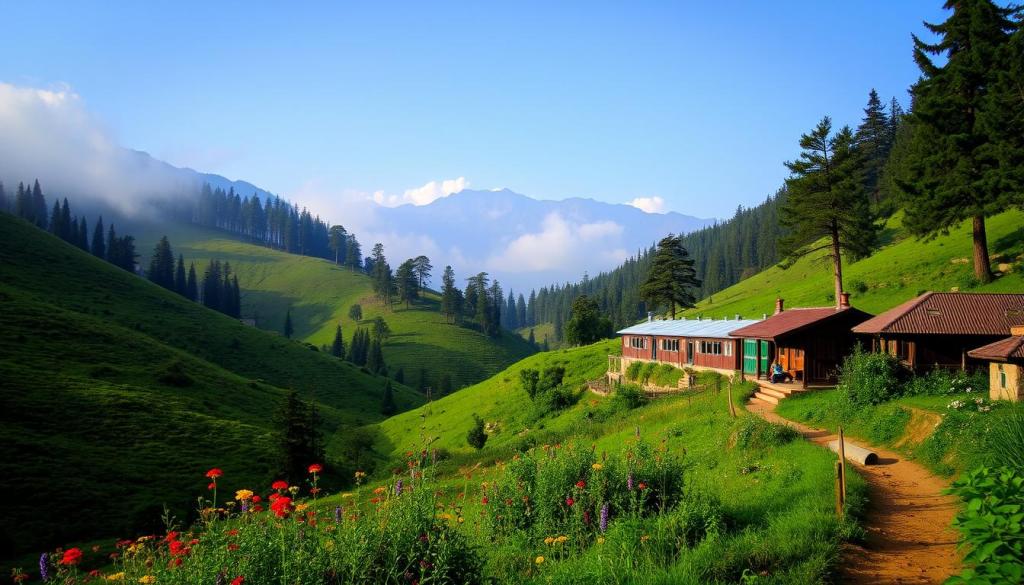
Khonoma is situated in the Kohima district of Nagaland, characterized by its picturesque landscapes and terraced fields. The village is surrounded by lush greenery, making it a haven for nature lovers.
The Angami Tribe: Custodians of Khonoma
The Angami tribe has been the custodian of Khonoma for generations, preserving the village’s cultural heritage and sustainable practices. You’ll have the opportunity to experience the rich traditions of the Angami people.
Climate and Seasonal Variations
Khonoma experiences a wide range of temperatures throughout the year, offering a distinct kind of experience in each season. The climate contributes to the lush green landscape that gives the village its distinctive character in a natural way.
- You’ll experience distinct seasonal variations in Khonoma that shape both the natural landscape and the rhythm of village life throughout the year.
- Winter months (December to February) bring cooler temperatures, offering clear skies and spectacular views.
- Spring transforms the green village into a vibrant tapestry of colors, with flowering plants and agricultural activities.
- The summer and monsoon season brings warm temperatures and heavy rainfall, nourishing the forests and terraced fields.
- Autumn offers pleasant temperatures with golden light and harvest activities, providing a different experience for visitors.
From Warriors to Environmental Guardians
As you explore Khonoma, you’ll discover how this village has transformed from a historical stronghold to a beacon of environmental conservation. The Angami tribe, once known for their bravery, has shifted their focus towards protecting the rich biodiversity of their homeland.
The 1998 Conservation Initiative
In 1998, Khonoma took a significant step towards conservation with the establishment of the Khonoma Nature Conservation and Tragopan Sanctuary. This initiative marked a new era in the village’s history, as the community came together to protect their natural heritage. The sanctuary is a testament to the village’s commitment to nature conservation and is a model for sustainable practices in the region.
Biodiversity and Sustainable Practices
Khonoma is renowned for its extraordinary biodiversity, boasting over 250 plant species, 70 of which have medicinal properties. The village is also home to 196 bird species, including the endangered Blyth’s tragopan, and features 19 varieties of bamboo. The community’s innovative agricultural practices, such as terraced farming and the use of Alder trees in shifting cultivation, demonstrate a successful model of sustainability. You can witness firsthand the harmony between nature and human habitation in this green village.
- The village shelters an impressive array of life, including 84 types of wild fruits and 116 varieties of vegetables.
- Khonoma’s residents have documented 45 dazzling orchid varieties and 25 types of snakes.
- The community’s conservation efforts have made it a living laboratory for conservation tragopan and other species.
The Historic Battle of Khonoma (1830-1880)

As you explore Khonoma, you’ll discover its rich history, including the pivotal Battle of Khonoma. This battle was a significant event in the history of Nagaland, marking the resistance of the Angami Naga tribe against British colonization.
Resistance Against British Colonization
The Angami Naga tribe had long been resistant to British colonization. The conflict escalated when Guybon Henry Damant, a political officer of the Naga Hills, arrived in Khonoma with 87 British soldiers to enforce taxation and bonded labor. This move was met with fierce resistance from the tribal warriors, who were determined to protect their independence.
The Ambush of October 13, 1879
On October 13, 1879, the Angami Naga warriors executed a brilliantly planned ambush against the British forces, killing 27 soldiers, including Damant. This significant blow to colonial authority was a testament to the strategic planning and determination of the Naga people. The British responded by laying siege to Khonoma for four months, until a peace treaty was signed on March 27, 1880.
The Battle of Khonoma was a crucial milestone in the Naga people’s struggle for self-determination, showcasing their resilience and bravery in the face of colonial expansion. You can reflect on the significance of this event and its impact on the history of the region.
Experiencing Khonoma Today
As one of the pioneers in sustainable living, Khonoma village beckons travelers from around the world to experience its unique blend of history, culture, and eco-friendly practices.
Located a four-hour drive from Kohima, Khonoma is now gaining attention in the world of global travel. The village has successfully transitioned from traditional hunting practices to sustainable efforts, with only about 20-30 families still dependent on hunting. This transformation has made Khonoma village a model for community-based conservation.
Visitors can immerse themselves in the village’s rich cultural heritage by participating in community events and traditional festivals. The residents of Khonoma take pride in sharing their tribe’s history and traditions with respectful visitors. You can experience authentic Naga hospitality through home stays, savoring locally grown organic cuisine.
Nature enthusiasts will appreciate guided hikes through the conservation area, where they can spot diverse plant life and 196 bird species. By visiting Khonoma today, you become part of the village’s ongoing story, supporting their conservation efforts through responsible tourism.
This model village is a testament to the successful integration of cultural heritage and modern sustentation principles, making it a must-visit destination for anyone seeking a unique and enriching experience.
Read more: Attractions
Read more: Attractions
FAQ
As India’s first green village, Khonoma has become a model for sustainable living and nature conservation, thanks to the efforts of the Angami Naga tribe.
The Tragopan Sanctuary is a testament to the village’s commitment to conservation, providing a safe haven for the rare and endangered Blyth’s Tragopan, a species of bird found only in this region.
The residents of Khonoma have come together to protect their natural resources, adopting sustainable practices and promoting eco-tourism, which has not only preserved the environment but also improved their livelihoods.
As you journey through Khonoma, you can immerse yourself in the village’s rich history, explore the surrounding forests, and witness the community’s dedication to preserving their cultural heritage and the natural world.
The Battle of Khonoma, fought between 1830 and 1880, is a testament to the bravery and resilience of the Angami Naga warriors, who resisted colonization and protected their land, leaving behind a legacy that continues to inspire the community today.
Bamboo is an integral part of Khonoma’s ecosystem, used sustainably by the community for various purposes, from building materials to food, showcasing the village’s harmonious relationship with nature.