
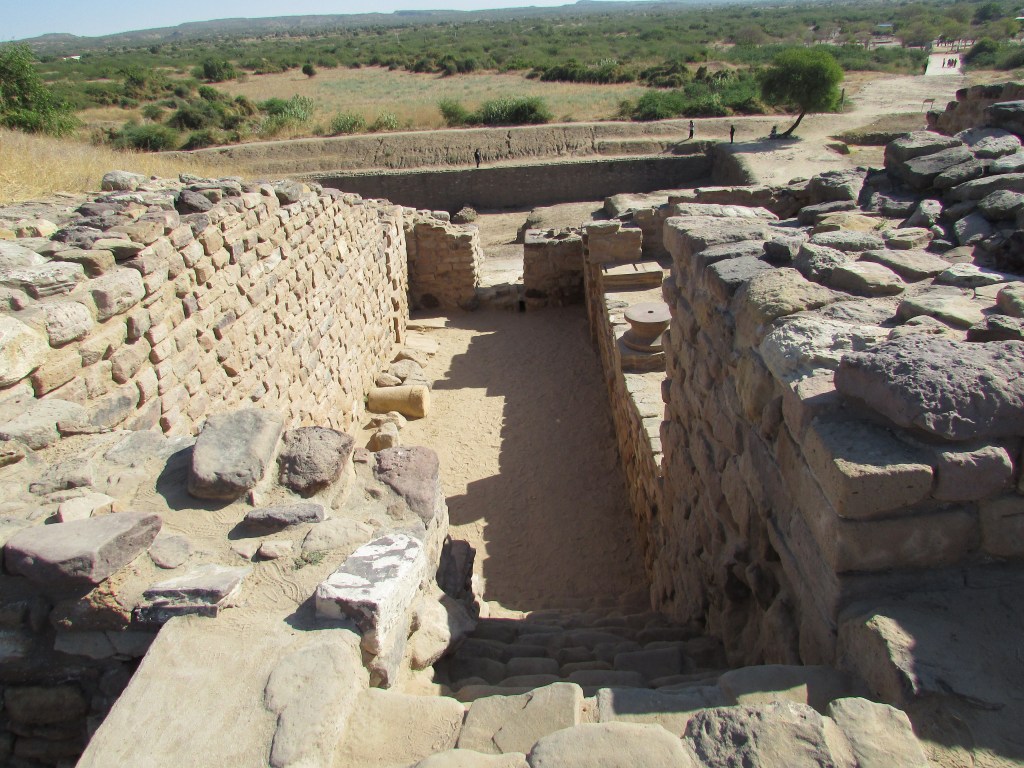
You are about to uncover one of India’s most significant archaeological treasures – a 4,500-year-old marvel of the Indus Valley Civilization. Located in the harsh desert landscape of the Great Rann of Kutch, this ancient city thrived due to its ingenious water conservation systems and sophisticated urban planning.

Dholavira stands as a testament to human innovation, featuring one of the world’s earliest water harvesting systems and mysterious inscriptions that continue to intrigue archaeologists. As a UNESCO World Heritage Site, it offers a unique window into the past, revealing the story of human development, prosperity, and eventual decline in this remote corner of Gujarat.
Key Takeaways
- Discover the history and significance of Dholavira, a prominent archaeological site in India.
- Explore the ingenious water conservation systems that allowed this ancient city to thrive.
- Learn about the sophisticated urban planning and architectural marvels of Dholavira.
- Understand the site’s importance as a UNESCO World Heritage Site.
- Plan your visit to this extraordinary window into our ancient past.
Discovering Dholavira: A UNESCO World Heritage Site
As you step into Dholavira, you’re about to uncover the secrets of a 4,500-year-old civilization. This ancient city, now a UNESCO World Heritage Site, offers a unique glimpse into the lives of the people who inhabited the Indus Valley region.
Location and Geographic Setting
Dholavira is situated on Khadir Bet island in the Great Rann of Kutch, a seasonal salt marsh in Gujarat‘s Kutch District. The site is strategically located between two seasonal streams, the Mansar in the north and Manhar in the south, which played a crucial role in the city’s water management system.
The site spans 47 hectares with a quadrangular layout, showcasing the advanced urban planning capabilities of the Indus Valley Civilization. You’ll find that Dholavira is one of the five largest Harappan sites discovered so far.
Significance in the Indus Valley Civilization
The Archaeological Survey of India has conducted extensive excavations at Dholavira since 1990, revealing a city that flourished from approximately 3500 BCE to 1800 BCE. Unlike other Indus Valley sites built primarily of brick, Dholavira’s structures were predominantly constructed of stone, showcasing the adaptability of its inhabitants to local resources.
Dholavira’s city planning and culture are testaments to the sophistication of the Indus Valley Civilization. As you explore this ancient city, you’ll gain insights into a world heritage site that has stood the test of time.
The Rich History of Dholavira
As you step into the ancient city of Dholavira, you’re about to uncover a history that spans over 1,700 years, a testament to the ingenuity and resilience of its inhabitants. The city’s story is intricately linked with the broader narrative of the Indus Valley Civilization, one of the world’s earliest urban cultures.
Timeline of Dholavira’s Development
Dholavira’s history began around 3500 BCE, during the Pre-Harappan period. The settlement evolved through several stages, with significant developments during the Mature Harappan phase (around 2500-2000 BCE), when the city reached its zenith. Archaeological evidence suggests that the site was occupied until around 1450 BCE.
The timeline of Dholavira’s development is marked by seven distinct stages, as identified by archaeologist Ravindra Singh Bisht. These stages highlight the city’s gradual growth, from an early settlement to a sophisticated urban center.
| Stage | Period | Characteristics |
|---|---|---|
| I | 3500-3200 BCE | Pre-Harappan Dholaviran Culture |
| II | 3200-2600 BCE | Early Urban Society |
| III-IV | 2500-2000 BCE | Mature Harappan, Urban Zenith |
| V | 2000-1900 BCE | Decline and Desertion |
| VI-VII | 1900-1450 BCE | Reoccupation with Simplified Lifestyles |
The Seven Stages of Civilization
The seven stages of Dholavira’s civilization, as outlined by Ravindra Singh Bisht, provide a comprehensive understanding of the city’s evolution. From the initial Pre-Harappan stages to the sophisticated urban planning of the Mature Harappan period, each stage offers insights into the lives of Dholavira’s inhabitants.
As you explore these stages, you’ll notice the impact of climate change on the city’s fate. The weakening monsoon and dwindling water sources forced the inhabitants to adapt, ultimately leading to the city’s decline.
“The archaeological evidence from Dholavira underscores the significance of climate change in shaping human history, serving as a poignant reminder of the fragility of even the most advanced civilizations.”
Architectural Marvels of Dholavira
You’ll be amazed by the intricate city planning and architectural sophistication of Dholavira. As you explore the site, you’ll notice the precision and foresight that went into designing this ancient Indus Valley Civilisation city.
City Planning and Urban Layout
Dholavira’s urban planning is a testament to the advanced engineering skills of its builders. The city was constructed according to a pre-existing geometrical plan, dividing it into three distinct sections: the citadel, the middle town, and the lower town. This division reflects the social hierarchy of its inhabitants and showcases a sophisticated understanding of urban planning. The city’s layout, with streets running in perfect cardinal directions, further highlights the citadel’s prominence and the overall architectural prowess.
The city’s sophisticated layout is evident in its well-planned streets and structures, built according to a predetermined geometric plan. This level of planning is a hallmark of the Harappan sites, demonstrating a high degree of civic organization.
The Citadel, Middle Town, and Lower Town
The division of Dholavira into the citadel, middle town, and lower town indicates a complex societal structure. The citadel, being at the highest point, housed the ruling elite and featured massive defensive walls up to 15 meters thick at the base. This not only underscores the engineering capabilities of the Harappans but also highlights the importance of defense in the city’s design.
The Famous Dholavira Signboard
One of the most significant discoveries at Dholavira is the famous “Dholavira Signboard,” found in one of the side rooms of the northern gateway. This signboard, comprising ten large symbols of the undeciphered Indus script made from gypsum pieces, is considered one world earliest known signboards. The signboard’s discovery has provided valuable insights into the language and communication methods of the Indus Valley Civilisation.
The excavation at Dholavira has revealed a city primarily constructed using stone, a departure from other Harappan sites that were mainly built with bricks. This adaptation to local resources and environmental conditions showcases the ingenuity and resilience of Dholavira’s inhabitants.
Revolutionary Water Conservation Systems
One of the most remarkable aspects of Dholavira is its ingenious water conservation system, a testament to the ingenuity of its ancient inhabitants. You’ll be amazed to discover that Dholavira is most famous for this revolutionary system, considered one of the earliest and most sophisticated in the world, which allowed the city to thrive in the arid landscape of the Great Rann of Kutch.

Ancient Reservoirs and Dams
The city’s sophisticated water conservation system included massive reservoirs, three of which are exposed, used for storing fresh water brought by rains or diverted from two nearby rivulets. The inhabitants of Dholavira created sixteen or more reservoirs of varying size during Stage III, some taking advantage of the natural slope of the ground.
- The engineering genius is evident in how they utilized the natural 13-meter slope of the land to create a gravity-fed water management system.
- Massive dams were constructed across seasonal streams, along with channels and drains that directed water into the reservoirs.
Water Harvesting Techniques
The water harvesting techniques employed at Dholavira were not only technologically innovative but also represented significant social cooperation. The construction and maintenance of this complex system would have required community-wide coordination and shared values around water conservation.
- In 2014, archaeologists uncovered a rectangular stepwell measuring 73.4 meters long, 29.3 meters wide, and 10 meters deep, further highlighting the site’s water engineering achievements.
- This extraordinary water harvesting system is a testament to the advanced understanding of hydrology and urban planning possessed by the inhabitants of Dholavira, a significant city in the Indus Valley Civilisation.
Notable Archaeological Findings at Dholavira
Dholavira’s excavation has yielded a remarkable array of artifacts that showcase the advanced craftsmanship and unique cultural practices of its ancient inhabitants. As you delve into the archaeological findings, you’ll discover a wealth of information about the daily lives, technological capabilities, and artistic expressions of the people who lived in this ancient city.
Artifacts and Craftsmanship
The artifacts found at Dholavira include a variety of items such as painted pottery, bronze tools, and gold jewelry, which demonstrate the sophisticated craftsmanship of the Harappan people. A giant bronze hammer, a big chisel, and a bronze hand-held mirror are some of the notable findings that highlight their technological prowess. Additionally, the discovery of copper celts and bangles, shell bangles, and terracotta tumblers in good shape underscores the diversity of materials used.
| Artifact Type | Description | Significance |
|---|---|---|
| Painted Pottery | Intricately designed with various motifs | Indicates advanced craftsmanship and aesthetic sense |
| Bronze Tools | Includes hammers, chisels, and mirrors | Demonstrates technological capabilities |
| Gold Jewelry | Ear studs, globules with holes | Shows wealth and luxury in the ancient city |
The Mystery of Indus Script
One of the most intriguing discoveries at Dholavira is the collection of seals bearing the mysterious Indus script. A huge signboard measuring about 3 meters in length and containing ten letters of Indus script has also been found. Despite decades of scholarly effort, the Indus script remains undeciphered, holding secrets of this ancient civilization’s language and communication.

Hemispherical Structures and Burial Sites
The Archaeological Survey of India has uncovered several hemispherical structures at Dholavira, some designed in the form of spoked wheels, which may have served as funerary monuments or had ceremonial significance. These structures, along with the discovery of a stone sculpture of a seated male figure, provide insights into the burial practices and artistic traditions of the Harappan civilization.
Visiting Dholavira Today
Visiting Dholavira is a journey through time, offering a glimpse into the lives of the people who lived in this ancient Indus Valley Civilization city. As you explore the site, you’ll be struck by the sophistication of its water conservation system and urban planning.

Timings and Entry Fees
Dholavira is open to visitors year-round, maintained by the Archaeological Survey of India. The site is typically open from sunrise to sunset, approximately 8:00 AM to 6:00 PM. You can book your entry tickets online through the Archaeological Survey India’s booking system at https://asi.payumoney.com/.
Best Time to Visit
The best time to visit Dholavira is during the winter months, from October to March, when the temperatures are pleasant. Summers can be extremely hot, with temperatures soaring above 40°C (104°F). Visiting during the winter ensures a comfortable exploration of the extensive ruins.
How to Reach Dholavira
To reach Dholavira, you can fly to Bhuj airport, about 215 km away, or take a train to Bhachau station, 150 km away. From there, a road journey through the villages and the unique salt desert terrain of the Great Rann of Kutch will take you to this archaeological wonder. Along the way, you might spot wildlife such as chinkara gazelle, nilgai, and various bird species, including flamingos.
Once you arrive, you’ll have the opportunity to explore the remains of the sophisticated water conservation system, the city’s three-tiered urban layout, and various artifacts, including terracotta pottery and stone structures that have survived for over 4,000 years. The site museum also displays findings from excavations, providing insights into the trade networks and daily life of this ancient civilization.
Conclusion: Lessons from Dholavira’s Rise and Fall
The story of Dholavira is one of resilience and adaptation, a testament to the ingenuity of the Indus Valley Civilization. As you reflect on Dholavira’s remarkable journey, you’ll appreciate how this ancient settlement offers profound lessons about human resilience, adaptation, and the delicate relationship between civilization and environment.
Dholavira’s rise and fall, documented in the Journal of Quaternary Science, reveals how climate change can dramatically alter the course of human settlement. The once-thriving city, with its ingenious water conservation system, flourished for over 1,700 years in an arid landscape, demonstrating the sophistication of the Mature Harappan settlement.
As the climate changed and water sources dwindled, the inhabitants adapted by shifting to drought-resistant crops and modifying their lifestyle. Eventually, however, they were unable to sustain the settlement. This ancient Indus Valley Civilisation site serves as a powerful reminder that civilizations rise and fall, but their achievements continue to inspire and inform us, connecting us to our shared human history across the subcontinent and beyond.
Dholavira’s legacy as a UNESCO World Heritage Site underscores its significance, not only for its historical importance but also for the valuable lessons it provides about the importance of water conservation and sustainable urban planning.
FAQ
What is the significance of Dholavira in the context of the Indus Valley Civilization?
Dholavira is one of the five largest Harappan sites and a UNESCO World Heritage Site, showcasing a sophisticated urban planning system and advanced water conservation techniques, making it a crucial part of understanding the Indus Valley Civilization.
What makes Dholavira’s water conservation system so remarkable?
The ancient city’s water harvesting techniques and reservoirs demonstrate a high degree of planning and engineering skills, allowing the civilization to thrive in the arid Great Rann of Kutch.
What are some of the notable archaeological findings at Dholavira?
Excavations have uncovered a range of artifacts, including terracotta items, stone structures, and evidence of a sophisticated craftsmanship, providing insights into the lives of the people who lived there.
What is the significance of the Dholavira signboard?
The signboard, featuring the Indus script, is a significant discovery that has shed light on the language and communication systems of the Indus Valley Civilization.
How did the people of Dholavira manage to build such an advanced city in the desert?
The city’s city planning and urban layout demonstrate a deep understanding of the environment and a commitment to creating a sustainable and thriving community.
What can visitors expect to see when they visit Dholavira today?
Visitors can explore the ruins of the city, including the citadel, middle town, and lower town, and gain a glimpse into the lives of the people who lived there through the various artifacts and structures on display.
Read more: Attractions



.jpg)