
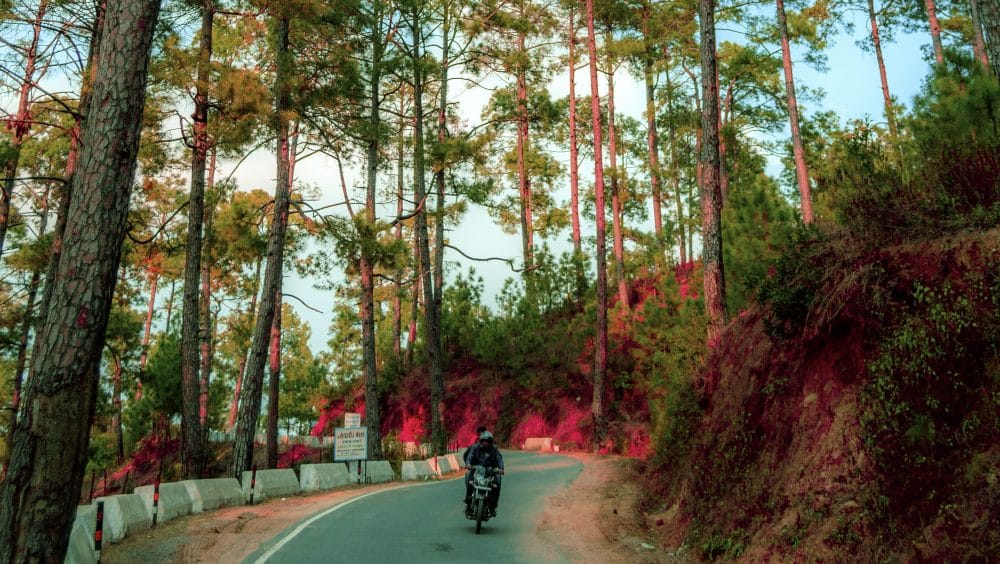
Nestled in Uttarakhand’s Bageshwar district at about 1,890 m above sea level, Kausani is a serene Himalayan hill-station famous for its 300 km-wide panoramic views of peaks like Nanda Devi, Trisul, and Panchachuli.

Mahatma Gandhi himself reportedly called Kausani the “Switzerland of India” after a short stay, enchanted by its vistas.
In this guide, you’ll find everything you need: what to do, how to reach, when to visit, expenses, local tips — all backed by verifiable sources.
Quick Snapshot
| Feature | Detail |
|---|---|
| Best time to visit | April to June and September to November (clear skies, pleasant temperature) |
| How to reach | Via road (nearest rail: Kathgodam or Almora; nearest airport: Pantnagar / Dehradun) |
| Must-do experiences | Sunrise view, Anashakti Ashram, Tea estate walk, Rudradhari trek, Baijnath temple visit |
| Approximate daily budget | ₹1,500–₹3,000 (midrange) |
| Safety & health | Cold winters, limited medical facilities — basic precautions needed |
Why Visit Kausani?
- Panoramic Himalayan Views: From Kausani you can view peaks such as Nanda Devi, Trisul, Panchchuli, and Nanda Kot forming a breathtaking
- Tranquil Ambience: Unlike many crowded hill stations, Kausani retains a quiet, almost untouched character.
- Cultural & Literary Heritage: It is the birthplace of the Hindi poet Sumitranandan Pant (there’s a gallery in his memory).
- Gandhian Legacy & Ashrams: Mahatma Gandhi visited and stayed at the Anashakti Ashram here; nearby Lakshmi Ashram continues Gandhian social work.
- Nature, Trekking & Village Life: The hills, forests, waterfalls, and rural trails offer scope for gentle treks and immersive village tourism.
Kausani thus combines nature, culture, peace, and light adventure in a compact package.
When to Go
Seasonal Breakdown
| Season | Months | Highlights | Things to Watch Out |
|---|---|---|---|
| Spring / Summer | April – June | Pleasant (10–25 °C), wildflowers, clear skies | Occasional rain, clear sunrise days |
| Monsoon | July – August | Green foliage, fewer tourists | Heavy rain, slippery trails, landslide risk |
| Autumn / Post-monsoon | September – November | Clear skies, crisp air, best visibility | Nights get cold |
| Winter | December – February | Snowy vistas, minimal crowds | Very cold (−5 to 8 °C), some roads may be closed |
Sadly, I could not find an official temperature & precipitation chart specific to Kausani from government meteorology sources. Use regional Kumaon climate data or check local weather forecasts for precise planning.
How to Reach
Nearest Airports
- Pantnagar Airport (PGH) is about 150–170 km from Kausani; road travel from there takes ~5–6 hours (via Haldwani / Kathgodam).
- Dehradun (Jolly Grant Airport) is further away; road + connecting segments will be long.
I could not find a government source giving an exact “nearest airport to Kausani” route time — local taxi operators or Uttarakhand tourism office may confirm.
Rail & Road
- Railway: The nearest broad gauge station is Kathgodam, from where one can take a bus/private vehicle to Kausani (distance ~120–150 km).
- Road / Bus: Kausani is well connected via Almora (≈ 51–53 km away) and via Bageshwar.
- The district website affirms Kausani is a tourist place in Bageshwar and is suited for those seeking calm in the hills.
For up-to-date bus schedules, check Uttarakhand State Transport or district transport websites.
Where to Stay
Kausani has a mix of guest houses, homestays, mid-range hotels, and KMVN (state tourism) rest houses.
- Many hotels and homestays face the Himalayan range for sunrise views.
- KMVN resthouse in Kausani is a state tourism option.
- Homestays in the villages around Kausani offer local experiences; validate registration and amenities.
- Book in advance during peak (April–June, Sept–Nov).
I did not find a definitive official list of all recommended hotels from the Uttarakhand tourism department; you may refer to local tourism board or hotel portals for stay options.
Top Attractions & Experiences
Below are key places and experiences you must consider — each given as H3 with a verified fact.
Anashakti Ashram (Gandhi Ashram)
This peaceful ashram is where Mahatma Gandhi stayed in 1929 and wrote his treatise on Anasakti Yoga.

It also includes a library, meditation areas, and gardens with mountain views.
Sumitranandan Pant Gallery & Museum
Located about 0.5 km from the town center, this gallery is dedicated to the life and works of poet Sumitranandan Pant, who was born in Kausani.
It houses manuscripts, letters, photographs and offers insight into his bond with nature.

Rudradhari Falls & Caves
About 12 km / 30 minutes from Kausani (on Almora road), this spot includes a waterfall and caves amidst forested terrain.

The trek is moderate and rewarding for nature lovers.
Kausani Tea Estate
Around 5 km / 15 minutes from the town, you can stroll through tea gardens, observe tea processing, and buy freshly processed tea.

Lakshmi Ashram
About 1 km from Kausani, this ashram was founded by Sarla Behn (a Gandhian disciple) in 1948 focusing on women’s education and social upliftment.

Baijnath Temple
At a distance of ~16–17 km from Kausani, Baijnath is an ancient temple of Lord Shiva on the banks of the Gomti River.

It’s known for its stone carvings and historical architecture. (Timings: ~6:00 a.m. to 9:00 p.m)
Stargate / Observatory / Astrophotography
Kausani hosts a private Stargate Observatory for celestial viewing and astrophotography.
According to Incredible India, Kausani also supports mountain biking, climbing, and hiking in nearby forested terrain.
Trek to Pinnath / Gopalkot
A trek of ~5 km (≈ 2 hrs one way) from Kausani leads to the village of Pinnath / Gopalkot. It is often done as a half-day excursion.
Village Walks & Cultural Immersion
You can explore nearby villages, interact with locals, see Kumaoni architecture, and observe rural life. Uttarakhand tourism encourages village tourism.
Suggested Itineraries
1-Day Itinerary
- Early morning: Wake for sunrise viewpoint
- Visit Anashakti Ashram + Sumitranandan Pant Gallery
- Lunch in town
- Afternoon: Tea Estate walk + local village stroll
- Evening: Sunset view
- Optional: Night sky observation (if clear)
2-Day Itinerary
Day 1: As above
Day 2:
- Morning: Trek to Rudradhari Falls & Caves
- Return for lunch
- Afternoon: Visit Lakshmi Ashram, then drive to Baijnath Temple
- Evening: Return and relax
3-Day Itinerary
- Days 1 & 2: as above
- Day 3: Trek or drive to Pinnath / Gopalkot, explore local villages, depart
You may also extend to visits to Bageshwar and Almora region as side excursions.
Costs & Budget
| Category | Approx Range (per person/day) | Notes / source |
|---|---|---|
| Accommodation (midrange) | ₹800 – ₹2,000 | Depends on homestay / hotel quality |
| Food & drink | ₹300 – ₹700 | Local meals, tea shops |
| Local transport / taxi | ₹200 – ₹800 | Based on short distances and local rates |
| Activities / entry | ₹0 – ₹300+ | Most ashrams/museums low fee or free; observatory may charge |
| Trek / guides | ₹100 – ₹500 | For guided treks or local guides |
These are estimates; I could not find all official activity or entry fees in government sources. Use them as benchmarks and cross-check locally.
Local Transport
- Shared jeeps / taxis operate between Kausani and nearby towns (Almora, Bageshwar).
- Local walking / hiking is often the mode within the town.
- There is no official city bus system documented specifically for Kausani in state transport portals I could locate.
- For rural treks or remote sites, hiring a guide or local transport is advisable for safety and directions.
Food & Drink
Local Dishes & Taste
- Kumaoni cuisine: Aloo ke Gutke, Bhang ki Chutney, Gahat (kulath) dal, Bhatt (black soybean) dishes, madua (ragi) roti
- Fresh Himalayan tea from local gardens is a must-try
Recommended Eateries
While official sources do not list specific restaurants, local guides suggest:
- Yogi Restaurant, Kausani — Indian dishes
- Garden Restaurant, Kausani — Indian, Chinese, Continental mixes
Hygiene Tip: Prefer cooked/stewed food, drink boiled or bottled water, avoid street food in wet or monsoon season.
Safety, Health & Permits
- Winters can be very cold; carry woollens, thermals, and protection against frostbite.
- Medical facilities in Kausani are basic; carry essential medicines.
- Trekking off marked paths or after dusk is not advised.
- I found no special permit zones in the immediate Kausani area.
- As with all hills: risk of landslides, slippery trails in rains — check local weather before travel and avoid monsoon peaks.
Packing List & Tips
Essentials for All Seasons
- Warm layers (fleece, woolens)
- Rain jacket / umbrella
- Good walking shoes / trekking boots
- Sunscreen, sunglasses, wide-brim hat
- Daypack, water bottle
- Flashlight / headlamp
- Basic first aid kit
Additional Notes
- Respect local culture: avoid revealing clothing in villages or near ashrams
- Carry a power bank; electricity may fluctuate in remote areas
- For winter, thermal innerwear, gloves, caps, heavy jackets
Responsible Travel & Sustainability
- Avoid single-use plastic; carry refillable bottles
- Stick to marked trails; avoid disturbing flora/fauna
- Respect local customs, ask before photographing villagers
- Support local homestays, handicrafts, and guides — benefit the community
- Check if any forest rules apply locally (e.g. no fire zones)
Top FAQs
Q1. Is 2 days enough for Kausani?
A: Yes — you can cover main highlights (sunrise, Anashakti, Rudradhari, galleries, Baijnath) in 2 days, though 3 days gives more breathing space for treks and village time.
Q2. What is the best time to visit Kausani for clear Himalayan views?
A: Post-monsoon (September to November) and late spring (April to June) are best for clear skies and comfortable weather.
Q3. How to reach Kausani from Delhi?
A: Take a train or bus to Kathgodam / Haldwani, then hire a taxi or take state buses via Almora or Bageshwar. Alternatively, drive via Uttarakhand hill roads.
Q4. Do I need any permits for trekking around Kausani?
A: No specific permit is documented for the usual treks (Rudradhari, Pinnath). For deep forest or border regions, check local forest department rules.
Q5. Is it safe for solo women travelers?
A: Kausani is relatively safe; still take usual precautions (avoid isolated places after dark, inform hosts about plans). Use local guides when venturing out.
Q6. Is there any night life or markets open late in Kausani?
A: No major nightlife; most shops/restaurants close by evening. Kausani is about peaceful retreats, not nightlife.
Q7. Can I see snow in Kausani during winter?
A: Yes, snow occurs in December–January, though accumulation depends on the year’s snowfall. Infrastructure may be affected then.
Conclusion
Kausani is a hidden gem in Uttarakhand that offers sweeping Himalayan vistas, peace, local culture, gentle treks, and literary history. While 2 days can cover its highlights, a 3-day stay gives you room to breathe, explore, and savor. Before you travel, check local weather, road conditions, and availability of homestays. Pack well, travel responsibly, and you’ll leave Kausani with memories etched against the mountain horizon.
Safe travels and may your sunrise views be magical!
Read more: Attractions
Latest Posts
- Best trekking trails in Wayanad – Peaks, Forests and Nature Hikes
 Explore the best trekking trails in Wayanad — peaks, forest hikes, caves and offbeat paths — with complete tips on seasons, permits, stays, costs and itineraries.
 - Tamil Nadu’s Most Beautiful Waterfalls – A Complete Travel GuideDiscover Tamil Nadu’s most beautiful waterfalls — from Courtallam’s famous cascades to hidden forest falls — with travel tips, best times, itineraries and safety advice.
- Pangi Valley: Hidden Himachal via Sach PassPangi Valley – ultimate travel guide for travellers who want raw Himalayan adventure. Learn how to reach via Sach Pass, where to stay, what to see and how to explore its remote valleys safely.
- Nanda Devi National Park – Ultimate Travel GuideDiscover Nanda Devi National Park — its soaring peaks, pristine wilderness, trek routes, flora & fauna and practical travel tips in this comprehensive guide.
- Savour the Famous South Indian Food in CoimbatoreExplore the famous South Indian food in Coimbatore, from soft idlis and ghee roast dosas to bun parottas and filter coffee. This guide reveals authentic flavors, costs, itineraries, and culinary secrets.




I was reading through some of your articles on this internet site and I believe this site is rattling instructive! Keep on putting up.
Thank you for such kind words, It really keeps us going.