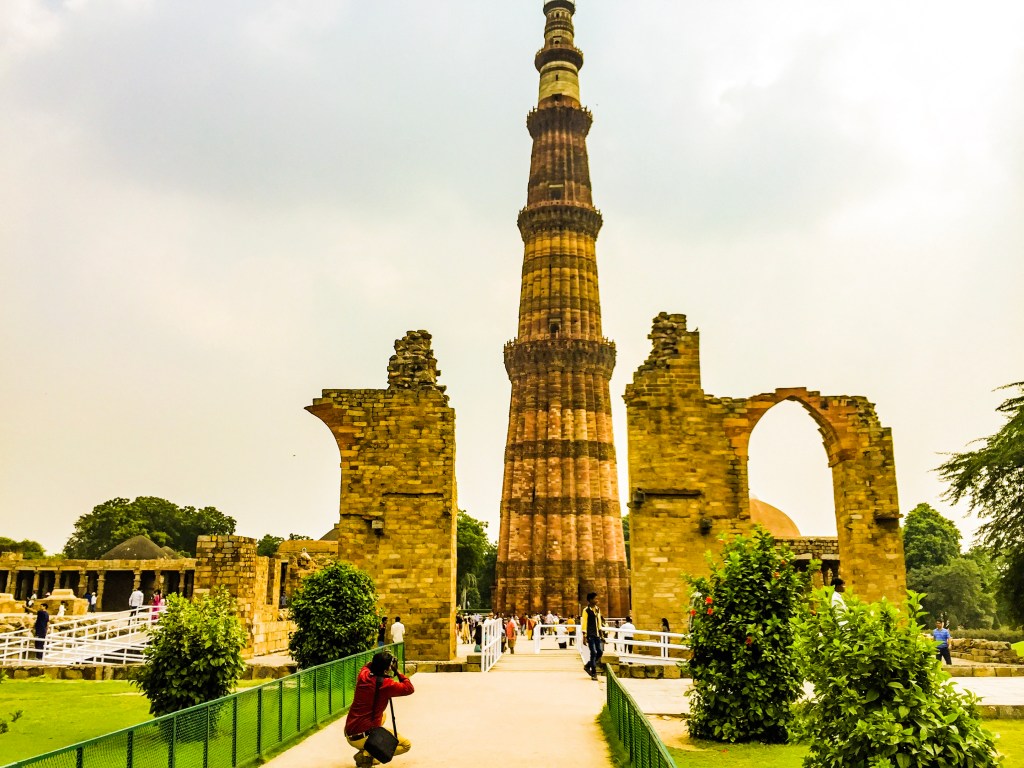
Standing tall for over eight centuries, the Qutub Minar is a testament to India’s rich history and architectural prowess. As you step into the Qutb complex, you’re immediately struck by the grandeur of this UNESCO World Heritage Site. At 72.5 meters (238 feet), this magnificent minaret is not only an iconic landmark but also a symbol of the region’s cultural heritage.

Built during the Delhi Sultanate era, this monument represents a unique blend of Islamic and Hindu architectural styles. As you explore the complex, you’ll uncover the fascinating stories behind this architectural marvel and understand why it continues to draw millions of visitors each year.
Key Takeaways
- The Qutub Minar is a significant historical monument and a UNESCO World Heritage Site.
- It represents a blend of Islamic and Hindu architectural styles.
- The complex is a testament to the artistic brilliance of craftsmen from centuries ago.
- The monument continues to inspire wonder and attracts millions of visitors.
- It is a symbol of India’s rich cultural heritage.
The Magnificent Qutub Minar: An Overview
The Qutub Minar is an awe-inspiring monument that has captivated visitors for centuries. As you explore this magnificent structure, you’ll be struck by its sheer grandeur and the rich history it embodies. Standing tall in the Delhi skyline, Qutub Minar is a masterpiece of Indo-Islamic architecture that has withstood the test of time.
What Makes Qutub Minar Special
Qutub Minar’s unique fluted design, with alternating angular and rounded flutings, makes it architecturally distinct from any other monument in the world. The tower’s height of 72.5 meters makes it the tallest minaret in the world built of bricks. As you climb the 379 steps of the spiral staircase, you’ll notice the intricate sandstone and marble work that adorns its five distinct stories, each with its own unique design elements.
The Qutub Minar’s significance extends beyond its architectural beauty; it represents a crucial moment in history when Islamic architectural traditions were first established in the Indian subcontinent.
UNESCO World Heritage Status
In 1993, UNESCO recognized the exceptional universal value of Qutub Minar by designating it as a World Heritage Site. This prestigious recognition cements Qutub Minar’s place among humanity’s most treasured cultural landmarks. The Qutub Minar complex, which includes the Quwwat-ul-Islam Mosque and the Iron Pillar, is a testament to the rich cultural heritage of India.
Visiting Qutub Minar is not just about seeing a historical monument; it’s an experience that connects you with the stories and craftsmanship of a bygone era.
The Rich History of Qutub Minar
As you delve into the history of Qutub Minar, you’ll discover the fascinating story behind this iconic monument. The Qutub Minar is not just a tower; it’s a symbol of the Delhi Sultanate’s rich history and architectural prowess.
Who Built Qutub Minar?
The construction of Qutub Minar began in 1199 under the direction of Qutb al-Din Aibak, the founder of the Delhi Sultanate. Qutb al-Din Aibak started the construction of the first story, envisioning it as a victory tower and a minaret for the adjacent mosque. The Qutub Minar was built using red sandstone and marble, showcasing the architectural skills of the time.
| Ruler | Contribution |
|---|---|
| Qutb al-Din Aibak | Started construction in 1199 |
| Shamsuddin Iltutmish | Added three more stories |
| Firuz Shah Tughlaq | Repaired and added a fifth story after a lightning strike in 1369 |
Construction Timeline: From 1199 to Completion
The construction of Qutub Minar was a long-drawn process that spanned several generations. Qutb al-Din Aibak only managed to complete the base level before his death. His successor and son-in-law, Shamsuddin Iltutmish, continued the construction, adding three more stories to the tower. The construction timeline reveals the evolving architectural styles of the Delhi Sultanate, with each ruler adding their own artistic influence.

Built in Memory of Whom?
The Qutub Minar is believed to have been built in honor of the Sufi saint Khwaja Qutbuddin Bakhtiar Kaki. Shamsuddin Iltutmish was a devotee of this saint, and it’s possible that the tower was named after him. Alternatively, it’s also believed that the tower was named after Qutb al-Din Aibak, who initiated the construction. The exact reason behind the naming remains a topic of debate among historians.
Architectural Marvel: Features of Qutub Minar
As you stand before the Qutub Minar, the sheer scale of this architectural marvel will leave you awestruck. The Qutub Minar is a masterpiece that showcases the ingenuity and craftsmanship of ancient builders.
The Impressive Height and Structure
The Qutub Minar stands tall at a height of 72.5 meters (238 feet), making it the tallest minaret in the world built of bricks. Its structure ingeniously tapers from a broad base with a diameter of 14.3 meters (47 feet) to just 2.7 meters (9 feet) at its top, creating a sense of grandeur.

The Five Distinct Stories
The Qutub Minar is composed of five distinct stories, each telling its own architectural story. The first three stories are constructed primarily of red sandstone, while the upper story incorporates white marble, creating a striking visual contrast. The stories vary in size, style, and material due to the different architects and builders who constructed each section.
The second, third, and fourth stories were erected by Sham ud-Din Iltutmish, showcasing a blend of architectural styles. The intricate craftsmanship is visible in the alternating angular and rounded flutings that run the length of the tower, demonstrating the advanced engineering knowledge of its builders.
Materials and Craftsmanship
The Qutub Minar is a testament to the skill of ancient craftsmen, who used high-quality sandstone and marble to construct this magnificent structure. The use of red sandstone for the lower stories and white marble for the upper story adds to the visual appeal. The ornate balconies supported by elaborate stone brackets (muqarnas) provide not just structural support but also create stunning visual breaks in the tower’s vertical ascent.
The Qutub Complex: Beyond the Minar
As you explore the Qutub Minar, you’ll discover that it’s just one part of the larger Qutub Complex, a treasure trove of historical monuments. The complex is a testament to the rich cultural heritage of Delhi, with numerous structures that showcase the architectural styles of various periods.
Quwwat-ul-Islam Mosque
The Quwwat-ul-Islam Mosque, built in 1199 by Qutub-ud-Din Aibak, is the earliest extant mosque in the Indian subcontinent. This mosque is unique because it was constructed using materials from 27 Jain and Hindu temples, creating a fascinating blend of architectural styles. As you walk through the mosque, you’ll notice the intricate carvings and the lofty arched screen erected by later rulers.
The Iron Pillar Mystery
Standing tall in the courtyard of the mosque is the enigmatic Iron Pillar, a marvel of ancient Indian metallurgy. This 1,600-year-old pillar has resisted corrosion, sparking curiosity and admiration. The inscription on the pillar tells the story of a mighty king named Chandra, adding to the mystique surrounding this monument.
Other Monuments in the Complex
Beyond the mosque and the Iron Pillar, the Qutub Complex is home to numerous other monuments, including tombs, gateways, and smaller structures. These monuments collectively create one of the most significant archaeological sites in India, offering a glimpse into the layered history of Delhi.
| Monument | Description | Built By | Year |
|---|---|---|---|
| Quwwat-ul-Islam Mosque | Earliest extant mosque in Indian subcontinent | Qutub-ud-Din Aibak | 1199 |
| Iron Pillar | 1,600-year-old metallurgical wonder | Unknown | 4th century |
| Qutub Minar | Tallest brick minaret in the world | Qutub-ud-Din Aibak | 1199 |
Experiencing Qutub Minar Today
As one of the most visited monuments in Delhi, Qutub Minar offers a unique blend of history, architecture, and culture. You’ll be joining millions of visitors from around the world who come to witness this architectural masterpiece that has stood the test of time for over eight centuries.
The Spectacular Qutub Minar Light Show
The Qutub Minar light show is a spectacle not to be missed. After sunset, this ancient monument transforms into a canvas of vibrant colors and patterns, bringing its architectural details to life in a whole new way.

Visitor Information and Best Time to Visit
When planning your visit to the Qutub Minar complex, you’ll find that early morning or late afternoon offers the best lighting for photography and a more comfortable experience away from Delhi’s midday heat.
The site is accessible year-round, but you might find the most pleasant visiting experience during the winter months (October to March) when the weather is cooler and more conducive to exploring the outdoor complex.
As one of Delhi’s most popular tourist destinations, you’ll want to allocate at least 2-3 hours to fully explore the entire complex and appreciate the historical significance of each monument.
Occasionally, the Qutub Minar is illuminated for special diplomatic occasions, strengthening global relationships and adding another layer of significance to your visit to this world heritage site.
Preserving a Legacy: Challenges and Restoration
The Qutub Minar’s enduring presence is a testament to the tireless efforts to restore and conserve it over the centuries. You’ll gain a deeper appreciation for this monument when you understand the tremendous preservation efforts that have kept this 800-year-old tower standing despite numerous natural disasters.
The tower has survived multiple earthquakes, including major ones in 1505 and 1803, with successive rulers undertaking restoration work that demonstrates its enduring cultural importance. One of the most curious chapters in the preservation history occurred in 1828 when British officer Major Robert Smith added a sandstone cupola to the top of the tower.
Today, you’ll witness the results of careful conservation work that maintains the delicate balance between preserving the original features of the monument—including its intricate carvings, inscriptions, and marble inlays—while ensuring its stability for future generations. As a UNESCO World Heritage site, the Qutub Minar complex continues to be an important cultural landmark, symbolizing the rich history of the Delhi Sultanate.
As you admire this enduring symbol of Delhi’s past, you’ll recognize how each restoration effort has contributed to the story of Qutub Minar, adding layers of meaning to this remarkable victory tower that has served as a call to prayer and a beloved landmark for over eight centuries.
Read more: Attractions
FAQ
The Qutub Minar is a symbol of victory and a testament to the rich history of the Delhi Sultanate. It represents the beginning of Muslim rule in India and is considered one of the most important monuments in the country.
The construction of the Qutub Minar was initiated by Qutb al-Din Aibak, the founder of the Delhi Sultanate, in 1199. The project was later completed by his successor, Iltutmish.
The Qutub Minar stands at an impressive height of 72.5 meters, making it one of the tallest minarets in the world.
The Qutub Minar is built using red sandstone and white marble, showcasing exceptional craftsmanship and attention to detail.
Yes, the Qutub Minar is a UNESCO World Heritage Site, recognized for its cultural and historical significance.
The Qutub Complex is home to several other important monuments, including the Quwwat-ul-Islam Mosque and the Iron Pillar, which is a mysterious iron column that has withstood the test of time.
Yes, visitors can climb to the top of the Qutub Minar via a series of balconies and stairs, offering breathtaking views of the surrounding area.
The best time to visit the Qutub Minar is during the cooler months or during the spectacular Qutub Minar Light Show, which is a must-experience event.