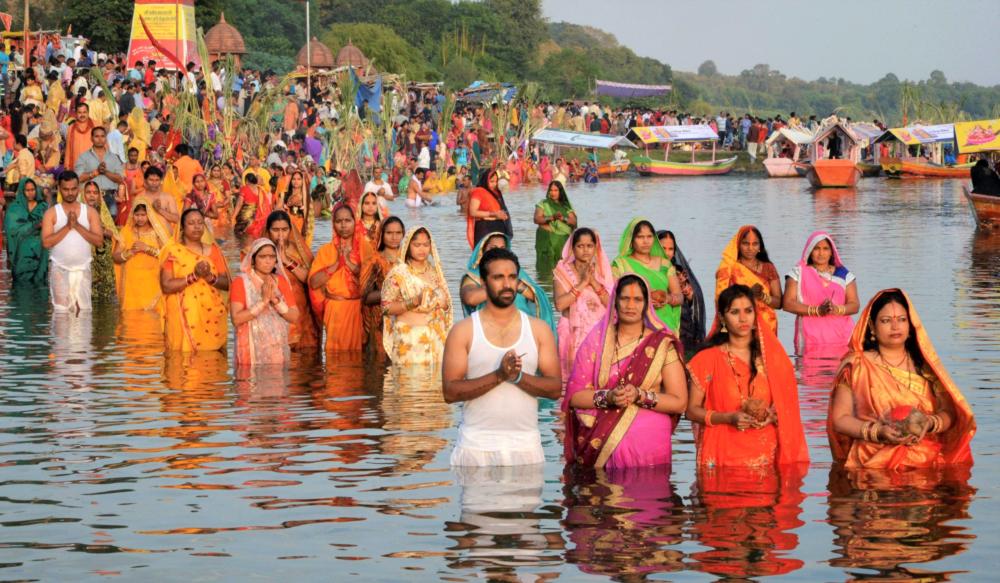
Every year, as dawn and dusk cast golden hues over the river-banks of eastern India, millions of devotees gather for Chhath Puja, a four-day festival dedicated to the Sun God (Surya Dev) and his sister-goddess Chhathi Maiya. The rituals involve holy bathing, strict fasting, standing knee-deep in water, and offering arghya to both the setting and rising sun — a unique practice in Hindu culture.

For travellers and cultural explorers alike, the festival offers a rare blend of spiritual purity and immersive regional tradition, especially in states like Bihar, eastern Uttar Pradesh and Jharkhand.
Quick Snapshot
| Item | Details |
|---|---|
| Duration | 4 days (observed on the 6th day of the lunar month of Kartika) |
| Key regions | Bihar, Eastern Uttar Pradesh, Jharkhand (also parts of Nepal) |
| Main rituals | Nahay Khay (bath & meal) → Kharna (fast & prasad) → Sandhya Arghya (evening offering) → Usha Arghya (morning offering) |
| Significance | Worship of the setting and rising sun, expression of gratitude, purification of body & mind |
| 2025 Dates (anticipated) | 25 Oct to 28 Oct 2025 |
What is Chhath Puja?
Chhath Puja is an ancient Hindu festival focused on Sun-worship and nature-based ritual observance. It is believed to grant health, prosperity, and longevity by honouring Surya Dev and Chhathi Maiya.
What sets it apart: it is the only major Hindu festival where both the setting sun and the rising sun are offered prayers and arghya.
The festival emphasises ritual purity, simplicity, devotion and deep connection with water-bodies and light.
Historical Background
The roots of Chhath go deep into Vedic traditions where Surya Dev was worshipped as the source of all life and energy.
In the epic narrative of the Mahabharata, it is said that figures like Draupadi and the Pandavas observed the Sun-worship on river-banks to regain fortunes.
Over centuries this practice transformed into a formalised four-day festival of ritual cleanliness, bathing, fasting, offerings and communal devotion. The official tourism website of Bihar calls it a “bath-festival followed by a four-day period of abstinence and ritual purity”.
When is Chhath Puja Celebrated?
2025 dates (anticipated):
- Day 1 (Nahay Khay): 25 Oct 2025 — devotees take a holy bath and eat the first pure meal.
- Day 2 (Kharna): 26 Oct 2025 — full-day fast without food or water, evening prasad—kheer, fruits—offered.
- Day 3 (Sandhya Arghya): 27 Oct 2025 — evening, at river-banks, standing in water to offer oblation to the setting sun.
- Day 4 (Usha Arghya): 28 Oct 2025 — early morning offering to the rising sun, breaking of fast, distribution of prasad.
Note: These dates are based on calculated lunar calendars and media reports. Local ghat committees may publish exact times of arghya and ritual windows — it is recommended to verify with local authorities.
Where to Experience Chhath Puja
While Chhath is celebrated in multiple places, the most immersive experiences for travellers are:
1. River-banks of Patna (Bihar)
The ghats on the banks of Ganga River in Patna see thousands of devotees at dawn and dusk. The official Bihar Tourism site highlights this as the centre of Chhath celebrations.
Tour-packages for watching Chhath from cruise-boats on the Ganga have been introduced by the state tourism board.
2. Eastern Uttar Pradesh & Jharkhand Rivers & Ponds
Regions across eastern UP and Jharkhand mirror Bihar’s traditions. While slightly less crowded, they offer a more local, less touristy experience.
3. Urban Ghats in Delhi, Kolkata, etc.
Migrant communities from Bihar/UP celebrate Chhath in major cities. Governments often arrange special ghats, cultural shows and cleanliness drives to manage crowds. (News: Delhi cultural-shows for Chhath at 200+ locations)
Travel tip: Arrive at least one hour before sunset in Day 3, and similarly pre-sunrise in Day 4, to secure a good vantage point.
Rituals & Traditions
Below is a day-by-day breakdown of the major rituals with commentary, followed by a list of what devotees bring and do, and travel-friendly guidelines.

Day 1 — Nahay Khay
- Early morning, devotees bathe in a river/clean waterbody and bring water (often from the Ganga) home for rituals.
- Homes are cleaned thoroughly, kitchens prepared.
- After bath, a simple vegetarian meal is eaten.
- Fasting begins (depending on family tradition).
Day 2 — Kharna
- A strict fast is observed without food and water until evening.
- In the evening, offerings like kheer (rice pudding) cooked in milk, whole wheat rotis, fruits, jaggery are prepared. These are offered and then distributed.
- The fast ends after the evening offerings.
Day 3 — Sandhya Arghya
- Preparations at the ghats: devotees carry bamboo baskets (soop) filled with offerings: fruits, sugar-cane, thekua (a sweet), etc.
- At sunset, devotees stand in water (often knee-deep) and offer water + lighted lamps to the setting sun. Folk songs accompany the ritual.
- The night often features Kosi – sugarcane stick canopies illuminated with lamps.
Day 4 — Usha Arghya
- Before dawn, devotees return to the ghats and offer prayers and oblations to the rising sun.
- After the offering, the fast is broken, prasad distributed among neighbours, family and pilgrims.
- The ceremony ends and families return home to celebrate with a meal.
What is typically offered / materials used
- Thekua (sweet made with wheat flour, jaggery, ghee)
- Fruits: banana, apple, orange, etc.
- Sugar-cane stalks.
- Milk, coconut, seasonal produce.
- Earthen lamps, bamboo trays (soop).
- Water from river for arghya.
Dress & Etiquette
- Traditional attire: women often wear sarees (yellow, red) and men dhoti-kurta.
- Modesty at the ghats is important.
- Arrive early and avoid loud gear; follow instructions of local volunteers.
- Refrain from entering designated ritual zones unless authorised.

Scientific & Cultural Significance
Culturally, Chhath Puja is grounded in the reverence for the Sun as the source of life — an idea embedded in Vedic tradition. The formalised festival is a blend of nature-worship, devotion and community ritual.
From a sociological viewpoint, the festival strengthens communal bonds — communities come together at dawn/dusk, on ghats, in collective ritual, with mutual sharing of prasad and labour.
Some travel-oriented commentary notes that the combination of fasting, river-bath, and offering may have subtle health/psychological benefits (though not officially verified scientifically).
The festival is increasingly seen as a tourism attraction: the state government of Bihar is promoting packages, cruise-views of the ghats, improved infrastructure.
Chhath Puja Celebrations Across India
While rooted in Bihar and eastern states, Chhath’s celebrations have expanded and diversified:
- Nepal: In the Mithila and Madhesh regions the festival is observed with almost identical rituals. (Wikipedia notes Chhath as native to east India and southern Nepal)
- Urban settings (Delhi, Kolkata, etc.): Migrant communities from Bihar and UP replicate the rituals. Local governments often set up ghats and organise cultural programmes. For example, Delhi announced cultural shows at 200+ locations for Chhath.
- Tourism innovation: In Bihar, cruise-boat packages and specially prepared viewing ghats for tourists are being launched.
These variations allow travellers to witness authentic rituals in major centres while also experiencing local variations in smaller towns.
Travel Guide for Visitors
How to Reach & Where to Stay
- Nearest airport for major Chhath ghats in Bihar: Jay Prakash Narayan Airport (Patna) ~17 km from central Patna.
- Rail: Patna Junction connects widely by Indian Railways.
- Road: State highways and local transport link many smaller ghats to larger hubs. The Bihar Tourism page points to improving connectivity for festival tourism.
Best Viewing Spots
- Arrive early at major ghats on Day 3 evening for Sandhya Arghya, and Day 4 early morning for Usha Arghya.
- Choose ghats with river-view clear of large crowds if you prefer quieter experience (smaller towns along the Ganga or tributaries).
- Consider booking a viewing cruise (in Patna) or a special tour package for tourists.
Travel Tips & Safety
- Wear comfortable shoes suitable for damp surfaces near water.
- Modest clothing recommended; avoid large backpacks or equipment that may obstruct rituals.
- Follow instructions of local volunteers; ghats may become crowded and slippery.
- Keep valuables secure; consider arriving in daylight and leaving after the major rituals.
- Consider staying in nearby accommodation to avoid late-night travel after dawn rituals.
Cultural Etiquette
- Do not litter or drop plastics/lamps in the river — many ghats enforce eco-friendly materials.
- Respect local houses, devotees and photographers — ask permission before snapping close-up.
- Participate as an observer respectfully; you are not required to join the fast or stand in water unless you wish to.
Food & Offerings
Food plays a central role, both as part of rituals and cultural experience:

- Thekua: Deep-fried sweet made of wheat flour, jaggery or sugar, ghee — iconic to Chhath.
- Fruits and sugar-cane stalks — common prasad items.
- Kheer (rice pudding) cooked on Day 2 evening (Kharna) for offerings.
- As a visitor, you can sample local versions of these sweets in village-markets around the ghats.
- Hygiene tip: Choose stalls with fresh oil/frying, clean water, and popular turnover — avoid overly crowded narrow side-stalls in peak hours.
Responsible Travel & Sustainability
- Many ghats are now being developed with clean-ghat initiatives: improved lighting, safe pathways, dedicated tourist viewing zones, and eco-friendly materials (bamboo trays, clay lamps).
- The state governments (such as Bihar) are actively promoting Chhath as religious-tourism and working toward facilities that manage crowd, clean-up, and safety.
- As a traveller, you can help by: carrying reusable water bottle, avoiding plastic bags, following designated paths, disposing of waste responsibly, avoiding entering restricted ritual spaces, and respecting local devotional atmosphere.
Top FAQs
Q1: On which date does Chhath Puja occur in 2025?
A: Approximately 25 October to 28 October 2025.
Q2: Can non-Hindus or tourists participate in the rituals?
A: Yes — many ghats welcome respectful observers. However, visitors should follow local guidelines and may stay in designated spectator zones.
Q3: What should I wear when attending Chhath ghats?
A: Modest attire is advisable (women in saree/salwar-kameez, men in kurta-pajama or comfortable clothes). Avoid heavy bags or loud fashion that distracts from the ritual.
Q4: Must I fast to witness Chhath Puja?
A: No — fasting is observed by devotees performing the rituals. Visitors may simply observe without fasting.
Q5: Are there special travel packages for Chhath Puja?
A: Yes. For example, the Bihar Tourism Department has introduced 2-night/3-night packages and cruise viewing for Chhath celebration.
Q6: Is it safe to attend that early morning on Day 4?
A: Yes – but ensure you go with a group, follow local directions, and avoid isolated areas, as ghats can be dark and slippery early morning.
Conclusion
Experiencing Chhath Puja is more than attending a festival — it is stepping into a space where devotion, nature, community and gratitude converge in ritual splendour. Whether you’re in a ghat in Patna at sunrise, standing beside riverside lamps at dusk, or simply exploring the cultural significance of the event from afar, you will be part of a tradition that has endured for centuries.
As you plan your travel, remember: arrive early, dress respectfully, follow local instructions, enjoy the culture but leave no trace, and you’ll gain not only memorable images but a deeper connection with nature, tradition and community. Safe travels and happy Chhath!
Read more: Attractions