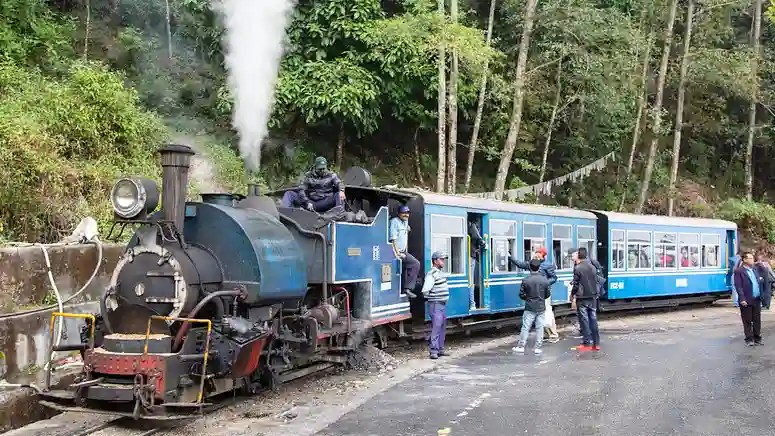
The Darjeeling Toy Train, officially known as the Darjeeling Himalayan Railway (DHR), offers a picturesque journey through India’s mountainous terrain in the Eastern Himalayas. This historic railway, famed for its scenic views, colonial-era engineering, and cultural significance, was designated a UNESCO World Heritage site in 1999.

Arne Hückelheim, CC BY-SA 3.0, via Wikimedia Commons
For adventure seekers, train enthusiasts, and history lovers alike, the Darjeeling Toy Train provides an unforgettable journey that captures the magic and mystery of the Himalayan region.
A Brief History of the Darjeeling Himalayan Railway
The Darjeeling Himalayan Railway was completed in 1881 and is one of the oldest mountain railways in India. Initially constructed to support transportation needs between the plains and the higher altitudes, it quickly became a symbol of British colonial engineering and a gateway to the mountainous wonders of Darjeeling. The line stretches for about 88 kilometers from New Jalpaiguri to Darjeeling, climbing over 2,000 meters in altitude using a combination of innovative loops, zigzags, and gradients.
Why the Darjeeling Toy Train is UNESCO Recognized
The Darjeeling Himalayan Railway is celebrated globally for its historical importance and engineering brilliance. Its recognition as a UNESCO World Heritage site highlights its significance not only as a cultural asset but also as a unique testament to industrial progress in the 19th century. The railway’s steep ascents and the famous ‘Batasia Loop’ demonstrate advanced engineering methods used to navigate mountainous landscapes. Preservation of these historic engines and carriages, along with the original tracks, attracts thousands of tourists each year.
Highlights of the Darjeeling Toy Train Experience
1. Scenic Views and Majestic Himalayan Vistas
The train journey treats travelers to awe-inspiring sights of snow-capped Himalayan peaks, including the revered Kanchenjunga, the world’s third-highest mountain. Rolling tea gardens, dense forests, and quaint mountain towns pass by as the train meanders up the hill. The changing landscape provides a visually captivating experience, capturing the essence of the Himalayas.

2. Iconic Batasia Loop
The Batasia Loop, located about 5 km from Darjeeling, is one of the most iconic stops on the route. This spiraling railway marvel allows the train to navigate the steep slopes while offering panoramic views of the mountains. There’s also a beautifully landscaped garden at the loop, featuring a war memorial honoring the Gorkha soldiers, making it a perfect stop for photos and quiet reflection.
3. Historic Ghum Station
At an altitude of over 7,400 feet, Ghum is the highest railway station in India and a major attraction along the route. The Ghum Museum at the station is dedicated to the history of the Darjeeling Himalayan Railway and showcases vintage photographs, documents, and the famed steam engines. The historical charm of Ghum Station provides a peek into the past, enriching the journey with educational insights and cultural heritage.

The original uploader was Hph at German Wikipedia., CC BY-SA 3.0, via Wikimedia Commons
Types of Rides on the Darjeeling Toy Train
- Joy Rides: Short round-trip journeys, typically from Darjeeling to Ghum, are perfect for travelers wanting a quick experience. These trips focus on the highlights, including the Batasia Loop and Ghum Station, lasting around two hours.
- Daily Passenger Train: This option provides the complete route from New Jalpaiguri to Darjeeling, offering travelers a more extensive experience of the railway. Though slower-paced, the full journey is ideal for those who want to immerse themselves in the picturesque landscapes and small villages along the way.
- Charter Train: The DHR offers the unique opportunity to charter a private train, suitable for groups or special occasions. This allows travelers to enjoy a customizable experience with the charm of the toy train without the usual crowds.
Experiencing the Steam vs. Diesel Engines
Travelers can choose between steam and diesel-powered trains, each offering a different experience. The steam engines are beloved for their authentic, nostalgic feel, as they evoke the grandeur of the past with the sound and sight of their iconic black-and-gold locomotives. Diesel engines, on the other hand, are faster and offer a smoother ride, making them a practical choice for those looking to focus on the landscapes over the journey.
Best Time to Ride the Darjeeling Toy Train
The best months to enjoy the toy train are October to April, when the skies are clear, offering uninterrupted mountain views and comfortable temperatures. Monsoon season, from June to September, brings lush greenery but also frequent rains that can disrupt the journey, so this period is best avoided for those seeking a reliable travel schedule.
Cultural Significance of the Darjeeling Himalayan Railway
The Darjeeling Toy Train is more than just a tourist attraction; it plays a central role in the cultural heritage of Darjeeling and West Bengal. The train has featured in Bollywood movies, documentaries, and literature, symbolizing both the aspirations and challenges of life in the Himalayas. Locals have a deep emotional connection to the train, which contributes to its endearing presence in the cultural fabric of the region.
Practical Information for Riding the Darjeeling Toy Train
- Booking Tickets: Tickets for the toy train can be booked online through the Indian Railway Catering and Tourism Corporation (IRCTC) website. Reservations are highly recommended, especially during peak travel seasons.
- Cost: Ticket prices vary depending on the type of ride (Joy Ride, Full Route, or Charter) and the choice between steam and diesel engines. Generally, prices for the Joy Ride are higher due to the heritage aspect and demand for the experience.
- Facilities: Most trains feature basic seating arrangements and panoramic windows, ensuring a comfortable viewing experience.
Sustainable Tourism and Preservation Efforts
As a UNESCO site, the Darjeeling Himalayan Railway is the focus of conservation efforts that aim to protect its historical integrity. Local authorities, in partnership with UNESCO, work to maintain the tracks, engines, and stations, promoting responsible tourism practices that ensure the railway continues to inspire future generations. Visitors are encouraged to respect the pristine natural environment and cultural landmarks along the route.
Read more: Attractions
FAQs
The Darjeeling Toy Train, officially the Darjeeling Himalayan Railway, is a UNESCO World Heritage mountain railway that operates between New Jalpaiguri and Darjeeling, offering scenic views and a historical experience.
The full journey from New Jalpaiguri to Darjeeling takes about 7 hours, while shorter joy rides between Darjeeling and Ghum last approximately 2 hours.
Ticket prices vary based on the ride type and season, with Joy Rides generally costing more due to their popularity and scenic highlights.
October to April is the best time to enjoy clear skies and breathtaking views, with October being especially popular for its visibility of the Kanchenjunga range.
Yes, both steam and diesel engines are available, with the steam engine rides typically attracting heritage enthusiasts.
Yes, tickets can be booked through the IRCTC website, where you can choose the type of ride and engine option.