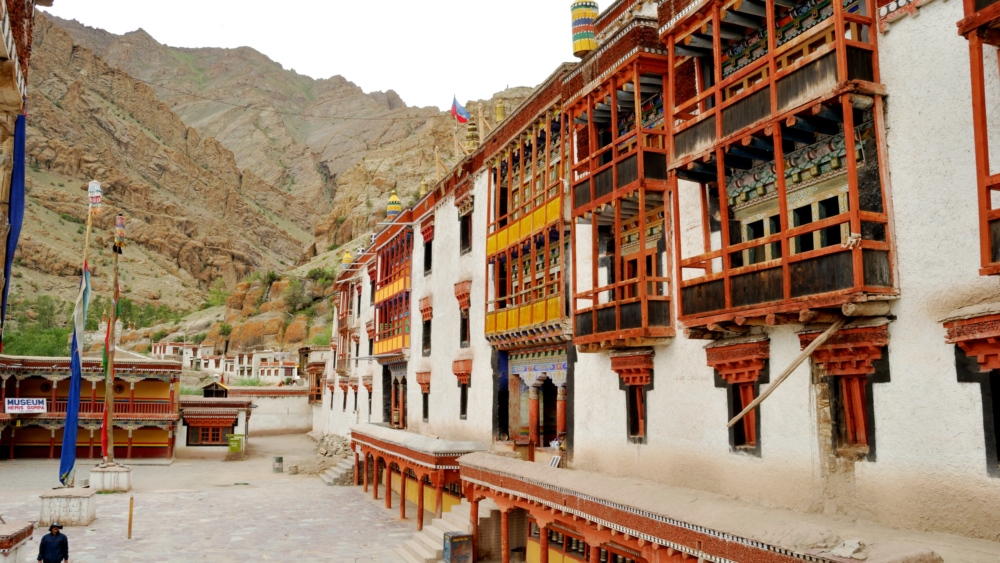
Nestled in the rain-shadow of the high Himalayas, Hemis in Ladakh delivers a rare blend of spiritual culture, alpine wilderness and adventure. Just about 45 km from Leh (the distance varies by route) lies the famous Hemis Monastery (also called Hemis Gompa) which was re-established by King Sengge Namgyal in 1672. Meanwhile, the surrounding Hemis National Park is India’s largest high-altitude national park, home to the elusive snow leopard.

This article will guide you through things to do in Hemis Ladakh, from must-see attractions to practical tips, itinerary suggestions, budget, safety, and more.
Quick Snapshot
| Feature | Details |
|---|---|
| Best time to visit | May – September (clear weather for most outdoor activities) |
| How to reach | Fly to Leh, then road to Hemis (~1–1.5 hrs) |
| Must-do experiences | Visit Hemis Monastery, explore Hemis National Park, attend Hemis Festival (if timing works) |
| Budget range | Mid-range: guesthouses in Leh + day trips to Hemis; see cost section below |
| Safety tips | High-altitude acclimatisation (48 hrs recommended) and respect sacred sites & wildlife zones |
Why Visit Hemis Ladakh?
Hemis offers a compelling combination of:
- Spiritual & cultural draw: The Hemis Monastery is among the wealthiest and most prominent monasteries in Ladakh, following the Drukpa sect of Tibetan Buddhism.
- Wildlife & wilderness: Hemis National Park spans about 4,400 km² and features rugged terrain, high altitudes and rare fauna like snow leopards, Tibetan wolves and Ladakhi urial.
- Off-beat adventure: Compared to busier Ladakh spots, Hemis remains quieter and ideal for travellers who want a blend of culture, nature and peace.
- Festivals & traditions: The famous Hemis Festival (a two-day masked dance event) brings the monastery alive with rituals and colours.
When to Go
| Season | What to expect |
|---|---|
| Late spring (May-June) | Snow starts melting, easier access to trails; good general weather. |
| Summer (July-August) | Peak trekking/wildlife months, warmer days, nights still cold. |
| Early autumn (Sept-early Oct) | Clear skies, fewer crowds, stunning landscapes. |
| Winter (Nov-Mar) | Very harsh conditions, many roads/trails closed; only for experienced travellers. Note: specific monthly average temps for Hemis not available in official source; you may use Leh’s data as a proxy and expect nights to drop well below 0 °C. |
Because official monthly temperature / precipitation data specific to Hemis wasn’t found, please use Leh region data or check the India Meteorological Department for updates.
How to Reach Hemis
- By air: The nearest airport is in Leh (Leh-Kushok Bikram Singh Airport). From Delhi or other Indian hubs you can fly to Leh.
- By road: From Leh the road to Hemis takes approximately 1 to 1.5 hours depending on conditions. (Exact travel time depends on traffic/road)
- By bus/taxi: Local taxis from Leh will take you to Hemis village and the monastery; you can also join a guided tour or shared vehicle.
- Permits: While Hemis itself is not deep in a restricted zone, if you plan more remote treks in Hemis National Park you may need permissions via the Leh District Tourist Office.
Where to Stay
While the hamlet of Hemis itself has limited accommodation, staying in Leh is common and provides easy access.
- Stay in Leh town: multiple guesthouses, hotels across price ranges. According to the UT Ladakh tourism site there are 250+ hotels/guesthouses in and around Leh.
- Recommended budget bands:
- Budget: Guesthouse in Leh (₹1,500–₹3,000 per night approx).
- Mid-range: Comfortable hotel in Leh (₹4,000–₹8,000 per night).
- Premium: Luxury resort options, though stay near Hemis proper may be more rustic/home-stay style.
- Sample places: Use tourism board listings, confirm recent reviews for Hemis/Leh area.
Top Attractions & Experiences
Hemis Monastery

Visit the ancient Hemis Monastery, founded and re-established in 1672 by Sengge Namgyal. The monastery stands majestically in Hemis village and is a vibrant seat of the Drukpa lineage.
Hemis National Park
Explore Hemis National Park, spanning about 4,400 km² (≈ 4,400 sq km) and established in 1981. It is home to rare species such as the snow leopard, Eurasian brown bear, Tibetan wolf, and Ladakhi urial.

Hemis Festival (Hemis Tsechu)
If you visit in early June or July (10th day of the 5th month of Tibetan lunar calendar) you may catch the colourful Hemis Festival — a spectacular two-day event featuring masked dances and cultural rituals.
Wildlife & Trekking in High-Altitude Valleys
Trek the valleys inside/around Hemis National Park (such as Rumbak, Markha) and look for alpine flora and fauna. Note: high altitude demands proper acclimatisation.
Local Villages & Culture
Visit local villages (Shingo, Chilling-Yurutse, Rumbak) around Hemis for authentic Ladakhi village life, homestays and interactions with mountain communities.
Scenic Drives & Photography
The drive from Leh to Hemis offers sweeping landscapes, Indus river views, remote mountain passes — perfect for photography and quiet reflection.
Suggested Itineraries
1-Day Itinerary
- Morning: Depart Leh, arrive at Hemis Monastery.
- Mid-day: Explore monastery, local village, lunch in Hemis.
- Afternoon: Visit Hemis National Park viewpoint/visitor centre (if time permits). Return to Leh for evening.
3-Day Itinerary
- Day 1: Acclimatise in Leh, city stroll, local market.
- Day 2: Hemis Monastery early morning, then Hemis National Park short walk, stay one night at Leh.
- Day 3: Explore nearby village/trekking trail (half-day), return to Leh by afternoon.
7-Day Itinerary
- Day 1-2: Acclimatisation in Leh.
- Day 3: Hemis Monastery, village visit.
- Day 4-5: Two-day trek inside Hemis National Park (camp or stay in village guest-house).
- Day 6: Rest day in Leh or side-trip (e.g., to Indus valley).
- Day 7: Shopping, depart.
Costs & Budget
| Category | Approximate Cost* | Notes |
|---|---|---|
| Accommodation (mid-range) | ₹4,000/night | Stay in Leh, 2025 estimate |
| Meals (lunch + dinner) | ₹1,000–₹1,500 per day | Varies by place & menu |
| Transport (Leh ↔ Hemis round-trip taxi) | ~₹3,000–₹5,000 | Shared taxi lowers cost |
| Entry fees Hemis National Park | ₹20 (Indian) / ₹100 (Foreigner) (validated 2025) | May vary slightly |
| Permits (if required) | Refer district site for latest fees |
*Costs are indicative and may change — always check latest rates.
Local Transport
- Shared taxis from Leh to Hemis village and back.
- Local village walks or guided treks inside Hemis National Park.
- Ensure your taxi driver is aware of routes, road/altitude conditions.
- If you plan remote treks inside the park, check for permit requirements via district portal.
Food & Drink
- Try local Ladakhi dishes: yak-butter tea, tsampa, momos, thukpa.
- In Leh and Hemis region guesthouses offer meals; check hygiene and freshness, especially given high altitude and remote supply chains.
- Staying hydrated, avoiding alcohol on arrival is wise (altitude effect).
Safety, Health & Permits
- Altitude acclimatisation: The district website advises 48 hours acclimatisation on arrival in Ladakh.
- Carry sunscreen, warm layers (even in summer nights).
- Permits: For some restricted/protected areas, you will need a Protected Area Permit via the Leh District Tourist Office.
- Wildlife safety: Respect the park rules, maintain distance from animals.
- Road/vehicle: Ensure your vehicle is in good condition; mountain drives require caution.
Packing List & Travel Tips
Essential items:
- Warm jacket, fleece, thermal inner layers (nights get very cold).
- Good hiking boots, sunglasses (high-altitude sun is strong), sunscreen.
- Water bottle with filter or purification tablets.
- First-aid kit, altitude sickness medicine (after consulting your doctor).
- Respectful clothing for monastery visits (arms/legs covered).
- Camera/binoculars for wildlife spotting.
- Permits printed or digital copy.
Cultural tips:
- Remove shoes before entering monasteries.
- Ask permission before photographing monks or local villagers.
- Use plastic-bag banned zones awareness: In Ladakh, plastic bags are banned.
Responsible Travel & Sustainability
- Stay on designated trails; avoid disturbing alpine vegetation in Hemis National Park.
- Respect village life — choose homestays and support local economy.
- Follow local rules on wildlife interaction — avoid feeding animals or straying off path.
- Respect monastery rules — avoid loud behaviour, dress modestly, turn off phone on rituals.
- Minimise use of single-use plastics.
- Use local guides when possible — it supports the local economy and ensures you aren’t inadvertently harming the ecosystem.
Read more: Attractions
Top FAQs
A1: Yes — for some parts of Hemis National Park or areas outside the standard tourist circuit a Protected Area Permit is required. You should check the latest rules via the Leh District Tourist portal before going.
A2: The best window is roughly May to September when trails are accessible and weather favourable. For snow leopard sightings winter may offer better chance but access is difficult.
A3: Accommodation inside the park is very limited. Most visitors stay in Leh and do day trips or short treks from there.
A4: A 1-day visit is possible (from Leh to Hemis and back) but a 3-day stay allows you to explore more deeply and acclimatise better. A full 7-day trip gives you time for trekking, wildlife, village visits and rest.
A5: Absolutely — the two-day cultural festival features masked dances and vibrant local culture. If your dates align (typically late June/early July) it’s a memorable experience.
A6: Dress in layers — warm jacket, fleece, thermal inners. Good hiking boots, sunglasses, sunscreen, water bottle. Nights stay cold even in summer.
A7: Roughly 40–45 km via road; travel time about 1-1.5 hrs depending on road conditions. Start early to allow more time at destination.