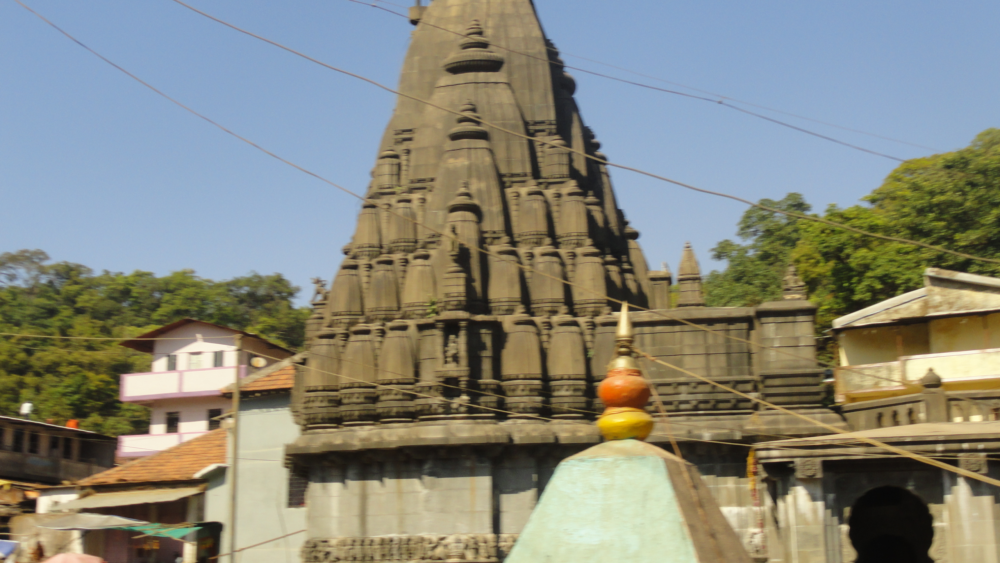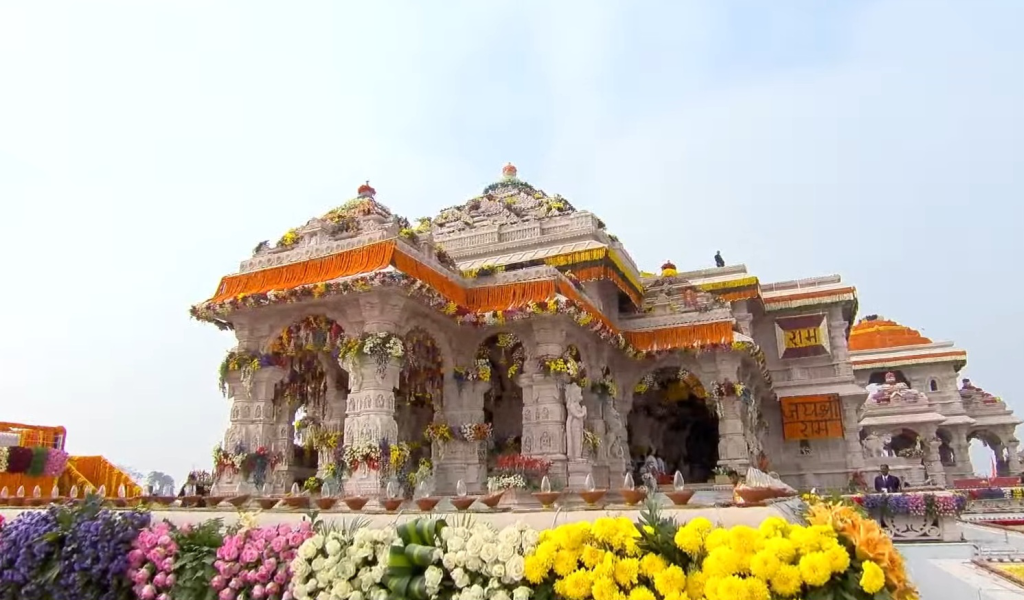
Embark on a spiritual journey to the sacred city situated on the banks of the Sarayu river. As one of the seven most sacred cities in Hinduism, it is the divine birthplace of Lord Rama, where ancient legends come alive amid temples and sacred sites.

Discover the newly consecrated temple, a magnificent structure that stands as a testament to faith, devotion, and architectural brilliance at the Ram Janmabhoomi site. With over 110 million visitors in the first half of 2024, this land has become Uttar Pradesh’s top tourist destination, surpassing Varanasi.
As you explore this ancient city, you’ll experience the essence of a revered pilgrimage site. Get ready to uncover the rich history and significance of this sacred land.
Key Takeaways
- Explore the divine birthplace of Lord Rama in the sacred city.
- Visit the newly consecrated Ram Mandir, a magnificent temple.
- Understand the historical significance of the Ram Janmabhoomi site.
- Experience the spiritual essence of this ancient city.
- Learn about the city’s transformation into a top tourist destination.
The Sacred City of Ayodhya: An Overview
As you step into Ayodhya, you’re not just visiting a city; you’re embarking on a spiritual journey. Ayodhya, known for its rich cultural heritage and spiritual significance, has become a magnet for pilgrims and tourists alike. The city’s landscape is dotted with sacred sites and temples, each telling a story of devotion and faith.
Geographical Location and Significance
Ayodhya is situated in the state of Uttar Pradesh, India. Its geographical location has played a significant role in its historical and cultural development. The city is nestled along the banks of the Sarayu River, adding to its serene and sacred ambiance. Ayodhya’s significance is deeply rooted in its association with Lord Rama, making it a revered pilgrimage destination.
Ayodhya’s Current Status as a Pilgrimage Destination
Ayodhya has witnessed a remarkable transformation, emerging as the top tourist destination in Uttar Pradesh with an astonishing 110 million visitors in the first half of 2024, surpassing even Varanasi. The consecration of the new Ram Temple has revitalized Ayodhya’s status as a major temple and pilgrimage site. For devotees, visiting Ayodhya is a soul-stirring journey that nourishes the spirit and deepens one’s connection to ancient traditions and divine presence.
The city’s spiritual magnetism is palpable, with the Ram Janmabhoomi being the focal point of devotion. As a result, Ayodhya has become a hub for religious tourism, attracting visitors from across the globe.
Historical Evolution of Ayodhya
As you explore Ayodhya, you uncover the layers of its history, from ancient texts to archaeological findings. Ayodhya’s historical significance is deeply rooted in its status as the capital of the ancient Kosala Kingdom, a fact corroborated by various historical texts, including the Ramayana and Jain canonical works.
The Ancient Name: From Saketa to Ayodhya
Ayodhya was known by another name in ancient times – Saketa. The city’s name evolved over time, reflecting its changing significance and cultural influences. The name ‘Ayodhya’ is closely associated with its status as a sacred city, believed to be the birthplace of Lord Rama. According to historical texts, Ayodhya’s transformation from Saketa to Ayodhya signifies its growing importance in Hindu tradition.
- The name change from Saketa to Ayodhya highlights the city’s evolving identity.
- Ayodhya’s ancient name reflects its historical depth and cultural richness.
- The city’s sacred status is a key factor in its name change over the centuries.
Ayodhya as the Capital of Kosala Kingdom
Ayodhya’s glory as the capital of the Kosala Kingdom is well-documented in historical and religious texts. The city was ruled by the illustrious Ikshvaku dynasty, with King Dasharatha being one of its most revered rulers. The Ramayana describes Ayodhya as a prosperous and well-fortified city, with grand palaces and bustling marketplaces, underscoring its significance as a royal capital.
- Ayodhya served as the magnificent capital of the ancient Kosala Kingdom.
- The city’s status as a royal capital contributed to its enduring importance in Hindu tradition.
- Various historical texts, including Jain canonical works, confirm Ayodhya’s significance as a political and religious center.
Ayodhya’s history is a testament to its importance as a sacred and political center, with its legacy continuing to inspire devotion and historical interest. The city’s evolution over time, from being known as Saketa to becoming the revered Ayodhya, highlights its deep-rooted significance in Indian culture and heritage.
Mythological Significance of Ayodhya
Ayodhya stands as a testament to the enduring legacy of Lord Rama, whose divine presence elevates the city to celestial heights. As the birthplace of Lord Rama, Ayodhya has become a sacred site that embodies the principles of righteousness, duty, and devotion.
Ayodhya in the Ramayana
The Ramayana, one of Hinduism’s most revered epics, narrates the life journey of Lord Rama, from his birth in Ayodhya to his triumphant return after exile. This epic not only sanctifies Ayodhya but also creates a spiritual geography that continues to inspire millions of devotees. You can explore how the events described in the Ramayana have transformed Ayodhya into a living tradition, with numerous temples and rituals celebrating Lord Rama’s divine presence.
Lord Rama’s Connection to the City
Lord Rama’s connection to Ayodhya is profound, as his life events—from his princely upbringing to his righteous rule as King—have established an ideal of “Ram Rajya” or perfect governance. The Ram Janmabhoomi, or birthplace of Lord Rama, has become the spiritual epicenter of Ayodhya, drawing devotees from across the globe. You can understand why this site is considered sacred and how it continues to inspire political and social thought in India.
| Mythological Significance | Relevance to Ayodhya |
|---|---|
| Lord Rama’s Birthplace | Ram Janmabhoomi is considered the spiritual epicenter |
| Ramayana Epic | Narrates Lord Rama’s life, sanctifying Ayodhya |
| Ideal Governance | “Ram Rajya” continues to inspire social and political thought |
By exploring Ayodhya’s mythological significance, you can appreciate the city’s transformation into a sacred site that continues to inspire devotion and righteousness. The city’s connection to Lord Rama transcends mythology, becoming a living tradition celebrated through various rituals and festivals.
Ram Mandir: The Magnificent Temple

As you approach the sacred city of Ayodhya, the majestic Ram Mandir awaits, embodying the spiritual essence of Lord Rama’s legacy. This magnificent temple is not just a structure; it’s a testament to the faith and perseverance of millions.
Architectural Features and Design
The Ram Mandir’s architecture is a blend of traditional Indian temple designs, reflecting the rich cultural heritage of the country. The temple’s design is inspired by ancient Indian architectural styles, with intricate carvings and detailed craftsmanship that narrate stories from the Ramayana.
The temple complex is designed to be a spiritual haven, with various elements that enhance the overall religious experience. The temple ayodhya is constructed using high-quality materials, ensuring its longevity and sanctity.
The Sacred Ram Lalla Idol
At the heart of the Ram Mandir is the sacred Ram Lalla idol, standing 51 inches tall. This idol is made from a rare and sacred rock known as Shaligram, estimated to be 60 million years old. The use of Shaligram stone is significant in Hindu tradition, as it is considered a natural manifestation of Lord Vishnu.
- Behold the divine Ram Lalla idol, the spiritual heart of the Ram Mandir, standing 51 inches tall and radiating sacred presence from the temple’s sanctum sanctorum.
- Marvel at the extraordinary material from which the idol is crafted—Shaligram stone, a rare and sacred rock estimated to be an astonishing 60 million years old.
- Understand the profound significance of Shaligram stone in Hindu tradition, considered a natural manifestation of Lord Vishnu and therefore perfectly suited for the idol of Ram, Vishnu’s seventh avatar.
- Appreciate the meticulous craftsmanship that went into creating this idol, where skilled artisans worked with reverence to bring divine form to the ancient stone.
- Experience the powerful spiritual atmosphere surrounding the Ram Lalla idol, where devotees feel a direct connection to the divine presence of Lord Rama in his child form (Lalla).
- Learn how this idol represents the culmination of centuries of devotion and decades of anticipation, now permanently enshrined in its rightful place at Ram Janmabhoomi.
The temple is a place where spirituality and history converge, making it a significant pilgrimage site.
Where is Ayodhya Ram Mandir Located?

The Ram Mandir in Ayodhya is situated at the revered Ram Janmabhoomi site, a place of immense historical and mythological importance. This sacred site is where Lord Rama is believed to have been born, making it a focal point of devotion for millions.
Ram Janmabhoomi Site
The Ram Janmabhoomi site is the exact location where the Ram Mandir is being constructed. It is a place of great significance, being the birthplace of Lord Rama. The site has been the center of reverence and has witnessed significant historical events.
Surrounding Landmarks
Ayodhya is a city rich in spiritual heritage, with numerous landmarks surrounding the Ram Mandir. One of the most notable is Hanuman Garhi, a temple dedicated to Lord Hanuman, known for its towering statue and panoramic views of the city. Other significant landmarks include Kanak Bhawan, a beautifully adorned temple dedicated to Lord Rama and Goddess Sita, and Dashashwamedh Ghat, a sacred bathing ghat on the banks of the Sarayu River.
Historically, the area was also significant due to the presence of the Babri Mosque, a mosque that stood before its demolition, marking a controversial period in the site’s history.
Administrative Details: State and District
The city’s administrative details reveal its integration into the larger regional framework. Ayodhya, being a significant cultural and religious hub, is also an important administrative center.
Ayodhya in Uttar Pradesh
Ayodhya is located in the state of Uttar Pradesh, one of India’s most populous and historically rich states. As part of Uttar Pradesh, Ayodhya benefits from the state’s infrastructure development and tourism initiatives. The state government plays a crucial role in maintaining and promoting Ayodhya as a major pilgrimage site.
Ayodhya District Information
Ayodhya serves as the administrative headquarters of the Ayodhya district, which was established in 2018 by renaming the former Faizabad district. The district encompasses Ayodhya city and its surrounding areas, creating a significant administrative unit. The district administration works to balance the needs of local residents and the millions of pilgrims visiting annually. Development initiatives focus on improving infrastructure, transportation, and accommodations to support the growing importance of Ayodhya as a pilgrimage destination.
| Administrative Unit | Description |
|---|---|
| State | Uttar Pradesh |
| District | Ayodhya |
| Administrative Headquarters | Ayodhya city |

Understanding Ayodhya’s administrative setup enhances your appreciation of its significance and the efforts to manage its growing importance as a pilgrimage site.
Is Ayodhya in Lucknow? Clarifying Common Confusion
As you plan your spiritual journey to Ayodhya, it’s essential to understand its connection to Lucknow. While both cities are significant destinations in Uttar Pradesh, they are distinct entities with their own unique characteristics.
Relationship Between Ayodhya and Lucknow
Ayodhya and Lucknow, though separate cities, are closely linked in terms of their cultural and historical significance. Lucknow, being the capital city of Uttar Pradesh, often serves as a gateway for travelers heading to Ayodhya. Understanding this relationship can help you plan your trip more effectively.
Distance and Transportation Between the Cities
Ayodhya is approximately 135 kilometers (84 miles) away from Lucknow. The journey between these two cities typically takes about 2.5 to 3 hours by car or bus, depending on traffic conditions. Various transportation options are available, including regular train services, bus routes, and well-maintained highways for private vehicles. Ongoing infrastructure improvements, such as highway expansions and new train services, are making travel between these cities increasingly convenient. Many visitors choose to combine trips to both cities, experiencing the cultural attractions of Lucknow and the spiritual sites of Ayodhya in a single journey through Uttar Pradesh.
How to Visit Ram Mandir, Ayodhya

As you plan your trip to Ayodhya, understanding how to visit the Ram Mandir is essential for a meaningful experience. The Ram Mandir is not just a temple; it’s a spiritual destination that embodies the rich cultural heritage of India.
Best Time to Visit
The best time to visit the Ram Mandir in Ayodhya is from October to March, when the weather is pleasant and conducive to exploration. Avoid visiting during the peak summer months or the monsoon season for a more comfortable experience.
Entry Procedures and Timings
The Ram Mandir is open to devotees from early morning till evening. It’s advisable to check the official timings before you visit, as they may be subject to change. Upon arrival, you’ll be guided through the entry procedures, which include security checks and registration.
To ensure a smooth darshan experience, follow the instructions of the temple volunteers and the flow of devotees.
Dress Code and Etiquette
When visiting the Ram Mandir, it’s essential to dress modestly. Men are typically expected to wear kurta-pajama, dhoti-kurta, or shirt and pants, while women should wear sarees, salwar kameez, or other modest attire that covers shoulders and knees.
- Dress modestly, covering shoulders and knees.
- Remove your footwear before entering the temple premises.
- Maintain a respectful silence or speak in hushed tones within the temple.
- Refrain from taking photographs inside the main temple area unless permitted.
- Follow the flow of devotees and the instructions of temple volunteers.
- Consider bringing a small offering such as flowers or fruits if you wish.
- Practice patience and maintain a calm demeanor, even during crowded conditions.
By following these guidelines, you can have a peaceful and enriching experience at the Ram Mandir. The temple is a sacred space where respectful behavior honors both the deity and fellow devotees.
VIP Darshan at Ram Mandir: Complete Guide

The Ram Mandir in Ayodhya offers a VIP Darshan experience, allowing devotees to have a more intimate and guided tour of the temple. This special arrangement is designed to enhance your spiritual journey, providing a deeper connection with Lord Rama.
Booking Process for VIP Darshan
To book a VIP Darshan, you can visit the official Ram Janmabhoomi temple website or contact the temple administration directly. The booking process is straightforward, requiring you to fill out a simple form with your details and preferred date and time for the darshan. It’s advisable to book in advance, especially during peak pilgrimage seasons, to ensure availability.
Once your booking is confirmed, you will receive a confirmation report with all the details regarding your VIP Darshan, including the time, date, and any specific instructions to follow.
Benefits and Special Arrangements
The VIP Darshan at Ram Mandir comes with several benefits, enhancing your overall experience at the temple. Some of the special arrangements include:
- Experience a more intimate darshan of Ram Lalla with VIP arrangements that allow you closer access to the sanctum sanctorum and more time for prayer and contemplation.
- Bypass the general queues that can sometimes extend for hours, especially during peak pilgrimage seasons and festivals.
- Receive guidance from dedicated temple staff who escort VIP visitors through the temple complex and provide information about the spiritual and historical significance of different areas.
- Access special waiting areas with comfortable seating, shelter from weather conditions, and basic amenities while you wait for your darshan time.
- Benefit from priority entry through designated VIP gates that minimize waiting time and provide a more streamlined temple experience.
- Receive prasad (sacred offerings) directly after your darshan, often with special packaging for VIP visitors.
- Gain access to exclusive viewing areas during special ceremonies, aarti (ritual of lights), and other religious events at the Ram Janmabhoomi complex.
By opting for the VIP Darshan, you can make your visit to the Ram Mandir a truly memorable and enriching experience, focusing on the spiritual essence of the Ram Janmabhoomi centre.
Other Sacred Sites in Ayodhya
As you explore Ayodhya, you’ll discover a multitude of sacred sites that are steeped in mythology and history. Beyond the revered Ram Mandir, the city boasts numerous other significant religious destinations that are worth visiting.
Hanuman Garhi Temple
The Hanuman Garhi Temple is a sacred site dedicated to Lord Hanuman, situated in the heart of Ayodhya. This temple is believed to be the abode of Hanuman, and it’s a significant pilgrimage site. The temple complex is surrounded by a fort-like structure, and the main deity is worshipped with great fervor. Devotees often visit this temple before proceeding to the Ram Mandir, as it’s believed that seeking Hanuman’s blessings is essential before visiting Rama.
Kanak Bhawan
Kanak Bhawan, also known as the Palace of Gold, is a revered temple dedicated to Lord Rama and his consort Sita. Located in the heart of Ayodhya, this temple is renowned for its beautiful architecture and intricate designs. The sanctum houses idols of Rama and Sita, which are adorned with ornaments and jewels. The temple’s history dates back to the 17th century, and it’s believed to have been built by a local king.

Nageshwarnath Temple
The Nageshwarnath Temple is one of the oldest temples in Ayodhya, dedicated to Lord Shiva. According to legend, this temple was established by Kush, the son of Rama, making it a significant site for those interested in the mythology surrounding Rama’s descendants. The temple is a fine example of ancient architecture and continues to be an important pilgrimage site.
Sarayu River Ghats
The Sarayu River ghats are a series of sacred bathing ghats along the banks of the Sarayu River, where pilgrims gather to perform rituals and ceremonies. You can experience the serene beauty of the ghats, where the sacred waters have witnessed Ayodhya’s spiritual journey through millennia. The ghats are vibrant with activity, especially during sunrise and sunset, when the Saryu Aarti is performed, illuminating the riverfront with hundreds of lamps.
Ayodhya’s spiritual landscape is rich with various sacred sites, each with its own unique history and significance. As you visit these sites, you’ll gain a deeper understanding of the city’s cultural and religious heritage, which spans centuries.
Accommodation and Dining in Ayodhya
Your journey to Ayodhya, a city steeped in history and spirituality, begins with selecting the ideal place to stay and savor the local flavors. As you plan your visit to the Ram Mandir and other sacred sites, choosing the right accommodation and dining options can significantly enhance your experience.
Where to Stay in Ayodhya
Ayodhya offers a range of accommodation options to suit various preferences and budgets. You can choose from hotels, guesthouses, and dharamshalas, many of which are located near the Ram Janmabhoomi complex. Some popular choices include luxury hotels that offer modern amenities and comfortable stays, while traditional guesthouses provide a more authentic experience.
When selecting your accommodation, consider factors such as proximity to the temple, availability of vegetarian dining options, and the overall ambiance. This will help ensure that your stay in Ayodhya is both comfortable and spiritually enriching.
Local Cuisine and Restaurants
Ayodhya is renowned for its distinctive Awadhi cuisine, which is predominantly vegetarian and reflects the city’s religious significance. You can savor local specialties such as “Ramnami Roti,” a special bread imprinted with Ram’s name, and indulge in signature sweets like “Ramkot” and “Shringar.”
- Savor Ayodhya’s distinctive Awadhi cuisine, a vegetarian-focused culinary tradition.
- Taste the famous “Ramnami Roti,” a special bread unique to Ayodhya.
- Indulge in Ayodhya’s signature sweets, including “Ramkot” and “Shringar.”
- Explore food stalls along Ram Path and near major temples for vegetarian thalis and chaat.
- Visit traditional bhojanalays that serve sattvic food prepared according to ancient Vedic principles.
By experiencing the local cuisine, you can deepen your connection to the city’s spiritual heritage and enjoy a truly immersive experience.
Festivals and Best Times to Experience Ayodhya
Ayodhya’s cultural significance extends far beyond its religious importance, with the city hosting a range of festivals that showcase its rich heritage. As you plan your visit, you can coincide it with one of these vibrant celebrations to experience the city in all its glory.
Ram Navami Celebrations
Ram Navami, celebrating the birth of Lord Rama, is one of the most significant festivals in Ayodhya, marking the birthplace of the revered deity. The city comes alive with processions, devotional songs, and special prayers at the Ram Janmabhoomi temple. You can witness the festivities that include elaborate decorations and rituals performed by priests.
During Ram Navami, the atmosphere is filled with devotion as pilgrims from across the country gather to pay homage. The celebrations are a testament to Ayodhya’s enduring spiritual legacy.
Deepotsav and Other Festivals
Ayodhya is renowned for its Deepotsav celebrations, where the city is illuminated with hundreds of thousands of earthen lamps along the Sarayu River ghats. This spectacle has earned a place in the Guinness World Records multiple times. You can:
- Witness the breathtaking Deepotsav celebration, with over a million diyas creating a spectacular river of light.
- Experience the grand laser show and 3D projection mapping on historical buildings narrating Lord Rama’s return to Ayodhya.
- Participate in Kartik Purnima celebrations, with ritual baths in the Sarayu River and special prayers.
- Enjoy Ayodhya’s unique Holi celebrations, featuring traditional “Rama Holi” with devotional songs.
Notably, these festivals often feature addresses by prominent leaders, including Prime Minister Narendra Modi, who has shown personal interest in Ayodhya’s development as a spiritual and cultural center.
Conclusion: The Spiritual Journey to Ayodhya
From its roots as Saketa to its current status as a sacred destination, Ayodhya’s evolution is a testament to its enduring importance. As you journey through this ancient city, you’ll discover a place where mythology, history, and living faith converge. The 2019 Supreme Court verdict marked a significant milestone, resolving the long-standing dispute over the Ram Janmabhoomi site and paving the way for the construction of the magnificent Ram Mandir, consecrated in January 2024.
Visiting Ayodhya is more than a tour; it’s a spiritual pilgrimage that connects you to the timeless values embodied in Lord Rama’s life. As you explore the city’s sacred landscape, you’ll experience the divine presence that has drawn devotees for centuries. With the Ram Mandir at its heart, Ayodhya invites you to absorb its spiritual vibrations and take away deeper insights into the city’s unique heritage.
Read more: Attractions
FAQ
The Ram Janmabhoomi site is considered the birthplace of Lord Rama, a revered figure in Hinduism, and is thus a sacred pilgrimage site for millions of devotees.
The Babri Masjid was a mosque built in the 16th century by Mughal Emperor Babur, which stood on the disputed Ram Janmabhoomi site until its destruction in 1992, sparking widespread controversy and legal disputes.
The Supreme Court of India ruled in favor of the construction of a Ram Temple at the disputed site, paving the way for the building of the magnificent Ram Mandir.
The foundation stone for the Ram Mandir was laid by Prime Minister Narendra Modi in a ceremony marking the beginning of the temple’s construction.
The Sarayu River is a sacred waterbody that flows through Ayodhya, holding great spiritual significance and offering a serene atmosphere for devotees to worship and take a dip.
Apart from the Ram Mandir, you can visit the Hanuman Garhi Temple, Kanak Bhawan, Nageshwarnath Temple, and the Sarayu River Ghats, among other revered sites.
To plan your visit, check the best time to visit, entry procedures, and timings, as well as dress code and etiquette guidelines to ensure a smooth and respectful pilgrimage experience.