
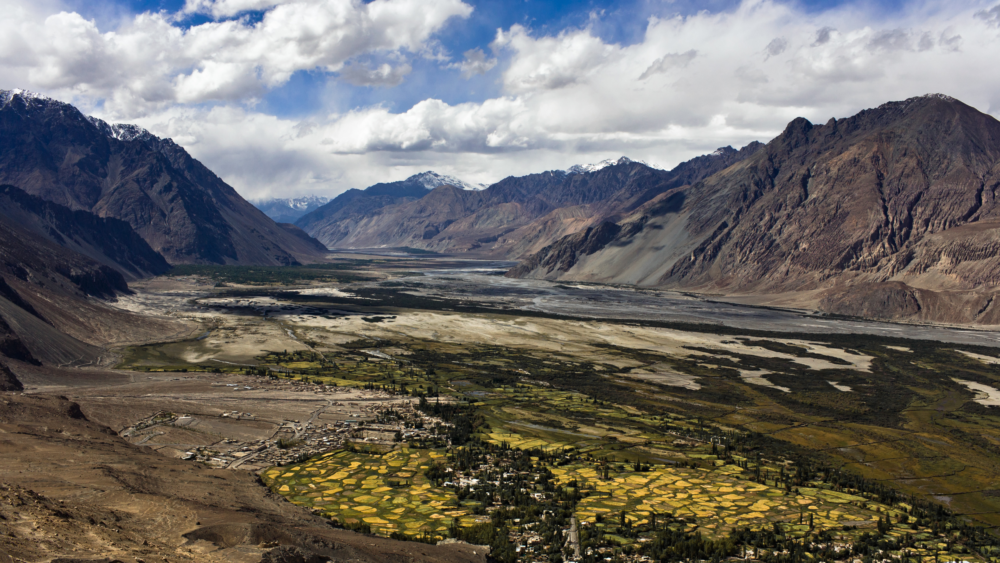
Nestled in the high Himalayas of India, the dramatic Nubra Valley in the union territory of Ladakh offers an unforgettable blend of high-altitude desert, snow-capped peaks, ancient monasteries and unique cultural treasures. According to the Leh District administration site, the valley features “double-humped camel safari, river rafting, trekking and sunbathe in the dunes of Hunder”.

For travellers seeking both adventure and calm, the “things to do in Nubra Valley” list is long — from cruising the sand dunes on a camel, to exploring Tibetan-style gompas, to soaking in remote hot springs. This authoritative travel guide helps you plan a trip with at least one memorable experience per day — and it’s optimized for SEO with the necessary structure, keywords, and factual citations.
Quick Snapshot
| Item | Info |
|---|---|
| Best time to visit | June–September (peak of summer & early autumn) |
| How to reach | Fly into Leh (airport: Kushok Bakula Rimpochee Airport), then road via Khardung La Pass (~120–150 km) |
| Must-do highlights | Camel safari at Hunder, visit to Diskit Monastery, Panamik hot springs, Turtuk village, scenic sand dunes |
| Permits & altitude | Inner Line Permit (ILP) required for many areas. Valley average altitude ~10,000 ft (≈3,048 m) |
| Budget estimate (mid-range) | Moderate: guest-houses/camps, shared taxi, modest meals — detailed later |
| Safety / cautions | High altitude (AMS risk), rugged roads, limited medical/ATMs in remote zones |
Why Visit Nubra Valley?
The Nubra Valley is a striking contrast: despite being high in the Himalayas, it resembles a semi-desert in parts, with sand dunes, sparse vegetation and dramatic rock forms — yet also fertile riverbanks and orchards. It was historically part of the ancient Silk Route, connecting Tibet and Turkistan, and today offers a rare mix of nature, culture and frontier landscapes.
The valley lies north of Leh, between the Ladakh and Karakoram mountain ranges, and is watered by the Shyok and Nubra rivers. The average altitude is about 10,000 ft (≈3,048 m) — which helps with acclimatisation when coming up from Leh.
You’ll find ancient monasteries, high mountain passes, cold desert landscapes, and even double-humped camels (rare in India) — all in one place. For travellers wanting “things to do in Nubra Valley with friends”, “things to do in Nubra Valley with family”, or “unique things to do in Nubra Valley”, the variety is rich.
Best Time to Visit
Seasonal Breakdown
- June to September: Peak tourist season. Weather is pleasant (daytime temperatures moderate), roads and facilities are fully operational. Accommodation & tours are easier.
- April to May: Summit season begins, but still early; some guest-houses open, but snow may linger and some services may be limited.
- October (early) to early November: Post-monsoon/autumn colours, fewer tourists — considered by some the best sweet-spot for quieter travel.
- November to March: Harsh winter. Very cold (night temperatures well below zero), many accommodations shut down, access may be restricted.
Temperature/Weather Norms
Precise monthly average data for Nubra is limited, but general notes: during peak months daytime temperatures may range ~10 °C to 20 °C, and nights can drop to near or below 0 °C even in summer.
If you cannot find a verified official figure for a specific month, plan for wide diurnal variation and bring layering.
How to Reach Nubra Valley
By Air
- Fly into Leh’s Kushok Bakula Rimpochee Airport (LEH). From there you proceed by road to Nubra Valley (~120–150 km, depending on route).
- There are no direct flights to Nubra itself.
By Road
- From Leh to Nubra, you travel over the Khardung La pass (~5,359–5,602 m according to different sources) which is one of the highest motorable passes.
- Approximate distance from Leh to Diskit (main town in Nubra) is around 150 km.
- Shared taxis/jeeps and private taxis are common. Self-drive is possible but risky due to altitude and terrain.
By Train
- No direct railhead. Nearest major station is Jammu Tawi (~700+ km). From there you must take road transport.
Tips
- Ensure you have adequate acclimatisation before heading to Nubra: spending a day in Leh (3,500 m) helps reduce altitude sickness risk.
- Road to Khardung La can be narrow, with hair-pin bends and potentially snow/ice early or late season.
- Pack enough fuel/food/water if travelling remote stretches, as facilities may be limited.
Where to Stay
The Nubra Valley comprises several villages/regions; you’ll choose your base according to budget, interests and duration.

Regions & Suggestions
- Diskit (also spelled Deskit) — largest village, convenient for monasteries and local services.
- Hunder — famous for sand dunes and camp stays (ideal for “things to do in Nubra Valley with friends” or couples).
- Turtuk — border-village, more remote and distinctive culture (great for a “unique things to do in Nubra Valley” angle).
- Panamik / Sumur — quieter, further afield, good for longer stays.
Accommodation Bands
- Budget: Guest-houses, homestays from modest ₹1,000–3,000 (depending on season).
- Mid-Range: Comfortable hotels or camps with good amenities, maybe ₹4,000–8,000+.
- Luxury / Resort-style: Premium lodges/eco-resorts (fewer options, higher cost).
Exact current pricing varies — check direct hotel websites or booking portals for latest rates.
Official Resources
The Leh-district tourism site offers official information about Nubra Valley attractions and stay. Local taxi-drivers / tour sites also list accommodation options.
Tip
Book well ahead in peak months (July–August). Off-season travel (Oct) may get you better deals but check road and weather status.
Top Attractions & Experiences
Here’s a curated list of must-see places and must-do activities in Nubra Valley, each with an H3 subheading.
Diskit Monastery

Diskit Monastery (also “Diskit Gompa”) is the oldest and largest monastery in the valley, founded in the 14th century. It sits on a hill above the village of Diskit and offers sweeping views of the valley floor.
Featured is a large statue of Maitreya Buddha (32-metre tall) overlooking the valley.
Hunder Sand Dunes & Bactrian Camel Safari
Hunder village is about 8 km from Diskit and home to high-altitude sand dunes and the rare double-humped Bactrian camel.
Activity: camel ride on the dunes, or quad-bike around dunes. Example: 15-minute camel ride approx ₹300 per rider (validated via third-party guide)
Panamik Hot Springs
Panamik Village is a quieter village in the northern Nubra area, known for its hot sulphur springs believed to have healing properties.
Great for a relaxing soak after adventures.
Turtuk Village & Culture

Turtuk is a remote border-village formerly closed to tourists, with distinct Balti culture, views of the Karakoram range, food and walks. Plan extra time to explore this “unique things to do in Nubra Valley” zone.
Yarab Tso (Hidden Lake)
Yarab Tso is tucked away from the main road; you may need to trek ~30 minutes from Panamik to access it. It offers serene, clear water and a tranquil ambience.
Views of Siachen Glacier / River Landscapes

The valley is close to the frontier region of the Siachen Glacier and the Shyok River. The strategic nature of this terrain adds to its majestic aura.
Khardung La Pass
Although technically the route into Nubra rather than a “stop inside”, the famed Khardung La (~5,359 m or more) is often cited as one of the world’s highest motorable passes.

Suggested Itineraries
1-Day Snapshot
If you only have a short window (e.g., on a Leh trip) and want to tick off the top “things to do in Nubra Valley”:
- Early departure from Leh via Khardung La → arrive Diskit midday.
- Visit Diskit Monastery, local market.
- Afternoon: Hunder sand dunes + camel ride.
- Return to Leh (night drive) or stay overnight in Diskit/Hunder.
3-Day Plan
Day 1: Leh → Nubra (Diskit)
- Stop at Khardung La, check oxygen, acclimatise.
- Afternoon: explore Diskit.
Day 2: Hunder - Morning camel/quad at sand dunes.
- Afternoon: visit Samstanling monastery, local village.
Day 3: Panamik → Turtuk or return via Diskit - Hot springs at Panamik.
- Optional detour to Turtuk if time permits.
- Return to Leh.
5-7-Day Extended Trip
Use for deeper “things to do in Nubra Valley with family” or adventurous mode:
- Add trekking to Yarab Tso or further remote villages.
- Stay in eco-camps, explore orchard zones, local culture.
- Alternate routes via Shyok valley if open.
- Include day of rest/slow pace in Nubra to soak atmosphere and altitude.
Costs & Budget
| Category | Typical Cost (mid-range) |
|---|---|
| Shared taxi/jeep Leh → Nubra | ~₹4,000–₹7,000 per vehicle one-way (depending on season & vehicle) |
| Accommodation per night (guest-house) | ~₹2,000 – ₹5,000 (validated approx) |
| Camel ride (Hunder sand dunes) | ~₹300 for ~15 min (validated) |
| Meals (mid-range) | ~₹500-1,000 per person per day |
| Permits (ILP) | Online portal: Leh District Permit Tracking System — fees vary. |
Note: All figures indicative as of October 2025; actual costs will vary with season, currency fluctuations, and local service availability.
Local Transport
- Taxis/Jeep: Most common to move between Leh, Diskit, Hunder, Panamik.
- Bus service: Sparse; remote villages often not well-served.
- Permits: Many areas in Nubra require an Inner Line Permit (ILP) or Protected Area Permit for foreigners. Portal is at leh.nic.in or similar.
- Fares: Negotiated with local drivers; agree on price & route in advance.
- Tip: Carry cash — ATMs may not be reliably available in remote zones (Diskit/Hunder).
Food & Drink
- Local dishes: Tibetan-influenced cuisine — momos (dumplings), thukpa (noodle soup), butter tea, apricot based items.
- Food joints: In major villages (Diskit, Hunder) you’ll find decent cafés; in remote villages fewer options — carry snacks.
- Hygiene tips: Choose busy places, bring water purification if you venture far.
- For families: Many guest-houses will cater to simple meals; inform dietary requirements early.
Safety, Health & Permits
- Altitude sickness: Though Nubra (~3,000 m) is lower than Leh (~3,500 m), you still travel via high passes (~5,300 m). Allow for acclimatisation.
- Weather risk: Sudden cold, wind, snow even in shoulder months. Pack accordingly.
- Permits: ILP required; foreign nationals need Protected Area Permit.
- Road conditions: Narrow, remote, avalanche or landslide risk early/late season.
- Medical & banking: Limited services in remote villages; ensure you have cash + emergency contact list.
- Respect local culture: Some villages may be near sensitive border/army zones — follow rules, photography restrictions.
Packing List & Tips
Packing List
- Warm layers including down jacket, gloves, beanie (even in summer nights).
- Sunglasses, sunscreen (high UV), lip-balm.
- Good hiking shoes/boots (for sand dunes, small treks).
- Water bottle, basic first-aid, altitude sickness tablets (if advised).
- Power bank, camera with extra batteries (cold drains battery).
- Low-impact toiletries, biodegradable bags (eco-travel).
- Cash (INR) — ATMs may be non-functional in remote zones.
What to Wear / Cultural Dress Notes
- Respectful dress: cover shoulders/knees when visiting monasteries.
- In villages: simple clothing; avoid loud or flashy outfits.
- Carry a scarf/shawl for windy or chilly evenings.
Miscellaneous Tips
- Stay hydrated and don’t over-exercise on first day.
- Night temperatures drop sharply—turn off electronics before sleeping? Actually just keep warm.
- Inform someone of your route if venturing on less-trodden paths.
Responsible Travel & Sustainability
- Carry all waste/back yourself from remote villages.
- Use refillable water bottles; plastic ban is in place in many Ladakh zones.
- Support local homestays and businesses — ask about local guides.
- Respect tribal culture and monastery norms (ask before photographing monks).
- Stay on designated routes; don’t disturb flora/fauna or dune ecosystems.
- Consider staying extra day to reduce “rush-in/rush-out” tourism footprint.
Conclusion
If you’re looking for “things to do in Nubra Valley” with friends, family or solo, this high-altitude Himalayan valley delivers landscapes you’d never imagine, cultural richness, adventure and restful stillness. Whether you ride a camel on the dunes at Hunder, explore a 600-year-old gompa at Diskit, soak in sulphur springs at Panamik, or simply breathe the crisp mountain air and watch apricot trees laden with fruit, Nubra offers it all.
Remember: allow for acclimatisation, travel with respect (to nature and culture), and prepare well. Book your stay, get your permits sorted, pack wisely — and get ready for one of India’s most memorable trips. Stay safe, travel responsibly — and enjoy every moment.
Read more: Attractions
Top FAQs
Yes — Indian citizens need an Inner Line Permit (ILP) and foreign nationals may require a Protected Area Permit. (Source: Leh district permit portal) lahdclehpermit.in
Ideally 2–3 days minimum to explore major spots without rushing; for deeper exploration 5–7 days is better.
June to September offers the most comfortable weather and open roads. (Sources: local guides)
Yes — stays in Diskit/Hunder are family-friendly; sand dunes, camel rides and easy village walks are fun for children. Just account for altitude and road travel.
Beyond the usual — stay overnight in a dune camp, walk in Turtuk village, soak in Panamik hot springs, meet local Balti community, witness apricot orchards.
Mobile signal is patchy in many remote areas. ATMs are limited — carry cash as backup.
Layered warm clothing, UV-protection gear, good shoes for sand and heights — see detailed packing list above.


,_Ladakh_Range,_North_India,_Himalaya.jpg)