Imagine visiting a temple where hundreds of devotees gather daily to seek blessings from the guardian deity of the city. Located on the serene banks of the sacred Shipra River, the Kal Bhairav Temple is a revered sanctuary in Ujjain, where divine energy and ancient traditions converge.

You are about to embark on a transformative spiritual journey to this magnificent Hindu temple, standing as a testament to centuries of devotion and faith. According to local beliefs, Kal Bhairav was appointed by Lord Mahakal to protect the city, making it a significant pilgrimage site.
Key Takeaways
- Discover the spiritual significance of the Kal Bhairav Temple in Ujjain.
- Learn about the role of Kal Bhairav as the guardian deity of the city.
- Experience the vibrant spiritual atmosphere of this active Hindu temple.
- Understand the historical and mythological importance of the temple.
- Explore the sacred Shipra River and its significance in Hinduism.
The Sacred History of Kal Bhairav Mandir
As you step into the Kal Bhairav Temple, you’re not just entering a place of worship; you’re stepping into a rich tapestry of history that spans centuries. The temple, located in Ujjain, Madhya Pradesh, is a significant pilgrimage site that has witnessed the rise and fall of dynasties and the evolution of cultural practices.
Origins and Ancient Significance
The present-day Kal Bhairav Mandir structure was built over the remains of an older temple. The original temple is believed to have been constructed by an obscure king named Bhadrasen. It is mentioned in the Avanti Khanda of the Skanda Purana, highlighting its ancient significance. Archaeological findings, including images of Shiva, Parvati, Vishnu, and Ganesha from the Paramara period (9th-13th century CE), underscore the temple’s historical importance.
- Explore the fascinating origins of Kaal Bhairav Temple, whose foundations date back to ancient times.
- Marvel at the archaeological treasures discovered at this sacred place, including images from the Paramara period.
- Visualize the temple’s former glory when its walls were adorned with exquisite Malwa paintings.
Maratha Influence and Restoration
The current structure of the Kal Bhairav Temple shows significant Maratha influence. According to local tradition, after the Maratha defeat in the Third Battle of Panipat (1761 CE), Maratha general Mahadaji Shinde offered his pagri (turban) to the deity, praying for victory in his campaign to restore Maratha rule in North India. Upon achieving success, he fulfilled his promise by restoring the temple.
- Discover how the temple’s history intertwines with India’s political narrative, particularly during the Maratha period.
- Be inspired by the story of Mahadaji Shinde, who restored the temple to its present glory after achieving victory.
The Kaal Bhairav Temple continues to be a vital part of Ujjain’s spiritual landscape, attracting devotees from across the country. Its history is a testament to the enduring legacy of faith and cultural heritage in this part of Madhya Pradesh.
Mystical Traditions at Kal Bhairav Ujjain
As you step into the Kal Bhairav Temple, you’re about to uncover the mystical traditions that have been a part of Ujjain’s spiritual fabric for centuries. The temple is a treasure trove of unique customs and practices that have been revered for their spiritual significance.
The Deity and Its Significance
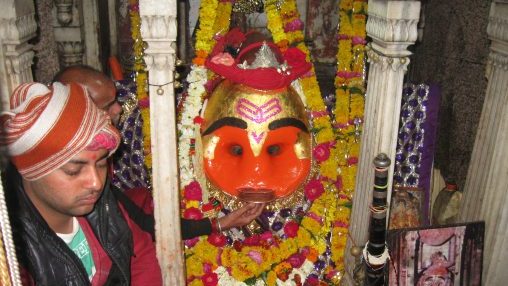
The Kal Bhairav Temple is dedicated to Kal Bhairav, a form of Lord Shiva. The deity’s image is represented as a face in the form of a rock layered with kumkuma or vermilion, signifying its importance in the Shaivite tradition. The deity’s silver head is adorned with a Maratha-style pagri, a tradition that dates back to the days of Mahadaji Shinde.
The Mystery of Liquor Offerings
One of the most fascinating traditions at the Kal Bhairav Temple is the offering of liquor to the deity. Devotees offer liquor as part of the panchamakara tantric ritual, where it is poured into a shallow cup and placed near the statue’s mouth. The alcohol seemingly disappears, leaving behind an air of mystery. This phenomenon has captivated visitors for centuries, with many attempting to uncover its secrets.

Spiritual Practices and Rituals
The worship of Kal Bhairav is deeply rooted in the Shaivite tradition, particularly among the Kapalika and Aghora sects. The temple continues to be a significant site for worship and spiritual practices, attracting devotees who seek to experience the divine.
Planning Your Visit to Kal Bhairav Temple
As you plan your spiritual journey to Ujjain, understanding the logistics of visiting Kal Bhairav Temple is essential. Located on the banks of the Shipra River, this ancient temple is a significant pilgrimage site.
Mahakal Ujjain to Kal Bhairav Ujjain Distance
The distance between Mahakal Temple and Kal Bhairav Temple in Ujjain is relatively short, making it feasible to visit both temples in a single day. This proximity allows pilgrims to easily include Kal Bhairav Temple in their itinerary alongside the revered Mahakal Temple.
Best Time to Visit Kal Bhairav Mandir
The best time to visit Kal Bhairav Mandir is from October to March, when the weather is pleasant, allowing for a comfortable exploration of the temple and its surroundings. Visiting early in the morning can enhance your experience, offering a serene atmosphere before the crowds arrive.
Transportation and Accessibility
Kal Bhairav Temple is easily accessible by various modes of transportation. The nearest railway station is Ujjain Railway Station, just 7 kilometers away. You can also fly into Indore Airport, approximately 70 kilometers from the temple, and take a taxi or bus. Regular bus services operated by the State Transport Corporation and private bus operators connect Ujjain to major cities across Madhya Pradesh.
Embracing the Divine Experience at Kal Bhairav Temple
Visiting the Kal Bhairav Temple is an experience that transcends the ordinary, touching the divine. As you immerse yourself in the spiritual atmosphere, you’ll witness hundreds of devotees gathering daily on the banks of the sacred Shipra River to honor the guardian deity of Ujjain city.
The temple is steeped in centuries of devotion, with ancient traditions continuing to fascinate visitors. One such tradition is the mysterious offering of liquor to the deity, a practice that has endured for generations. The idol of Lord Kaal Bhairav, adorned with the traditional Scindia turban, symbolizes the deep historical connection between the temple and the royal family of Gwalior.
Experience the unique blend of history, mystery, and devotion that makes this temple a standout spiritual destination in Madhya Pradesh. As you leave, you’ll carry not just memories but a profound sense of connection to Ujjain and its divine protector.
FAQ
What is the significance of the Kal Bhairav Temple in Ujjain?
The Kal Bhairav Temple is a revered site dedicated to Lord Shiva’s fierce form, Bhairav. It’s considered a guardian deity of the city, and devotees believe that visiting this temple brings protection and spiritual growth.
Why do devotees offer liquor to the deity at the Kal Bhairav Temple?
The tradition of offering liquor is rooted in the temple’s history and the deity’s association with the consumption of intoxicating substances. Devotees believe that this offering pleases the deity and brings them closer to their spiritual goals.
What are the visiting hours and best time to visit the Kal Bhairav Temple?
The temple is open to visitors throughout the day, but the best time to visit is during the early morning or late evening when the atmosphere is serene. You can plan your visit according to the temple’s darshan timings and your personal preference.
How do I reach the Kal Bhairav Temple in Ujjain?
The temple is easily accessible by road, and you can take a bus or taxi from the Ujjain city bus stand or railway station. The nearest railway station is Ujjain Junction, which is well-connected to major cities in Madhya Pradesh and other parts of the country.
What is the distance between Mahakal Temple and Kal Bhairav Temple in Ujjain?
The distance between the two temples is approximately a few kilometers, making it easily accessible on foot or by a short taxi ride. You can visit both temples as part of your spiritual journey in Ujjain.
Are there any specific rituals or practices that I should follow while visiting the Kal Bhairav Temple?
You can participate in the traditional rituals and practices, such as offering liquor, flowers, or prayers to the deity. It’s recommended to follow the guidance of the temple priests and respect the local customs to ensure a meaningful and enriching experience.
Read more: Attractions