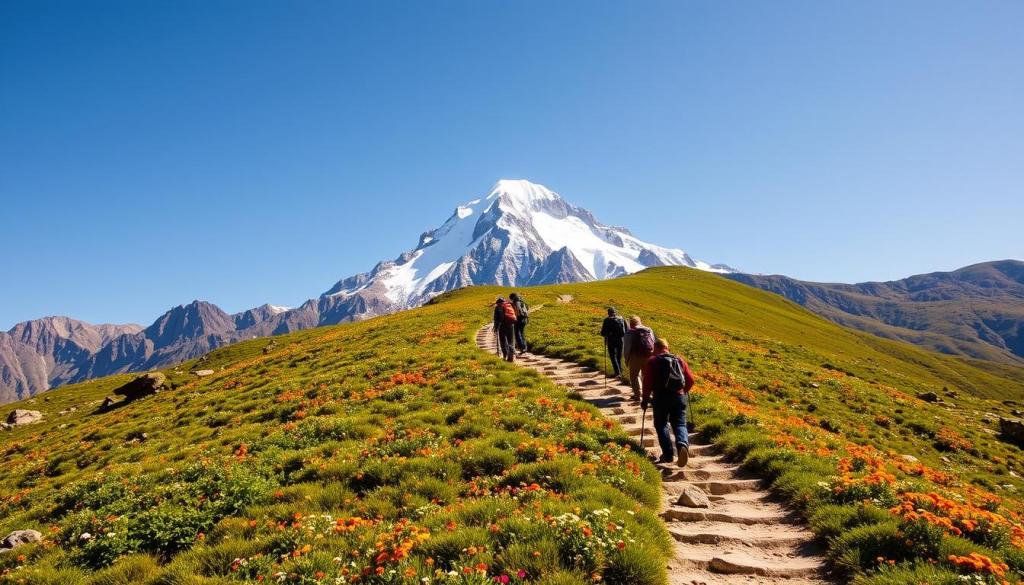
Are you ready for the adventure of a lifetime? The Stok Kangri trek, standing tall at 20,180 feet, is one of the most sought-after high-altitude expeditions in the Indian Himalayas. Located in Ladakh, this trek is not for the faint of heart, as it pushes trekkers to their limits with its challenging terrain and high altitude.

As you embark on this 9-day journey, you’ll be rewarded with breathtaking panoramic views of the Karakoram and Zanskar ranges. The trek typically covers approximately 40 km, taking you through diverse landscapes that test your endurance and willpower. With the right preparation and guidance, you can conquer this magnificent peak safely and successfully in 2025.
Key Takeaways
- Stok Kangri trek is a 9-day expedition covering 40 km.
- The trek is considered difficult due to its high altitude of 20,180 feet.
- Optimal trekking seasons and available packages for 2025.
- Essential preparation tips for a safe and successful expedition.
- Panoramic views of the Karakoram and Zanskar ranges.
The Majestic Stok Kangri: An Overview
The Stok Kangri trek is an adventure that takes you to the heart of the Himalayan range. As you embark on this journey, you are surrounded by the serene beauty of the Ladakh region, with its stark landscapes and towering mountain peaks.
Location and Significance
Stok Kangri is located in the Ladakh region of India, a area known for its breathtaking landscapes and rich cultural heritage. The Stok Kangri peak is significant not only for its height but also for the panoramic views it offers of the surrounding mountain ranges, including the Karakoram and Zanskar ranges.
The trek to Stok Kangri is considered a pilgrimage of sorts for adventure seekers and trekkers. It is a journey that tests one’s endurance and provides an opportunity to experience the pristine beauty of the Himalayas.
Height and Geographical Features
Stok Kangri stands tall at an impressive 6,153 meters (20,180 feet), making it one of the highest peaks in the Stok range. The mountain features a complex geography with diverse terrain, including rocky moraines, sprawling glaciers, and steep snow-covered slopes. The trek involves navigating through these challenging terrains, ultimately leading to the summit ridge of Stok Kangri.
The geographical features of Stok Kangri make it a unique trekking destination. The glacier and ridge offer breathtaking views, and the altitude provides a panoramic view of the surrounding landscape. As you ascend, the changing landscapes and the extreme altitude of Stok Kangri make for a thrilling adventure.
The Stok Kangri trek is a challenging yet rewarding experience. With proper preparation and acclimatization, trekkers can successfully reach the summit and enjoy the stunning views from the top. The trek is a testament to the beauty and majesty of the Himalayan range, making it a must-visit destination for any trekking enthusiast.
Current Status: Is Stok Kangri Trek Open in 2025?
As we look ahead to 2025, the Stok Kangri trek is now open with updated rules to ensure a sustainable trekking experience. If you’re planning to embark on this adventure, it’s crucial to understand the current status and regulations.
Previous Closure Information
The Stok Kangri trek has faced temporary closures in the past due to environmental concerns and the need to preserve the delicate ecosystem of the Ladakh region. The Indian Mountaineering Foundation (IMF) has been working to balance the growing interest in trekking with the necessity of protecting the environment.
Previous closures were primarily aimed at allowing the fragile high-altitude ecosystem to recover from the impact of increased trekking activities. These measures have been successful, and the trek is now reopened with enhanced regulations to ensure its long-term sustainability.
2025 Trekking Regulations
In 2025, the Stok Kangri trek has reopened with new, more stringent regulations designed to ensure sustainable tourism and preserve the mountain’s delicate ecosystem. The IMF has implemented a permit system with limited quotas, requiring all trekkers to obtain official permission well in advance of their planned expedition.
- Mandatory accredited guides for all groups to ensure safety and compliance with regulations.
- Stricter waste management protocols to minimize environmental impact.
- Designated camping areas to reduce the footprint on the natural terrain.
- A “leave no trace” policy, with significant fines for any violations.
- Mandatory briefings on altitude sickness prevention, emergency protocols, and cultural sensitivity.
| Regulation | Description | Impact |
|---|---|---|
| Permit System | Limited quotas for trekkers | Reduces overcrowding |
| Mandatory Guides | Accredited guides for all groups | Enhances safety and compliance |
| Waste Management | Stricter protocols for waste disposal | Minimizes environmental impact |
By adhering to these regulations, trekkers can contribute to the preservation of the Stok Kangri region, ensuring that this incredible trek remains accessible for future generations.
Understanding Stok Kangri Trek Difficulty
As you prepare for the Stok Kangri trek, understanding the difficulty level is crucial for a successful expedition. The Stok Kangri trek is a challenging adventure that requires careful planning, physical endurance, and mental toughness.
Technical Challenges
The Stok Kangri trek involves several technical challenges, including steep ascents, uneven terrain, and potentially icy slopes near the summit. You will need to be prepared for high-altitude trekking and have the necessary skills to navigate challenging sections. While the trek does not require extensive mountaineering experience, having some knowledge of using trekking poles and crampons can be beneficial.
Physical Demands
The physical demands of the Stok Kangri trek are significant, with long days of trekking at high altitudes. You will need to be in excellent physical condition to undertake this trek, with a good level of cardiovascular fitness and muscular endurance. Regular cardiovascular training and strength-building exercises are recommended to prepare for the trek.
The trek involves walking for several hours daily, carrying a backpack with essential gear and supplies. You should be prepared for variable weather conditions, including cold temperatures and potential snow or ice.
Altitude Considerations
One of the most significant challenges of the Stok Kangri trek is the high altitude. The trek reaches a maximum altitude of 20,180 feet (6,153 meters), where oxygen levels are significantly lower. Proper acclimatization is essential to avoid altitude sickness, which can be a serious risk even for experienced trekkers.
To mitigate this risk, most Stok Kangri itineraries include multiple acclimatization days and nights at progressively higher camps. This gradual ascent allows your body to adapt to the decreasing oxygen levels, reducing the risk of altitude-related illnesses.
Fitness Requirements for Stok Kangri Trek
The Stok Kangri trek is a challenging adventure that demands both physical stamina and careful medical consideration. To ensure a successful and safe trek, it’s essential to assess your overall fitness and health status before embarking on this high-altitude journey.
Recommended Physical Preparation
Preparing for the Stok Kangri trek involves a structured physical training program. You should focus on building your cardiovascular endurance, muscular strength, and flexibility. Regular cardio exercises such as running, cycling, or swimming for at least 30 minutes, three to four times a week, are highly recommended. Additionally, incorporating strength training to improve your muscular endurance will help you carry your backpack and navigate challenging terrains. It’s also crucial to acclimatize yourself to high altitudes by gradually increasing your exposure to higher elevations during your training.
As you prepare for the trek, it’s also important to practice hiking with a loaded backpack to simulate the actual trekking conditions. This will help you build the necessary stamina and strength. Flexibility exercises, such as yoga, can also enhance your overall physical fitness and reduce the risk of injury.
Medical Prerequisites
Before attempting the Stok Kangri trek, undergoing a comprehensive medical check-up is crucial. Certain medical conditions, such as uncontrolled hypertension, heart conditions, severe asthma, and epilepsy, are contraindicated for high-altitude trekking. Your vital signs should fall within healthy parameters: a resting pulse rate between 60-90 beats per minute, blood pressure readings between 100-140/70-90 mmHg, and a respiratory rate between 12-20 breaths per minute.
- Disclose your complete medical history to your trek operator, including any medications you’re taking.
- Ensure your BMI is within the normal range (18.5-25) to minimize health risks at high altitudes.
- If you have pre-existing medical conditions, consult with your trek coordinator before booking the trek.
It’s vital to be honest about your health status to ensure your safety and the safety of others on the trek. By being well-prepared physically and medically, you’ll be able to fully enjoy the Stok Kangri trekking experience and achieve a successful summit.
Best Time to Trek Stok Kangri in 2025
Determining the best time to trek Stok Kangri is crucial for a successful and enjoyable experience. The mountain’s extreme seasonal variations in weather significantly impact the trekking conditions.
Summer Season
The summer months (June-July) offer the most stable conditions for trekking Stok Kangri, with warmer temperatures making the climb more manageable. However, afternoon thunderstorms can still occur, particularly as you approach August. Trekkers should be prepared for unpredictable weather patterns during this time. The snow conditions are generally favorable, allowing for a more straightforward ascent.
Post-Monsoon Season
The post-monsoon season (August-September) typically brings clear mornings with occasional afternoon cloud buildup, resulting in more stable conditions than the height of summer. This period is ideal for those who prefer fewer crowds and are prepared for potential snow and ice challenges. The landscape is lush and green, adding to the trek’s scenic beauty.
Weather Conditions Throughout the Year
Stok Kangri experiences extreme weather variations throughout the year. Winter months (November through April) bring heavy snowfall and temperatures as low as -20°C (-4°F) or lower, making the trek virtually impossible. Spring (May) marks the beginning of the trekking season, though snow levels remain high, and unpredictable weather patterns can make summit attempts challenging. By October, temperatures drop rapidly, and the risk of early winter storms increases, making it increasingly dangerous to attempt the summit.
As you plan your trek, it’s essential to consider these factors to ensure a safe and enjoyable journey. Understanding the weather conditions and being prepared for the challenges they pose will significantly enhance your Stok Kangri trekking experience.
Complete Stok Kangri Trek Itinerary
Embarking on the Stok Kangri trek requires a well-planned itinerary to ensure a successful and safe expedition. The journey to the summit is as important as the summit itself, with each day’s trek carefully designed to prepare you for the challenges ahead.

Day-by-Day Breakdown
The Stok Kangri trek begins in Leh, a town that offers a perfect blend of natural beauty and cultural richness. You spend the first two days here, not just exploring the local sites but also acclimatizing to the high altitude of 11,500 feet. On the second day, you can enjoy the cultural and natural beauty of Leh, getting familiar with the town and its surroundings.
The trek officially starts on the third day, as you move to Chang Ma at 13,200 feet. Each subsequent camp is strategically located at higher elevations, allowing your body to adapt to the decreasing oxygen levels. You then proceed to Mankorma at 14,400 feet, followed by Base Camp at 16,350 feet, a crucial point for your final acclimatization before the summit attempt.
- The journey begins with two full days in Leh, allowing your body to adjust to the initial altitude jump.
- Each campsite is positioned at progressively higher elevations, giving your body time to produce additional red blood cells.
- A dedicated rest day at Base Camp serves as crucial final acclimatization before the summit attempt.
Acclimatization Schedule
Acclimatization is the cornerstone of a successful Stok Kangri expedition. The itinerary is carefully designed to allow your body to adapt gradually to the decreasing oxygen levels. The initial days in Leh are followed by gradual ascents to higher camps, ensuring that your body can adapt to the high-altitude conditions.
Throughout the trek, guides monitor trekkers for signs of altitude sickness, with the flexible itinerary allowing for additional acclimatization time if needed. This approach prioritizes safety over rigid schedules, ensuring that you are well-prepared for the summit attempt.
Stok Kangri Trek Packages for 2025

Embark on the adventure of a lifetime with Stok Kangri trek packages for 2025, carefully crafted to ensure a memorable experience. Our packages are designed to cater to different needs and preferences, ensuring that you have a comfortable and enjoyable trekking experience.
Budget Options
For those looking for an affordable Stok Kangri trek experience, our budget packages offer a cost-effective solution without compromising on the quality of service. These packages typically include accommodation in guesthouses in Leh and camping during the trek, meals during the trek, and a qualified trek leader and support staff.
Standard Stok Kangri packages usually cover necessary permits, camping fees, kitchen equipment, dining tents, toilet tents, and porters or pack animals for group equipment and supplies. You can expect to pay a competitive price for these packages, making it an ideal choice for budget-conscious trekkers.
Premium Packages
For a more luxurious experience, our premium packages offer additional amenities and services, such as personal porters, higher quality individual tents, more comprehensive meal plans, or additional oxygen support. These packages are perfect for those who want to indulge in a more comfortable and personalized trekking experience.
What’s Included vs. Excluded
It’s essential to understand what’s included and excluded in your Stok Kangri trek package. Typically, inclusions are: accommodation as per the itinerary, meals while on trek (Veg + Egg), support staff, trek equipment, first aid supplies, transportation as per the itinerary, mules/porters to carry the central luggage, and permits and entry fees.
Common exclusions include insurance (mandatory), food during transit, personal expenses, porter for personal luggage, emergency evacuation costs, peak booking fee (approximately ₹1000 for Indians, ₹5000 for foreigners), and environment fee (₹600 per person).
Stok Kangri Trek Price Analysis

Understanding the Stok Kangri trek price is crucial for trekkers planning to undertake this adventure in 2025. The cost of the trek encompasses various components, including package costs, additional expenses, and personal expenditures.
Package Cost Breakdown
The base package for the Stok Kangri trek typically includes costs such as trek leader fees, camping charges, and logistical arrangements. When selecting a trek package, it’s essential to understand what’s included and what’s not. The package cost can vary significantly depending on the service provider, the level of luxury, and the services included.
Budget Options: More economical packages that include basic services.
Premium Packages: Comprehensive packages that offer additional luxuries and services.
Additional Expenses to Consider
Beyond the base package price, trekkers should budget an additional 15-25% for essential expenses not typically included in Stok Kangri trek packages. These expenses include:
- Travel insurance with high-altitude trekking and emergency evacuation coverage, costing $50-150 USD.
- Personal equipment, potentially totaling ₹30,000-50,000 if purchased new.
- Transportation to and from Leh, costing approximately ₹5,000-10,000.
- Miscellaneous expenses such as tips for trek staff (₹3,000-5,000 total), additional snacks, and meals in Leh.
It’s also crucial to consider the cost of a buffer day (₹2,600 per day) if needed, and any pre or post-trek activities in Ladakh.
Essential Gear and Equipment for Stok Kangri
As you prepare for the Stok Kangri trek, it’s crucial to pack the right gear to ensure a safe and enjoyable journey. The high altitude and unpredictable weather conditions demand careful selection of equipment to tackle the challenges that lie ahead.
Clothing Requirements
Your clothing should be layered to adapt to varying temperatures. Start with a moisture-wicking base layer, followed by insulating layers, and finish with a waterproof and windproof outer layer. Don’t forget to pack warm hats, gloves, and scarves for colder conditions. Sun protection is critical at high altitudes, so include high SPF sunscreen, lip balm with SPF, quality sunglasses, and a sun hat.
Technical Equipment
The trekking operator provides essential equipment like tents and sleeping bags, but you may prefer to bring your own sleeping bag liner for added warmth and hygiene. Other technical equipment includes crampons and trekking poles, which may be necessary depending on the snow conditions.
Personal Items and Medications
A comprehensive personal first aid kit is vital. It should include medications for altitude sickness, pain relief, diarrhea, and cold symptoms. Personal hygiene items like biodegradable soap, quick-dry towel, toothbrush, and hand sanitizer are also essential. Don’t forget to pack your identification, permits, insurance information, and some cash.
| Equipment Provided | Description |
|---|---|
| First Aid Medical Kit | Includes basic medical supplies for emergencies |
| Toilet Tents | Portable toilets with a deep pit dug for hygiene |
| Sleeping Bags | Provided by trek operators for warmth during the night |
| Oxygen Cylinder | Available for emergency use in case of altitude sickness |
By carefully selecting your gear and equipment, you’ll be well-prepared for the challenges of the Stok Kangri trek and can enjoy the breathtaking beauty of this Himalayan peak.
Permits and Documentation for Stok Kangri Trek
As you prepare for the Stok Kangri trek, understanding the necessary permits and documentation is crucial. The Stok Kangri peak, being a high-altitude trekking destination, requires specific paperwork to ensure a safe and regulated experience.
IMF Permit Process
The Indian Mountaineering Foundation (IMF) permit is a mandatory requirement for trekking Stok Kangri. This permit is essential for trekking and climbing activities in the region. The process involves submitting your trekking plans and personal details to the IMF. It’s advisable to contact a registered trekking agency to facilitate the permit process, as they often handle the necessary paperwork and logistics.
Other Required Paperwork
Beyond the IMF permit, several other documents are required for the Stok Kangri trek. These include:
- An environmental conservation fee of approximately ₹600 per person, which supports trail maintenance and waste management.
- A comprehensive medical certificate from a registered physician, confirming your fitness for high-altitude trekking.
- Valid identification documents, such as a passport with a valid Indian visa for foreign nationals, or government-issued photo ID for Indian nationals.
- Comprehensive travel insurance documentation covering high-altitude trekking, emergency medical treatment, and helicopter evacuation.
- For international trekkers, an Inner Line Permit may be required, particularly if your itinerary includes other restricted areas of Ladakh.
| Document | Description | Requirement |
|---|---|---|
| IMF Permit | Permit issued by Indian Mountaineering Foundation | Mandatory |
| Environmental Conservation Fee | Fee for trail maintenance and waste management | ₹600 per person |
| Medical Certificate | Certificate confirming fitness for high-altitude trekking | Required |
| ID Proof | Valid identification documents | Mandatory |
| Travel Insurance | Insurance covering high-altitude trekking and emergencies | Essential |
Ensuring you have all the necessary permits and documentation will help you have a smooth and enjoyable trekking experience on Stok Kangri peak.
How to Reach Stok Kangri Base Camp
Reaching Stok Kangri base camp involves a scenic journey to Leh, followed by a drive to Stok Village. The adventure begins in Leh, a city that serves as the gateway to the Stok Kangri trek.
Getting to Leh
Leh, the capital of Ladakh, is well-connected by air and road. You can fly into Leh Kushok Bakula Rimpochee Airport, which receives flights from major Indian cities. Alternatively, you can travel by road, though this option is more time-consuming and typically used during certain seasons when the mountain passes are open.
Once you arrive in Leh, you’ll need to acclimatize to the high altitude before proceeding to Stok Village. This acclimatization is crucial for a successful trek.
Transportation from Leh to Stok Village
Stok Village, the starting point for the Stok Kangri trek, is approximately 15 kilometers southwest of Leh. The journey takes about 30-40 minutes by vehicle through picturesque landscapes. Most trek packages include transportation from your Leh accommodation to Stok Village, typically in shared jeeps or mini-buses.
If you’re arranging your own transportation, you can hire a taxi for around ₹800-1,000 one-way or use local buses for about ₹30, though the schedules can be unpredictable. The road to Stok Village crosses the Indus River and winds through agricultural fields, offering your first glimpses of the stunning mountain landscapes that await.
| Transportation Mode | Cost | Duration |
|---|---|---|
| Shared Jeeps/Mini-buses | Included in trek packages | 30-40 minutes |
| Taxi | ₹800-1,000 one-way | 30-40 minutes |
| Local Bus | ₹30 | 30-40 minutes (unpredictable schedules) |

Accommodation Options During the Trek
As you prepare for your Stok Kangri trek, understanding your accommodation options is crucial for a comfortable journey. The trek offers a range of accommodations that cater to different needs and preferences, ensuring that you have a pleasant stay both before and during your trek.
Camping Facilities
During the trek, camping is the primary form of accommodation. The campsites are well-organized, providing basic amenities such as tents, sleeping bags, and toilet facilities. The camping facilities are designed to offer a comfortable rest after a day’s trek, with services like hot meals and refreshments available at the campsite.
Guesthouses and Hotels in Leh
Before and after your trek, you’ll stay in Leh, where accommodation options range from budget-friendly guesthouses to luxury hotels. Most trek packages include a stay in mid-range hotels or guesthouses on a twin-sharing basis, offering clean rooms with attached bathrooms and basic amenities. The Old Town and Changspa areas are ideal locations, providing proximity to restaurants, trekking equipment shops, and the offices of the Indian Mountaineering Foundation where permits are issued.
Many trekker-friendly accommodations in Leh offer services specifically designed for mountaineers, including luggage storage, early breakfast options, and flexible check-in/check-out times. Consider extending your stay in Leh by a day or two after your trek to explore the region’s cultural highlights or simply to rest and recover before your journey home.
Choosing the right accommodation can significantly enhance your Stok Kangri trek experience. Whether you opt for the simplicity of camping or the comfort of a hotel in Leh, your accommodation plays a vital role in your overall trekking adventure.
Food and Water on Stok Kangri Trek
As you embark on the Stok Kangri trek, understanding the meal arrangements and hydration strategies is crucial for a successful journey. The right nutrition and hydration plan can significantly impact your performance and overall experience on the trek.
Meal Arrangements
During the Stok Kangri trek, meal arrangements are designed to provide you with the necessary energy to tackle the challenging terrain. Meals are typically prepared by the kitchen team at each campsite, offering a variety of dishes to cater to different dietary needs. The menu often includes a mix of local and international cuisine, ensuring a balance of nutrients and flavors. You can expect to have nutritious meals throughout the day, with options for breakfast, lunch, and dinner.
- Meals are prepared using fresh ingredients whenever possible.
- Dietary restrictions can be accommodated with prior notice.
- Mealtimes are generally during early morning, afternoon, and early evening.
On the Stok Kangri trek, you will be trekking for several hours each day, making it essential to have adequate meal arrangements to keep your energy levels up.
Hydration and Water Sources
Proper hydration is critical at high altitudes, and it’s recommended that you consume 4-5 liters of water daily. Along the Stok Kangri trek route, water sources are available at lower elevations, primarily from streams flowing from glacial melt. However, as you ascend toward Base Camp and beyond, these sources become scarce.
| Location | Water Availability |
|---|---|
| Till first half of the trek | Water can be refilled from the river |
| Beyond Base Camp | Limited to no water points; must carry sufficient water |
| Glacier crossing point | Very cold water available; requires treatment before consumption |
During the summit attempt, it’s crucial to carry enough water, as the only water source is at the glacier crossing point, where the water is extremely cold. Using insulated water bottles or hydration bladders can help prevent water from freezing.
Safety Measures and Acclimatization Tips
To tackle the majestic Stok Kangri, you need to be well-prepared with the right safety measures and acclimatization strategies. Throughout the trek, guides monitor trekkers for signs of altitude sickness, with the flexible itinerary allowing for additional acclimatization time if needed, prioritizing safety over rigid schedules.
Dealing with Altitude Sickness
Altitude sickness is a significant concern on the Stok Kangri trek. Your trek leader, who is certified in first-aid and rescue operations, will closely monitor your health. Maintaining a 1:8 ratio of trek leaders to participants ensures personalized attention. Recognizing early symptoms of altitude sickness is crucial, and your trek leader is trained to respond effectively.
Emergency Protocols
In case of an emergency, a comprehensive plan is in place. This includes satellite phones or radio communication systems to contact help from remote locations. Your trek leader is trained in wilderness first aid and carries emergency medical kits. Oxygen cylinders are also available for emergency use. Evacuation plans are established before the trek begins, with predetermined routes and methods for getting injured trekkers to medical facilities.
| Safety Measure | Description |
|---|---|
| Altitude Sickness Monitoring | Continuous monitoring by certified trek leaders |
| Emergency Communication | Satellite phones or radio communication systems |
| Medical Kits | Emergency medical kits carried by trek leaders |
| Oxygen Cylinders | Available for emergency use in cases of severe altitude sickness |
Training for Stok Kangri Trek
As you prepare for the Stok Kangri trek, a well-structured training program is essential for success. The trek demands a high level of physical fitness and mental resilience to overcome the challenges of high altitude and rugged terrain.
Physical Conditioning Program
To build the necessary endurance, you should start with cardiovascular exercises such as jogging or running for 5 kilometers in 25-30 minutes, or walking continuously for 10 kilometers with 3-4 small breaks on plain terrain. Incorporate strength training exercises like climbing 30-40 steps in one stretch (3 sets), push-ups (10), lunges, and squats (15 x 2 sets) into your routine. This will help you develop the physical stamina required for the trek.
Mental Preparation
Mental resilience is as crucial as physical fitness for Stok Kangri success. To develop mental toughness, engage in progressively challenging training sessions that push you beyond your comfort zone. Practice mindfulness and breathing techniques to manage anxiety and discomfort, especially at high altitudes where oxygen deprivation can affect cognitive function. Visualize your success and potential challenges, mentally rehearsing how you’ll respond to obstacles like extreme weather or physical fatigue. Connecting with previous Stok Kangri trekkers through online forums can provide valuable insights into the mental challenges you may face and strategies to overcome them.
By focusing on both physical conditioning and mental preparation, you’ll be well-equipped to tackle the Stok Kangri trek and reach the summit with confidence.
Conclusion: Is Stok Kangri Trek Right for You?
With its breathtaking altitude and challenging terrain, the Stok Kangri trek is an adventure that requires thorough preparation and a deep understanding of your capabilities. As you consider this trek, it’s essential to evaluate your readiness for this high-altitude expedition.
The Stok Kangri peak is an exceptional achievement for experienced trekkers seeking to push their boundaries. It offers a perfect balance between a challenging high-altitude expedition and an accessible 6000m+ peak that doesn’t require technical mountaineering skills.
To determine if this trekking adventure is right for you, consider your personal goals, fitness level, and experience honestly. Stok Kangri demands respect and preparation but rewards determined trekkers with unparalleled views and the profound satisfaction of standing atop one of India’s most iconic trekking peaks.
Whether you choose a budget-friendly package or a premium expedition, the journey to Stok Kangri’s summit offers a life-changing adventure that will challenge you physically and mentally while connecting you with the breathtaking beauty of the mountain landscape.
FAQ
What is the altitude of Stok Kangri peak?
Stok Kangri peak has an altitude of 6,153 meters (20,187 feet) above sea level, making it a high-altitude climb that requires proper acclimatization.
What is the best time to climb Stok Kangri?
The best time to climb Stok Kangri is during the summer months of June and July, and the post-monsoon season of August and September, when the weather is relatively stable.
What are the physical demands of the Stok Kangri trek?
The Stok Kangri trek is a challenging climb that requires a good level of physical fitness, including cardiovascular endurance and muscular strength, as well as mental preparation for high-altitude climbing.
Do I need to hire a guide or join a guided expedition?
While it’s possible to trek to Stok Kangri independently, hiring a certified guide or joining a guided expedition is highly recommended due to the challenging terrain and high altitude.
What kind of gear and equipment do I need for the Stok Kangri trek?
You’ll need specialized gear, including crampons, ice axes, and a sleeping bag rated for sub-zero temperatures, as well as technical equipment such as ropes and harnesses.
How do I acclimatize to the high altitude?
Acclimatization involves gradual exposure to higher altitudes, with rest days and gentle exercise to allow your body to adapt to the thinner air and lower oxygen levels.
What are the safety measures in place during the trek?
Safety measures include emergency response plans, first aid kits, and experienced guides who are trained in altitude sickness prevention and treatment.
Read more: Attractions