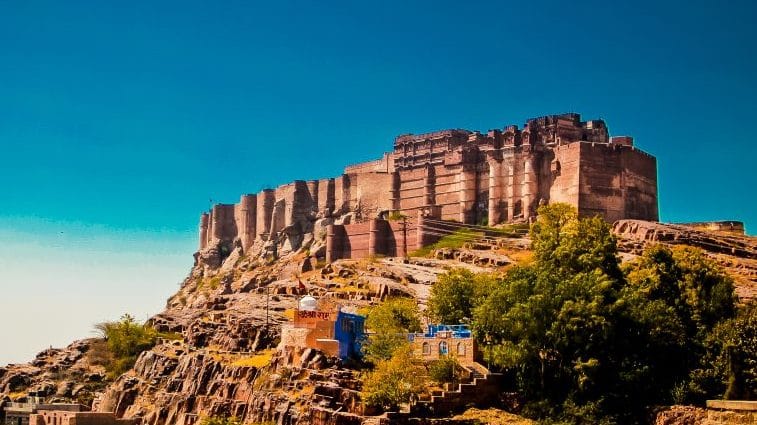
Standing majestically above Jodhpur’s azure landscape, Mehrangarh Fort is one of India’s most magnificent architectural wonders.

As you gaze upon this imposing citadel, you’ll be captivated by its timeless splendor and rich history spanning over five centuries. Perched 410 feet above the city, the fort offers breathtaking panoramic views of Jodhpur’s famous blue-hued buildings.
This historical marvel is a testament to Rajasthan’s rich cultural heritage and Rajput valor, making it the perfect place to begin your Jodhpur adventure.
Key Takeaways
- Explore the majestic Mehrangarh Fort, a royal architectural marvel in Jodhpur.
- Discover the rich history and cultural significance of this imposing citadel.
- Enjoy panoramic views of the blue city from the fort’s elevated position.
- Learn about the epic tale of Rajput valor and royal grandeur through its massive walls and intricate palaces.
- Visit the museum housing over 15,000 artifacts within the fort.
The Majestic Crown of Jodhpur: Discovering Mehrangarh Fort

Mehrangarh Fort, situated on a towering pinnacle, is a marvel of ancient architecture and a crown jewel of Jodhpur. As you explore this magnificent structure, you’ll uncover the rich history and cultural heritage that it embodies.
What Makes Mehrangarh Fort Famous
Mehrangarh Fort is renowned for its imposing architecture and historical significance. The fort’s elevated location provided a crucial military advantage, allowing defenders to spot approaching enemies from miles away. Its seven successive gates are a testament to the ingenuity of the Rajput builders.
The fort’s architectural brilliance is evident in its defensive features, including narrow entrances, sharp turns, and strategically placed openings for pouring hot oil on attackers. As you explore, notice how the architecture transitions from purely defensive at the outer gates to increasingly ornate and refined as you move deeper into the royal quarters.
The Strategic Location and Impressive Architecture
Strategically positioned atop Bhaurcheeria Hill, Mehrangarh Fort’s location was crucial for its defense. The fort’s massive walls, some reaching 118 feet in height and 69 feet in width, showcase the engineering prowess of medieval Rajput builders. The fort’s architecture is a blend of defensive and ornate styles, reflecting its dual nature as a military stronghold and a royal residence.
As you explore Mehrangarh Fort, you’ll be struck by the ingenuity and skill of its builders. The fort’s architecture is a testament to the region’s rich cultural heritage and its significance in Indian history.
The Rich History of Mehrangarh Fort
Mehrangarh Fort, founded by Rao Jodha in 1459, stands as a testament to the architectural prowess and strategic vision of the Rathore dynasty. As you explore the fort, you are surrounded by the remnants of a glorious past that shaped the region’s history.
The Foundation by Rao Jodha in 1459
Rao Jodha, a visionary king, laid the foundation of Mehrangarh Fort, which would become the seat of the Rathore dynasty. The fort’s strategic location on a hilltop provided a secure stronghold against invaders and a vantage point to oversee the surrounding landscape.
The construction of the fort began in 1459 and continued over several decades, with successive rulers adding to its grandeur. The fort’s architecture reflects a blend of Rajput and Mughal styles, a result of the cultural exchanges and alliances that characterized the century that followed its construction.
The Rathore Dynasty and Their Legacy
The Rathore dynasty, under whose rule Mehrangarh Fort was built and flourished, left an indelible mark on the history of Rajasthan. The dynasty’s bravery, administrative acumen, and cultural achievements are still celebrated today.
“The annals of Mehrangarh Fort are also interwoven with the saga of the Mughal Empire, their paths intertwining in conquest and alliance.”
The Rathores maintained a delicate balance between their independence and the alliances they forged with other powerful empires, including the Mughals. This balance allowed them to preserve their sovereignty while benefiting from the cultural and economic exchanges.
The Mughal Influence and Later Developments
The 16th century marked a significant turning point for Mehrangarh Fort when the Mughal Emperor Akbar formed alliances with the Rajputs, bringing new cultural and architectural influences to the fort. During periods of Mughal control, the fort’s architecture incorporated elements of Islamic design, visible in the arches and decorative motifs.
| Period | Event | Impact on Mehrangarh Fort |
|---|---|---|
| 16th Century | Mughal Alliance | Incorporation of Islamic architectural elements |
| 1707 | Reclamation by Maharaja Ajit Singh | Addition of Fateh Pol (Victory Gate) |
| 18th-19th Century | Construction of Palaces | Addition of Phool Mahal and Sheesh Mahal |
In modern times, Maharaja Gaj Singh II established the Mehrangarh Museum Trust in 1972, transforming the fort into one of India’s best-preserved historic sites. Today, visitors from around the world come to experience the grandeur of Mehrangarh Fort, a true marvel of Indian history and architecture.
Exploring the Magnificent Palaces Within Mehrangarh Fort
As you step into Mehrangarh Fort, you’re immediately struck by the grandeur of its palaces. The fort is a treasure trove of architectural marvels, with each palace telling a story of the region’s rich history and cultural heritage.
Sheesh Mahal: The Palace of Mirrors
Sheesh Mahal, or the Palace of Mirrors, is a testament to the opulence of the Rathore dynasty. This stunning palace is adorned with intricate mirror work and glass tiles, creating a dazzling effect that reflects the light. As you walk through its halls, you’re surrounded by an aura of luxury and refinement.

Phool Mahal: The Palace of Flowers
Phool Mahal, the Palace of Flowers, is another gem within Mehrangarh Fort. This beautiful palace is decorated with vibrant floral motifs and colorful paintings, giving it a lively and festive atmosphere. The intricate designs and patterns on its walls and ceilings are a treat to behold.
Moti Mahal: The Pearl Palace
Moti Mahal, or the Pearl Palace, is a masterpiece of Rajput architecture. Its walls are adorned with delicate carvings and ornate decorations, giving it a pearlescent sheen. The palace is a reflection of the royal family’s love for beauty and luxury.
Jhanki Mahal and Other Royal Chambers
Jhanki Mahal, meaning the Palace of Glimpses, was constructed by Maharaja Takht Singh for the royal women to observe formal proceedings in the courtyard below without being seen. The lattice walls have small holes that acted like keyholes, allowing the women to watch court proceedings and processions while maintaining their seclusion. Today, this palace houses a fascinating collection of royal cradles used for royal infants and during religious ceremonies. Beyond Jhanki Mahal, Mehrangarh Fort contains numerous other chambers, including Takhat Vilas and armory rooms, showcasing the everyday luxury of royal life.
You can explore these magnificent palaces and experience the grandeur of Mehrangarh Fort, understanding the historical context and the cultural significance of each structure.
The Haunted Tales of Mehrangarh Fort
As you step into the majestic Mehrangarh Fort, you’re not just walking into a historical monument, but into a realm where the past and the paranormal blend. The fort, a testament to the grandeur of Rajasthan, has witnessed centuries of history, and with it, numerous tales of bravery, sacrifice, and hauntings.
The Curse and the Human Sacrifice
The foundation of Mehrangarh Fort is steeped in legend, including a tale of a human sacrifice that is believed to have taken place during its construction. According to local lore, a man named Rajaram, who was a jogi or ascetic, was buried alive within the fort walls, and his spirit is said to still roam the premises. This act was believed to strengthen the fort and bring it good fortune, but it also laid the groundwork for the paranormal activities that are reported to this day.
The Handprints at Loha Pol: Stories of Royal Sati
One of the most haunting sights within Mehrangarh Fort is found at Loha Pol (Iron Gate), where visitors can see the handprints of royal widows who performed sati, a practice where they would immolate themselves on their husbands’ funeral pyres. These handprints, made by the queens of Maharaja Man Singh in 1843, were preserved for centuries and serve as a somber reminder of the extreme customs of the past.
| Event | Year | Description |
|---|---|---|
| Construction of Mehrangarh Fort | 1459 | Foundation laid by Rao Jodha |
| Human Sacrifice | 1459 | Rajaram, a jogi, was buried alive |
| Sati by Royal Widows | 1843 | Queens of Maharaja Man Singh performed sati |
Local legends claim that on moonless nights, the spirits of these royal women can be heard weeping and whispering throughout the fort. Visitors and staff have reported paranormal experiences near the handprints, including sudden cold spots and unexplained sounds.
Mehrangarh Fort Timings and Entry Fee

To make the most of your visit to Mehrangarh Fort, it’s essential to be aware of its operating hours and ticket prices. Mehrangarh Fort is a significant historical monument that attracts numerous visitors daily.
Opening Hours and Best Time to Visit
Mehrangarh Fort opens its gates to visitors from 9:00 AM to 5:00 PM. The best time to visit is early morning or late afternoon to avoid the peak sun and enjoy a more serene experience.
Entry Fee Structure for Domestic and International Visitors
The entry fee for Mehrangarh Fort varies for domestic and international visitors. It’s advisable to check the official website or contact the fort’s administration for the most current pricing. Generally, the fee includes access to the fort’s museums and certain attractions within.
Temple Timings Within the Fort
The revered Chamunda Mataji Temple within Mehrangarh Fort operates on a different schedule, opening at 8:00 AM and remaining accessible until 5:00 PM. During festivals like Navaratri and Dussehra, the temple extends its hours and hosts special ceremonies. The morning aarti begins at approximately 8:30 AM, offering a beautiful spiritual experience.
Understanding these timings and fees will help you plan your visit effectively, ensuring that you make the most of your time at Mehrangarh Fort and its significant attractions like the Chamunda Mataji Temple.
Must-See Attractions and Activities at Mehrangarh Fort
Mehrangarh Fort offers a unique blend of historical exploration, cultural immersion, and adrenaline-pumping activities. As you step into the fort, you’re greeted by its imposing architecture and rich history.

The Fort Museum and Its Treasures
The Fort Museum is a treasure trove of historical artifacts, including intricate paintings and polished floors that adorn the royal chambers. As you explore the museum, you’ll gain insights into the lives of the royalty who once inhabited the fort. The museum houses a vast collection of artifacts, including royal cradles, palanquins, and other relics that showcase the opulence of the Rathore dynasty.
The Chamunda Mataji Temple
Located within the fort premises, the Chamunda Mataji Temple is a revered site for devotees. This ancient temple is dedicated to the goddess Chamunda, who is considered the protector of the city. You can witness the devotional fervor of the pilgrims as they offer prayers and perform rituals.
Zip-lining and Adventure Activities
For adventure enthusiasts, Mehrangarh Fort offers an exhilarating zip-lining experience called “Flying Fox.” This activity features six different zip lines that take you soaring over the ancient walls and water bodies surrounding the fort. As you zip through the air, you’ll get a unique bird’s-eye perspective of the fort’s massive architecture and the blue city below. The entire zip-line circuit takes approximately two hours to complete, with professional guides ensuring safety while sharing interesting facts about the fort’s history and landscape.
As you explore Mehrangarh Fort, you’ll discover that there’s something for everyone – history buffs, culture enthusiasts, and adventure seekers alike. Whether you’re exploring the historical rooms of the fort or experiencing the thrill of zip-lining, your visit to Mehrangarh Fort is sure to be an unforgettable experience.
Festivals and Cultural Events at Mehrangarh Fort

You can experience the rich cultural heritage of Rajasthan at Mehrangarh Fort’s festivals. The fort hosts various cultural events and festivals throughout the year, attracting a lot of people from around the world.
Rajasthan International Folk Festival
The Rajasthan International Folk Festival is a celebration of the region’s rich folk traditions. It features performances by local artists, showcasing the diverse musical and dance heritage of Rajasthan. This festival is a great way to experience the local culture and connect with the community.
World Sacred Spirit Festival
The World Sacred Spirit Festival, held in February, is dedicated to preserving Sufi and sacred traditions from around the world. The festival features performances in intimate settings throughout the fort, including moonlit courtyards and palace chambers. It offers a unique opportunity to experience sacred musical heritage from various cultures.
- Each February, Mehrangarh Fort hosts the World Sacred Spirit Festival, celebrating mystical and spiritual music traditions.
- The festival focuses on preserving sacred musical heritage from across cultures, featuring Sufi qawwalis and Rajasthani folk songs.
- The royal family of Jodhpur personally patronizes this festival, continuing their tradition of supporting the arts.
- Performances take place in various settings throughout the fort, enhancing the spiritual dimension of the music.
- The festival includes workshops and lectures on ancient musical traditions, attracting a lot of international attention.
Visiting Mehrangarh Fort during these festivals is a great way to experience the heritage and culture of Rajasthan with your family.
Planning Your Visit to Mehrangarh Fort

To ensure a memorable visit to Mehrangarh Fort, it’s essential to plan ahead. Mehrangarh Fort is easily accessible by air, train, bus, or car, with Jodhpur having its own domestic airport and well-connected roads. Once in Jodhpur, you can take an auto-rickshaw or taxi to reach the fort, which is just 2 km away from the old town and 10 km from the city center.
Here are some tips to make your visit more enjoyable:
- Plan to spend at least half a day exploring Mehrangarh Fort, though history enthusiasts may want to dedicate a full day.
- Visit on weekdays and arrive early morning or late afternoon to avoid the heat and crowds.
- Wear comfortable shoes and bring essentials like water, sunscreen, and a hat.
- Dine at Chokelao Mehran Terrace, the fort’s open-air restaurant, which serves authentic Rajasthani cuisine with spectacular views.
- If you’re staying multiple days in Jodhpur, consider visiting Mehrangarh Fort first to get a historical overview of the city.
- Photography enthusiasts should time their visit for the “golden hours” for memorable images.
- The fort’s museum shop offers high-quality souvenirs that support the Mehrangarh Museum Trust’s conservation efforts.
By planning your visit according to these tips, you’ll be able to fully appreciate the grandeur of Mehrangarh Fort and the beauty of the blue city.
FAQ
What is the history behind Mehrangarh Fort’s construction?
The fort was built in 1459 by Rao Jodha, the founder of Jodhpur, and has since been a symbol of the city’s rich history and heritage.
What are the must-visit attractions within the fort?
You can explore the magnificent palaces like Sheesh Mahal, Phool Mahal, and Moti Mahal, as well as the Fort Museum, which houses a vast collection of artifacts and treasures.
What are the fort’s operating hours?
The fort is open from 9:00 AM to 5:00 PM, and it’s best to visit during the early morning or late afternoon to avoid the harsh weather.
Are there any special events or festivals held at the fort?
Yes, the fort hosts various cultural events and festivals throughout the year, including the Rajasthan International Folk Festival and the World Sacred Spirit Festival.
Can I perform any rituals or worship at the fort?
Yes, you can visit the Chamunda Mataji Temple within the fort, which is an important pilgrimage site, and participate in the daily puja ceremonies.
Are there any adventure activities available at the fort?
Yes, you can enjoy zip-lining and other adventure activities while taking in the breathtaking views of the surrounding landscape.
How do I purchase tickets to visit the fort?
You can buy tickets online or at the fort’s ticket counter, and be sure to check the entry fee structure for domestic and international visitors.
Read more: Attractions