
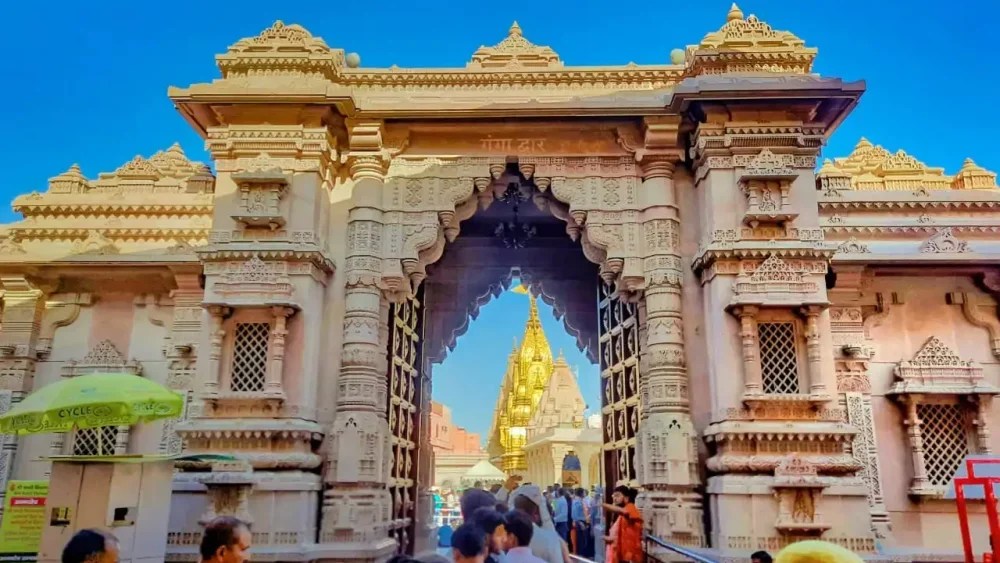
Did you know that the Kashi Vishwanath Temple attracts an average of 45,000 pilgrims per day? This Hindu temple dedicated to Shiva is one of the twelve Jyotirlinga shrines and a significant pilgrimage site. Located in the heart of Varanasi, the oldest continuously inhabited city in the world, the temple is a symbol of unwavering devotion.

The temple’s significance extends beyond its history; it’s a spiritual hub where faith and tradition have flowed uninterrupted for thousands of years. As you plan your visit, understanding the importance of the Jyotirlinga and the darshan process will enhance your experience.
Key Takeaways
- Understand the significance of Kashi Vishwanath Temple as a major Hindu pilgrimage site.
- Learn about the temple’s history and its importance in Hindu spirituality.
- Discover practical information for planning your visit, including darshan timings.
- Explore the profound significance of the Jyotirlinga housed within the temple.
- Gain insights into the temple’s enduring symbol of Hindu spirituality despite being destroyed and rebuilt multiple times.
The Sacred Significance of Sri Kashi Vishwanath Temple
As you approach the sacred grounds of Sri Kashi Vishwanath Temple, you are stepping into a realm of spiritual significance that has been revered for centuries. The Kashi Vishwanath Temple is a pivotal part of Varanasi, a city considered one of the holiest in Hinduism.
Why Kashi Vishwanath Temple Is Famous
The Kashi Vishwanath Temple, also known as Vishwanath Mandir, is famous for its association with Lord Shiva and its status as a Jyotirlinga, a manifestation of Shiva as an infinite column of light. This temple is believed to be the first Jyotirlinga to manifest itself, making it a significant pilgrimage site.
According to legend, Shiva manifested as a Jyotirlinga in front of Brahma and Vishnu, symbolizing his supremacy. This mythological event underscores the temple‘s importance in Hindu traditions.
The Spiritual Heart of Varanasi
Varanasi, known as the “City of Light” or the holy city, revolves spiritually around the Kashi Vishwanath Temple. It is considered the giver of liberation, or “Moksha Dayini,” where devotees come to seek spiritual enlightenment.
| Spiritual Significance | Description |
|---|---|
| Moksha | The temple is believed to be the place where Lord Shiva bestows salvation. |
| Pilgrimage | Countless pilgrims visit the Kashi Vishwanath Temple seeking spiritual enlightenment. |
| Traditions | The temple stands as a testament to unbroken Hindu spiritual traditions. |
The Kashi Vishwanath Temple serves as both a physical and metaphysical bridge between the earthly realm and the divine, with the Ganges nearby enhancing its spiritual significance.
The Divine Jyotirlinga of Kashi Vishwanath
At the heart of the Kashi Vishwanath Temple lies a sacred Jyotirlinga, embodying the spiritual essence of Varanasi. This revered site is a pivotal part of Hindu pilgrimage, symbolizing the divine presence of Lord Shiva.
Understanding the Concept of Jyotirlinga
The term “Jyotirlinga” combines “jyoti,” meaning light, and “linga,” a symbol of Lord Shiva. It represents the manifestation of Shiva as a column of light, signifying his infinite and formless nature. The Vishwanath Mandir in Kashi is one of the twelve Jyotirlingas in India, each considered a sacred dwelling of Lord Shiva.
Can Devotees Touch the Jyotirlinga in Kashi?
The main sanctum of the Sri Kashi Vishwanath Temple, where the lingam is placed, is typically accessible only to the temple priest. The linga, measuring 60 centimeters in height and 90 centimeters in circumference, is housed in a silver altar. Devotees are generally not permitted to touch the Jyotirlinga directly to preserve its sanctity.
| Aspect | Detail |
|---|---|
| Accessibility | Main sanctum is accessible only to the temple priest. |
| Linga Dimensions | 60 cm height, 90 cm circumference. |
| Offering to Jyotirlinga | Devotees can offer bilva leaves, flowers, and sacred water through the priest. |
You can participate in the worship by giving offerings like bilva leaves and sacred water to the priest, who will perform the rituals on your behalf. This way, you can still experience the divine energy of the Shri Kashi Vishwanath Jyotirlinga.
The Rich History of Kashi Vishwanath Temple
The history of the Kashi Vishwanath Temple is a testament to the enduring power of faith, despite facing numerous challenges over the centuries. You can trace the remarkable story of resilience as this sacred site has endured multiple cycles of destruction and reconstruction throughout its tumultuous history.
Ancient Origins and Mythological Connections
The original Vishwanath temple, initially known as the Adi Vishveshwar Temple, has its roots in ancient mythology. The temple’s significance is deeply intertwined with the sacred city of Varanasi, making it a cornerstone of spiritual significance. The Kashi Vishwanath is one of the twelve Jyotirlingas, holding a special place in the hearts of devotees worldwide.
Discover how the original Adi Vishveshwar Temple was first destroyed in 1194 by invading forces, marking the beginning of a pattern that would repeat several times over the centuries. The temple’s history is a story of faith and resilience, with each reconstruction reinforcing the spiritual continuity of worship at this sacred site.
Cycles of Destruction and Reconstruction
The Kashi Vishwanath Temple has faced numerous cycles of destruction and reconstruction. In 1194, it was destroyed by the Ghurids, and later, in 1230, it was rebuilt near the Avimukteshwara Temple during the reign of Delhi’s Sultan Iltutmish. The temple was demolished again during the rule of either Hussain Shah Sharqi or Sikandar Lodi.
- Learn about the various reconstructions of the temple by devoted rulers and patrons, including the rebuilding efforts during the reigns of Sultan Iltutmish, Raja Man Singh I, and Raja Todar Mal.
- Understand the pivotal role of Maharani Ahilyabai Holkar of Indore, who in 1780 constructed the present temple structure that continues to stand today.
In 1669, Mughal Emperor Aurangzeb destroyed the temple and built the Gyanvapi Mosque in its place. The remains of the erstwhile temple can still be seen in the foundation, columns, and rear part of the mosque.
“The story of Kashi Vishwanath Temple is not just about a building; it’s about the faith and resilience of millions of devotees over centuries.”
Appreciate how each reconstruction not only restored the physical structure but also reinforced the spiritual continuity of worship, ensuring that the divine presence of Lord Shiva remained accessible to devotees despite historical challenges.
The Kashi Vishwanath Temple Complex
As you step into the Kashi Vishwanath Temple Complex, you are greeted by a blend of spirituality and history. This sacred space is not just a temple, but a hub of religious and cultural activities that have been thriving for centuries.
Temple Architecture and Design
The Kashi Vishwanath Temple architecture is a testament to the rich cultural heritage of Varanasi. The temple’s design is a blend of traditional Indian styles, with intricate carvings and sculptures that adorn its walls and ceilings. The temple complex features a spacious courtyard, known as the sabha mandap, where devotees gather for communal worship and spiritual discourses.

The Gyanvapi Well and Other Sacred Spots
One of the most revered spots within the temple complex is the Gyanvapi Well, also known as the “Well of Wisdom.” According to legend, when Emperor Aurangzeb planned to destroy the original temple, devotees hid the sacred Shiva lingam in this well to protect it. The Gyanvapi Well is believed to contain the essence of cosmic knowledge and spiritual enlightenment. The temple complex also houses other sacred shrines and structures that were revealed during the Kashi Vishwanath Corridor Project, adding to the historical and spiritual significance of this site.
The complex relationship between the Kashi Vishwanath Temple and the adjacent Gyanvapi Mosque is a representation of the layered religious history of this sacred space. As you explore the temple complex, you will discover a world of devotion, mythology, and history that is sure to leave you inspired.
Planning Your Visit to Sri Kashi Vishwanath Temple
As you prepare to visit the revered Sri Kashi Vishwanath Temple, understanding the nuances of planning can enhance your spiritual experience. The temple, being one of the twelve Jyotirlingas, attracts numerous devotees, making it essential to be well-prepared for your visit.
Best Time to Visit
The best time to visit Sri Kashi Vishwanath Temple is from October to March when the weather is pleasant, making it ideal for pilgrims to perform rituals and darshan without the harsh conditions of the Indian summer or monsoon. Visiting during early morning or late evening can help avoid the crowds.
Kashi Vishwanath Temple Timings
The Kashi Vishwanath Temple is open from 3:00 AM to 11:00 PM, with the Mahabhishek ceremony taking place from 3:00 AM to 4:00 AM and the Shringar Aarti at around 4:30 AM. Understanding these timings can help you plan your darshan and other rituals effectively.
What to Wear and Bring
When visiting the Sri Kashi Vishwanath Temple, dressing modestly is a sign of respect. Men are advised to wear traditional attire like dhoti-kurta or simple pants with shirts, while women are encouraged to wear sarees or salwar kameez that cover their shoulders and knees.
- Remove your footwear before entering the temple premises.
- Avoid bringing prohibited items such as leather goods, non-vegetarian food, and intoxicating substances.
- Carry minimal belongings and essentials like water, a handkerchief, and a pouch for offerings.
| Item | Recommended | Not Allowed |
|---|---|---|
| Footwear | Remove before entering | Leather goods |
| Attire | Modest, traditional clothing | Revealing or inappropriate clothing |
| Items to Carry | Water, handkerchief, offerings | Non-vegetarian food, tobacco, alcohol |
By being mindful of these guidelines, you can ensure a smooth and respectful visit to the Sri Kashi Vishwanath Temple, enhancing your spiritual journey.
Kashi Vishwanath Temple Ticket Information

The Kashi Vishwanath Temple offers various ticket options to facilitate a hassle-free darshan experience for devotees. The temple management has introduced different types of tickets to cater to the diverse needs of its visitors.
Regular Darshan Ticket Prices
The regular darshan ticket prices at Kashi Vishwanath Temple are designed to be affordable for all devotees. You can purchase these tickets at the designated counters near the temple complex.
VIP Darshan Ticket Options
For those seeking a more personalized experience, the temple offers VIP darshan ticket options. These tickets allow you to have a priority darshan experience, minimizing wait times.
Special Arrangements for Elderly and Disabled Visitors
The Kashi Vishwanath Temple has made special arrangements for elderly and disabled visitors as part of the Kashi Vishwanath Corridor Project. These include wheelchair accessibility, dedicated lanes, and priority darshan facilities. You can request special assistance in advance through the temple’s help desks or official website.
The Vishwanath Temple Trust has implemented various initiatives to make the temple complex more accessible. Recent infrastructure improvements include ramps, handrails, and rest areas throughout the premises. Complimentary services such as wheelchair availability and assistance personnel are also offered for those with special needs.
Online Booking for Kashi Vishwanath Temple
For a hassle-free visit, consider booking your darshan at Kashi Vishwanath Temple through their online portal. The Kashi Vishwanath Temple official website allows you to secure your darshan in advance, ensuring a smoother experience, especially during peak pilgrimage seasons.
Step-by-Step Guide to Online Booking
Booking your darshan online is straightforward. First, visit the Kashi Vishwanath Temple official website and navigate to the booking section. Here, you will need to provide your personal details and select a suitable darshan time slot. It’s advisable to book at least 2-3 weeks in advance, especially during peak seasons like Shravan month or Maha Shivaratri.
After filling in the required information, review your details carefully before confirming your booking. Corrections post-booking can be challenging due to security protocols.
Tips for Hassle-Free Booking Experience
To ensure a smooth booking experience, keep digital and printed copies of your booking confirmation handy, as both may be required at different checkpoints within the Kashi Vishwanath Dham complex. Also, monitor your email and phone for any updates or changes to your booking.
Consider using the official Kashi Vishwanath mobile app for bookings, which often provides real-time updates on temple crowding and special events, sometimes offering exclusive time slots not available through the website.
By following these guidelines and tips, you can have a more organized and less stressful visit to the Kashi Vishwanath Temple, allowing you to focus on your spiritual journey.
The Darshan Experience at Kashi Vishwanath
The darshan experience at Kashi Vishwanath Temple is a deeply spiritual journey for devotees worldwide. As you enter the temple complex, you are enveloped in an atmosphere of devotion and reverence.

How Much Time Is Required for Kashi Vishwanath Darshan
The time required for Kashi Vishwanath darshan can vary significantly based on the time of visit, the day of the week, and the season. Generally, devotees should plan to spend at least 2-3 hours for darshan. During peak seasons or festivals, the waiting time can be longer.
| Day | Average Waiting Time |
|---|---|
| Weekdays | 1-2 hours |
| Weekends | 2-3 hours |
| Festivals | 3-4 hours |
Aarti Timings and Special Ceremonies
The Kashi Vishwanath Temple conducts several aartis throughout the day. The most significant aartis are the Shringar Aarti in the morning and the Sham Aarti in the evening. Devotees are advised to check the temple’s official timings to plan their visit accordingly.
Etiquette and Customs to Follow
When visiting the Kashi Vishwanath Temple, it is essential to follow certain etiquette and customs. Devotees are required to remove their footwear before entering the temple complex. Additionally, the temple authorities have specific rules regarding items that are not allowed inside, such as leather products and non-vegetarian food.
- Approach the temple with reverence and humility.
- Remove your footwear at designated areas.
- Maintain silence or speak in hushed tones within the temple complex.
- Follow the queue system patiently.
- Respect the prohibition against photography within the inner sanctum.
By following these guidelines, you can ensure a smooth and respectful darshan experience at the Kashi Vishwanath Temple.
How to Reach Kashi Vishwanath Temple

To experience the divine aura of Kashi Vishwanath Temple, you first need to know how to reach this sacred site. Located in the heart of Varanasi, the temple is accessible by air, train, and road.
By Air, Train, and Road
The nearest airport to Kashi Vishwanath Temple is the Lal Bahadur Shastri International Airport in Varanasi, which is well-connected to major cities like New Delhi. For those preferring train travel, Varanasi Junction is a major railway station with connections to all parts of India. By road, Varanasi is accessible via National Highway 2, making it a feasible drive from nearby cities.
Navigating Through Varanasi to the Temple
Once you arrive in Varanasi city, you can navigate to Vishwanath Temple using various local transport options. Auto-rickshaws or cycle rickshaws from your hotel or the railway station to Godowlia Crossing are recommended. From there, you can proceed on foot through the narrow lanes to reach the temple. Alternatively, consider using the new Kashi Vishwanath Corridor entrance from Lalita Ghat or Manikarnika Ghat if you are arriving by boat along the Ganges.
For a smoother journey, you can download the official Kashi Vishwanath Temple app, which provides navigation assistance. Engaging an authorized local guide can also be beneficial, especially if it’s your first visit to Varanasi.
The Kashi Vishwanath Corridor Project
The Kashi Vishwanath Corridor Project has revolutionized the pilgrimage experience in Varanasi, making it more accessible and enjoyable for devotees. As of August 2023, the Kashi Vishwanath Temple Trust reported that 10 crore (100 million) tourists had visited the temple since the corridor’s inauguration in December 2021.
Transformation of the Temple Complex
The corridor project has significantly transformed the temple complex by creating a direct, 24-meter wide pathway between the Ganges River and the temple. This eliminates the need to navigate through narrow, crowded lanes, allowing devotees to complete the traditional ritual of carrying Ganga water to the temple with greater ease. The project has also introduced enhanced security measures, including CCTV surveillance and trained security personnel, ensuring a safe and orderly darshan experience.
Enhanced Visitor Experience
The Kashi Vishwanath Corridor Project has dramatically improved visitor facilities, including spacious queuing areas, clean drinking water stations, air-conditioned waiting halls, and modern restrooms. Additionally, the project has introduced new tourist facilities such as a museum, a Vedic center, a city gallery, a food court serving traditional Banarasi cuisine, and souvenir shops offering authentic religious items and local handicrafts. With these enhancements, the temple now welcomes an average of 45,000 pilgrims daily.
- Experience the improved infrastructure and facilities.
- Benefit from enhanced security and streamlined entry procedures.
- Explore new tourist facilities, including cultural and religious attractions.
Conclusion: The Eternal Splendor of Kashi Vishwanath
As you reflect on the significance of Sri Kashi Vishwanath Temple, its enduring presence as a spiritual beacon becomes evident. For thousands of years, this sacred site has stood as a testament to the resilience and continuity of India’s ancient traditions. The Shri Kashi Vishwanath Temple remains a vibrant center of worship, drawing millions of devotees who seek Lord Shiva’s blessings and the possibility of moksha (liberation) that Kashi promises.
The recent Kashi Vishwanath Corridor Project has respectfully balanced the preservation of the temple’s ancient sanctity with modern improvements, enhancing the devotee experience and ensuring this sacred site remains accessible for generations to come. As one of the twelve Jyotirlingas, the Vishwanath Temple continues to fulfill its spiritual purpose, embodying the heart of Hindu spirituality.
Beyond its religious significance, the temple stands as a living museum of Indian architectural styles, artistic traditions, and cultural practices that have evolved over centuries. As you take with you the spiritual essence of Shri Kashi Vishwanath, whether you visited as a devoted pilgrim or curious traveler, you recognize that this sacred site represents not just a destination but a profound connection to India’s history and spiritual heritage that continues to inspire and transform lives in our modern world.
The Kashi Vishwanath Temple’s timeless significance is a testament to the power of faith and the importance of preserving cultural heritage. As you reflect on your journey to this sacred temple, you are reminded of the years of history and tradition that it embodies, making it a truly unique and enriching experience.
FAQ
What is the significance of the Kashi Vishwanath Jyotirlinga?
The Kashi Vishwanath Jyotirlinga is considered one of the twelve Jyotirlingas in India, representing the cosmic axis of the universe and is revered as a symbol of spiritual liberation.
What are the temple timings for darshan?
The temple is open from 3:00 AM to 11:00 PM, and the darshan timings may vary depending on the time of year and other factors, so it’s best to check with the temple authorities or website for the most up-to-date information.
Can I touch the Jyotirlinga during darshan?
No, devotees are not allowed to touch the Jyotirlinga, as it is considered a sacred and powerful symbol of Lord Shiva, and touching it may be considered impious.
What is the Kashi Vishwanath Corridor project?
The Kashi Vishwanath Corridor project is an initiative to enhance the temple complex, providing a more accessible and comfortable experience for pilgrims and visitors, while also preserving the historical and cultural heritage of the site.
How can I book tickets online for Kashi Vishwanath Temple?
You can book tickets online through the official website or authorized ticketing platforms, following a simple step-by-step process that allows you to select your preferred darshan time and other options.
What are the dress code and etiquette guidelines for visiting the temple?
Devotees are expected to dress modestly, removing shoes and other leather items before entering the temple, and following traditional customs and practices, such as offering prayers and performing rituals with reverence.
How do I reach the Kashi Vishwanath Temple?
The temple is accessible by air, train, and road, with the nearest airport being Varanasi’s Lal Bahadur Shastri International Airport, and the Varanasi Junction railway station being a major railhead, while taxis, auto-rickshaws, and other local transportation options are available.
What is the significance of the Gyanvapi Well?
The Gyanvapi Well is a sacred spot within the temple complex, believed to be associated with the goddess Gyanvapi, and is considered a site of spiritual significance and reverence.
Read more: Attractions




.jpg)
